- The alarm panel is the brain of the system. Every detector, keypad, siren and mobile app communicates through it.
- Before choosing an alarm panel, work out your protection scope, detector types and number of zones.
- The number of zones required is often the first factor that determines which alarm panel is suitable.
- Most wired alarm panels can work with existing wired detectors, making future upgrades more cost-effective.
- Modern alarm panels support mobile apps, remote notifications, monitoring centre integration and backup communication paths.
- Choose an alarm panel based on how the property will be used, not just the number of detectors you need today.
Start With the Design First
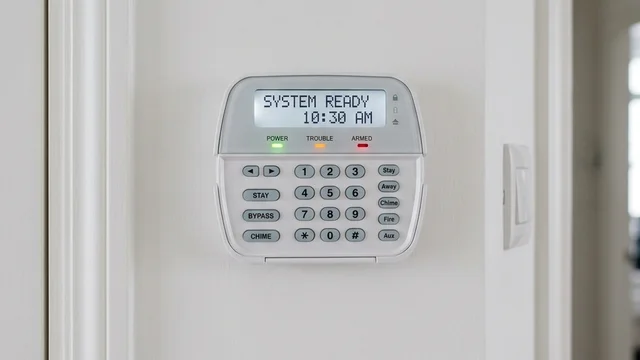
In the last two articles, we looked at alarm system design and detector selection. First, we defined what needed to be protected and how the property should be zoned. Then we looked at the different detector types and where each one belongs.
Only after those decisions have been made is it time to choose the alarm panel.
Many people do the opposite. They start by comparing brands and alarm panels before they have worked out the design. That is a bit like choosing a car engine before deciding what vehicle you are building.
Once you know your protection scope, your detector types and the number of zones required, selecting the right panel becomes much easier.
KEY POINT
The alarm panel should support the design. The design should not be forced to fit the limitations of the panel.
What Is an Alarm Panel?
If the detectors are the eyes and ears of the system, the alarm panel is the brain.
Every detector reports back to the panel. The panel decides whether an alarm condition exists and what action should happen next.
When a door contact opens, a PIR detects movement, or a panic button is pressed, the signal goes to the panel first. The panel then decides whether to:
- Activate the siren
- Send a notification to your mobile phone
- Report the event to a monitoring centre
- Record the event in the system log
Without the panel, the detectors have nowhere to report to and the system cannot function. This is why the panel is the single most important component in the entire alarm system.
KEY POINT
The panel does not just sound an alarm; it decides what kind of alarm event has occurred, how urgent it is, and which response to trigger. A panel that is correctly programmed for the property is what separates a useful system from a noisy one.
Start With the Number of Zones
One of the first questions I ask when designing an alarm system is: how many zones do we need?
The answer determines which alarm panels are suitable and which are not.
A small apartment may require only four to eight zones. A typical landed property may require eight to sixteen zones, with larger homes going higher. A commercial property may require significantly more.
Remember that every door, window group, motion detector area and emergency device may need its own zone. The exact number depends on how detailed you want the reporting to be. If all ground floor windows share one zone, the panel can tell you that a window has been opened. If each window has its own zone, the panel can tell you exactly which window was opened.
The more zones you require, the more flexible and expandable the panel needs to be.
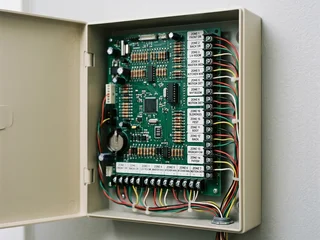
PLANNING POINT
Do not buy a panel based only on today's requirements. Leave room for future expansion. Additional detectors, panic buttons or outdoor protection may be added later.
Wired Panels and Detector Compatibility
One advantage of wired alarm systems that is often overlooked is compatibility.
Most wired alarm panels use industry-standard inputs. This means that many wired detectors can continue to work even when the alarm panel itself is replaced.
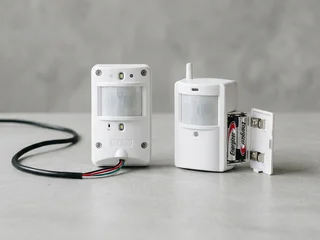
Magnetic door contacts, window contacts, PIR motion detectors, glass break detectors, and panic buttons often remain usable for many years. If the alarm panel becomes obsolete, it may be possible to replace only the panel and keypad while keeping the existing detectors and cabling.
Of course, this depends on the condition of the wiring and detectors. If they are damaged or unreliable, replacement may still be necessary. But in many properties, the cabling and detectors are still working reliably long after the original panel has reached the end of its life.
This is one reason why wired alarm systems remain popular for landed homes, factories, and commercial premises.
KEY POINT
A well-installed wired alarm system can often be modernised by replacing the panel while retaining the existing detectors and cabling. You do not always need to start from scratch.
Wired or Wireless?
That covers upgrading an existing system. If you are starting from scratch, here is how to think about the choice.
Both technologies work well. The choice comes down to the property and how it is being used.
Wired systems run detection cables from each detector back to the panel. The advantage is long-term reliability; no batteries to replace, no signal interference, and easy compatibility between detectors and panels. If one panel is eventually replaced, the existing detectors and cabling often continue to work with the new one. Wired systems are the right choice for new construction, major renovations, landed homes, and commercial premises where cabling can be run properly during the build or fit-out.
Wireless systems use radio frequency signals between the detectors and the panel. Installation is faster and far less disruptive; no cabling through walls or across door frames. The trade-off is battery maintenance. Budget-grade wireless detectors may need battery replacement every one to two years. Better quality systems are significantly more efficient, with a well-designed wireless system such as AJAX, detector batteries can last up to five to seven years depending on the detector type and how frequently it activates. For Singapore apartments and condominiums, wireless is usually the practical default. Running cables through reinforced concrete walls and across common corridor areas is either impossible or prohibitively expensive.
One point that applies to both: check the battery backup on the panel itself. If mains power is cut; whether during a power failure or deliberately by someone who knows what they are doing; the panel should continue operating on its internal battery. Most standard panels provide between one and two hours of backup on the built-in battery. If your site requires longer coverage, look for panels that support external battery modules to extend that window.
SINGAPORE CONTEXT
Most Singapore condominiums and apartments are built with reinforced concrete walls and shared corridor spaces. For these properties, wireless is almost always the practical choice. For landed homes and commercial properties where cabling is accessible, wired remains the more reliable long-term option.
Communication Paths; What Happens When the Internet Fails?
A modern alarm panel does much more than sound a siren. It also communicates with mobile apps and monitoring centres.
The question is: what happens if the internet connection goes down?
A good alarm panel should support multiple communication paths. These may include an Ethernet connection, a WiFi connection, and a 4G cellular backup. If one communication path fails, another can take over. This provides resilience against internet outages and equipment failures.
For higher-security applications, I generally recommend a panel with 4G cellular backup as standard.
DESIGN RULE
An alarm that cannot communicate during an emergency is only partially useful. Always confirm what happens if the primary communication path fails before you commit to a panel.
Mobile Apps and Monitoring
One of the biggest changes in alarm systems over the last decade has been mobile connectivity.
Most homeowners now expect to arm and disarm the system remotely, receive alarm notifications, view event history, and manage multiple users. These features are largely determined by the alarm panel and the software platform behind it.
If remote access is important to you, make sure the panel supports a mature and well-supported mobile app.
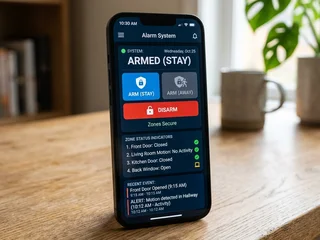
You should also decide whether you want self-monitoring or professional monitoring. With self-monitoring, notifications are sent directly to your phone. With professional monitoring, alarms are sent to a monitoring centre that can verify the alarm and decide what to do next. The right choice depends on your budget, lifestyle and security requirements.
PLANNING POINT
Self-monitoring puts you in control but relies on you being reachable and responsive at any time of day or night. Professional monitoring means someone is always watching, even when you are asleep, travelling, or out of mobile coverage.
What to Ask Your Installer Before Deciding
Once you have a shortlist of panels, use these questions to test whether each one is the right fit.
How many zones does the system need today, and how many might you need in three years? Does the panel support a mobile app, and is that app actively maintained? What happens to communication if the internet goes down; does it have 4G cellular backup? How long does the panel battery last if mains power is cut? Are spare parts and local technical support available in Singapore? Can the panel connect to a monitoring centre if you decide you want professional monitoring later?
A good installer should be able to answer all of these without hesitation. If they cannot, that tells you something too.
PLANNING POINT
The best alarm panel is not the most expensive one. It is the one that fits your zone count, supports the communication paths you need, and can be serviced locally when something eventually needs attention.
Putting It Together
The alarm panel is not the most visible part of a security system. Most people never look at it after installation. But it is the component that holds everything together; the detectors, the keypads, the sirens, the communication paths, the monitoring centre connection, and the mobile app.
Choose it last, after the design is done and the detectors have been selected. Choose it based on zone count, communication requirements, and how the property will actually be used, not on brand name or price alone.
A well-chosen panel running a well-designed system will work reliably for many years without drawing attention to itself. That is exactly what you want from it.
Securevision Verdict
Once the design is complete and the detectors have been selected, choosing the alarm panel becomes much easier. The panel should fit the design, not the other way around.
Start with the number of zones, how the property is used, and how you want to receive alarm notifications. From there, the right panel usually becomes obvious.
If you already have a wired alarm system, do not assume everything must be replaced. In many cases, the existing detectors and wiring can continue serving reliably for many years. The goal is not to buy the most expensive panel. The goal is to choose the panel that best supports the system you have designed.
In Short
The alarm panel is where all the design decisions converge; zones, communication paths, wired or wireless architecture, monitoring integration, mobile app access. The choice of panel determines what the system can do today and what can be added later. Most of the service calls we attend on older systems trace back to a panel that was under-specified at the time of installation. Choosing the right panel for the property and the requirement is the single decision that has the most long-term impact on system performance.

Frequently asked questions
What is a burglar alarm panel?
A burglar alarm panel; also called a control panel or alarm controller; is the central processing unit of an alarm system. It receives signals from all the detectors and sensors in the property, determines whether an alarm condition exists, and triggers the appropriate response; activating the siren, sending a signal to the monitoring centre, and notifying the user's smartphone. All other components in the system connect to and report through the panel.
What is an alarm zone?
An alarm zone is a defined area or group of detectors that the alarm panel treats as a single monitoring unit. When a detector in a zone is triggered, the panel identifies which zone is active and responds accordingly. Zones allow different areas of a property to be armed or disarmed independently, for example, keeping the perimeter armed overnight while allowing movement inside. A well-designed zone layout is fundamental to a useful and practical alarm system.
How many zones do I need for my property?
The number of zones depends on the size and layout of the property and the operational requirements; particularly how the system will be used daily. A small apartment may need only two or three zones. A landed home typically needs five to eight. A commercial property may need significantly more. The practical question to ask is: how many independent areas do I need to arm and disarm separately during normal use?
What is the difference between a wired and wireless alarm panel?
A wired alarm panel communicates with detectors and sensors through physical cables installed in the building. A wireless panel uses radio frequency signals to communicate with battery-powered wireless detectors. Wired systems are generally more reliable and do not require battery changes in individual detectors, but require cabling to be installed during construction or renovation. Wireless systems are easier to install in completed buildings but introduce battery management and potential radio interference considerations.
What communication paths should my alarm panel support?
For most Singapore residential and commercial properties, the recommended configuration is dual-path: broadband internet as the primary path and mobile data (GSM/4G) as the backup. If the internet connection fails, the panel switches automatically to the mobile path. A panel that supports only a single communication path has a vulnerability that a determined intruder can exploit.
Can I monitor my alarm panel remotely from my phone?
Yes. Most modern alarm panels support smartphone apps that allow you to arm and disarm the system, view real-time status, receive notifications of events, and in some cases view connected cameras. The app communicates with the panel through the internet. The availability of specific features depends on the panel model and any associated cloud platform provided by the manufacturer.
What is the battery backup in an alarm panel for?
The sealed lead-acid battery inside the alarm panel provides power to the entire system during a mains electricity failure. This ensures the alarm continues to operate even if an intruder cuts the power supply. Most residential panels are configured to provide 8 to 24 hours of battery backup depending on the battery capacity and the number of devices connected. The battery requires periodic replacement, typically every three to five years.
What is a tamper circuit in an alarm panel?
A tamper circuit is a monitoring loop that detects whether the panel enclosure has been opened or whether a detector has been removed from its mounting. If a tamper is detected, the panel generates a tamper alert independently of any alarm condition. Tamper protection is a fundamental security feature of properly installed alarm systems and ensures that attempts to physically interfere with the equipment are immediately detected.
How do I know when my alarm panel needs replacing?
Signs that a panel may need replacing include: inability to add new detectors or zones, incompatibility with current communication networks (particularly if it relies on PSTN), unavailability of spare parts or manufacturer support, recurring faults that cannot be resolved by servicing, and inability to support modern monitoring or app integration. Most panels have a practical service life of 10 to 15 years under normal conditions.
What should I ask an installer before choosing an alarm panel?
Ask: how many zones does the panel support and can it be expanded? What communication paths does it use and does it support dual-path? Is the panel compatible with a monitoring centre? Does it support a mobile app? What is the battery backup duration? How long will the manufacturer support the panel with firmware updates and spare parts? These questions reveal whether the panel is appropriate for the long-term requirements of the property.
Who should install and service my alarm panel in Singapore?
Alarm panel installation and maintenance in Singapore must be carried out by a company licensed under the Police Licensing and Regulatory Department (PLRD). Ask your installer to show their licence before work begins. Using an unlicensed contractor is an offence and may affect your insurance coverage.