- A security system can still be working but no longer be adequate; those are not the same thing.
- Changes in neighbourhood risk often justify a fresh review, even when nothing has gone wrong with the existing system.
- Site surveys are about identifying gaps in coverage, not just faults in equipment.
- Modern AI cameras can significantly improve detection accuracy while reducing false alarms; particularly useful in environments with wildlife or irregular movement.
- Effective security requires detection, verification and response in sequence; recording evidence is not the same as preventing an incident.
- Security systems should evolve as risks, technology and property layouts change over time.
A Break-In Nearby Started the Conversation
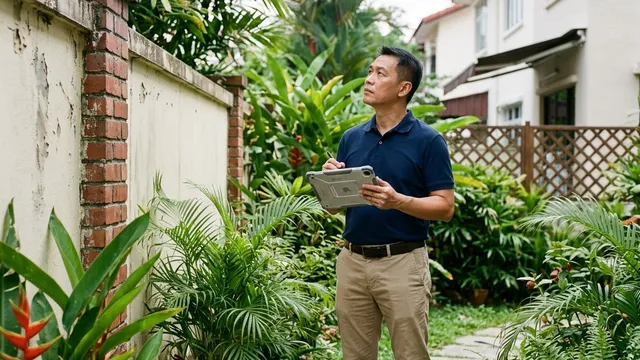
A break-in in the neighbourhood is an uncomfortable reminder. Not because your home is necessarily next, but because it forces a question that most homeowners would rather avoid: is my security system still good enough? Not whether it still works. Whether it is still adequate for the risks today.
Earlier in 2026, reports circulated of a break-in at a landed property in the Upper Thomson area. Like many nearby residents, one of our existing customers followed the reports closely. Their home was not directly affected. But the incident caused them to pause and think.
For years, their biggest challenge had been monkeys visiting the backyard from the nearby nature corridor. It was more of an annoyance than a security concern. After the break-in, however, the conversation changed entirely. The question was no longer about monkeys. It became: if someone wanted to enter the property, how well protected are we really? So they called us and asked if we could come down and take a look.
KEY POINT
A nearby incident does not mean your property will be targeted next. But it is one of the most useful prompts for a security review; because it changes how homeowners look at their own property. What felt adequate before suddenly invites a harder look.
What We Found During the Site Survey
When we arrived, the front of the property was reasonably well protected. There were cameras, the alarm system was functioning, and the video intercom at the gate was working properly. In many ways, the front of the house looked exactly as I would expect from a property that had been looked after over the years.
The back of the property was a different story. Like many Singapore landed homes, most of the original security attention had been focused on the front entrance; the natural approach point. The backyard had received far less attention over the years. There were no cameras covering the rear boundary, no visibility into what was happening behind the house, and no easy way for the homeowner to verify activity in that area from inside the property.
To be fair, the original design was not wrong. When the system was installed, the risk assessment made sense for the environment at that time. The problem was not the original design; it was that the environment had changed. The neighbourhood had changed. The homeowner's perception of risk had changed. The system had not kept pace with either.
We also noted that the existing front cameras were several years old. They were still recording and still functional. But they lacked many of the analytics capabilities available in current camera technology; particularly the ability to distinguish between people, animals, and environmental movement. For a property backing onto a nature corridor with regular monkey activity, that distinction matters significantly.
KEY POINT
A system can be working perfectly and still be overdue for review. Working and adequate are not the same assessment. The survey question is not "is it functioning?"; it is "is it still right for this property and this risk environment?"
Before Talking About Equipment, We Asked One Question
Whenever we conduct a security review, I try not to start with equipment. Equipment decisions are easy once the objectives are clear. What is harder, and more important; is agreeing on what we are actually trying to achieve.
In this case, the objective was not simply to record footage. Recording had been happening for years. The objective was to detect an intrusion early and create an immediate response. We wanted three things to happen automatically when someone entered the protected area: the intruder should know they had been detected; the homeowner should know immediately; and there should be enough information available to decide what action to take next.
Once those three objectives were clear, the solution became straightforward. We were not specifying a recording system. We were specifying a detection, verification, and response system. That is a meaningfully different brief, and it produces a different solution.
PLANNING POINT
Before any security upgrade, define what you want the system to do, not what equipment you want installed. The objective drives the specification. A system specified to record will do exactly that. A system specified to detect and respond will do something quite different.
See It. Light It. Alert It.

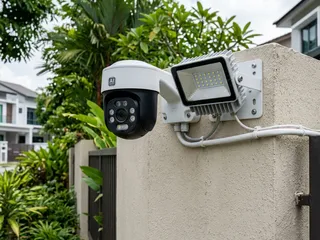
For the backyard, we installed a wide-angle AI camera capable of covering the entire rear area. The camera uses onboard analytics to distinguish between people, vehicles, and animals; a capability that was particularly important given the regular monkey traffic through the property. A system that triggers every time a monkey appears will eventually be ignored. A system that reliably distinguishes between a person and wildlife remains credible and actionable.
When a person enters the protected area, three things happen automatically in sequence. The floodlights activate immediately. Darkness is an intruder's best friend; the moment it disappears, so does their comfort. They are suddenly visible, they know they can be seen, and the psychological dynamic of the situation shifts immediately in favour of the homeowner.
The siren then activates. Many people assume a siren's purpose is to stop an intruder physically. That is not what it does. Its purpose is to communicate that they have been detected, that the clock has started, that their time is limited, and that the risk of discovery increases with every second they remain. Most people who enter a property intending to take their time will not do so with a siren running. The siren creates urgency that the intruder cannot ignore.
Simultaneously, the homeowner receives an immediate notification with a live view of the camera. Instead of receiving a generic alert and wondering whether it is genuine, they can see exactly what is happening. That visual confirmation allows them to make a far better decision about what action to take; whether to call the police, contact a neighbour, or assess that what triggered the camera was in fact a person rather than an animal or environmental movement. The notification with visual confirmation is significantly more useful than a notification alone.
DESIGN RULE
The sequence matters. Detection triggers lights, which remove cover and communicate exposure. The siren then communicates detection and creates time pressure. The notification with live view gives the homeowner the information they need to act. Each step builds on the previous one, and together they are more effective than any single element alone.
Detection. Verification. Response.
The technology itself is not the most important part of this story. The principle behind it is.
One thing I have understood for a long time is that recording an incident and preventing an incident are two very different things. A traditional CCTV system provides evidence. Evidence is valuable, for insurance claims, for police investigations, for understanding what happened. But evidence comes after the event. The incident has already occurred by the time the recording becomes useful.
What we designed for this property was a system built around a different sequence. Detection first; the camera recognises that a person has entered the protected area, not an animal, not a moving branch, not a change in lighting. Verification second; the onboard analytics confirm the nature of the detection and the homeowner receives visual confirmation through the live view. Response third; the lights, siren, and notification create an immediate reaction that changes the situation in real time, while the incident is still in progress.
Each step increases pressure on an intruder and reduces the time available for them to continue. The response is not something that happens after the incident is reviewed; it is something that happens during it. That distinction is what separates a security system designed around prevention from one designed around documentation.
KEY POINT
Detect. Verify. Respond. In that sequence, in real time. A system that only completes the first step; detection, and does nothing until someone reviews the footage afterwards is not providing the same level of protection as one that completes all three.
Security Is a Living System
The biggest lesson from this project has nothing to do with the camera model or the backyard layout. The real lesson is that security systems should not remain frozen in time.
The customer's original system was not a failure. It was correctly specified for the property and the risk profile that existed when it was installed. What changed was the context around it. The neighbourhood changed. The technology available changed substantially. The homeowner's expectations and sense of risk changed after a nearby incident. The system simply had not evolved alongside those changes, and as a result, a property that looked secure had a significant gap that neither the homeowner nor anyone else had identified until we walked around the back.
This is something I encounter regularly across Singapore landed properties. A camera installed five years ago may still be recording every day. The question is not whether it still works; it is whether it is still giving the property the level of protection that the current environment requires. A property that felt low-risk five years ago may feel very different after a break-in nearby, after a renovation that introduced a new blind spot, after vegetation has grown to screen a previously visible boundary, or after the neighbourhood profile has shifted in ways that change the realistic threat level.
Security is not a one-time installation decision. It is an ongoing assessment, of risk, of coverage, of technology, and of whether the system still matches the property it is protecting. The best time to do that assessment is before something happens, not after.
KEY POINT
Schedule a security review not just when something goes wrong, but when something changes; a nearby incident, a renovation, new landscaping, a change in how the property is used, or simply the passage of several years since the last time anyone walked the perimeter with fresh eyes.
When Did You Last Review Your Security?
One of the most common mistakes homeowners make is assuming that because a security system is working, it is still adequate. Those are two different assessments, and conflating them is how gaps accumulate unnoticed over time.
If your system has not been reviewed for several years, it may be worth a fresh look. Not because something is necessarily wrong. But because security performs best when it stays ahead of the risks rather than reacting to them. The homeowner in this case had a functioning system. They also had an unprotected backyard that backed onto a nature corridor. Both statements were true at the same time, and only a site survey made the second one visible.
Securevision Verdict
We do not recommend security reviews simply because a system is old. We recommend them when circumstances change; a nearby incident, a renovation, new technology that meaningfully changes what is achievable, or a shift in how the property is used. These are the moments when the gap between what the system was designed for and what the property currently needs is most likely to have grown.
Security is not a one-time project. It is an ongoing process of assessing risk and adapting accordingly. A system that was right for the property five years ago may still be functioning today. The question worth asking is whether it is still the right system for today, and the only way to answer that honestly is to look at the property with fresh eyes.
In Short
A break-in in the neighbourhood is an uncomfortable reminder that security is not static. Properties change, habits drift, and systems age, and the vulnerabilities that result often go unnoticed until an event makes them visible. The most useful thing a nearby incident can do is prompt a deliberate, structured review of what is actually protecting the property, what the response would be if a detector triggers, and whether the system reflects how the property is actually used today. The review itself takes two hours. The value of getting it right lasts years.

Frequently asked questions
Should I review my security after a break-in in my neighbourhood?
Yes. A nearby break-in is a useful prompt to assess whether your current security arrangements are appropriate. Properties and habits change over time, and a system that was adequate five years ago may have gaps today; new entry points, changed usage patterns, a system that has not been serviced, or a monitoring subscription that has lapsed. A review costs little and may identify changes worth making.
What does a security site survey involve?
A security site survey is a systematic assessment of a property's vulnerabilities and the adequacy of existing security measures. It covers: all potential entry and exit points; the visibility of the property from the street and from adjacent properties; lighting coverage; the state and coverage of existing CCTV, alarm, and access control systems; the response plan if a detector triggers; and a review of how the systems are actually used in daily practice.
What is the see-it, light-it, alert-it principle?
This is a simple framework for layered security: ensure that all entry points and approaches can be seen (camera coverage and unobstructed sightlines); ensure they are well lit (motion-activated lighting at entry points and dark approaches); and ensure that intrusion at any of these points triggers an alert (alarm detector coverage at every accessible entry). The principle applies equally to perimeter and interior protection.
What are the most common security vulnerabilities in Singapore homes?
The most common gaps we find during site surveys are: rear or side access points not covered by CCTV or alarm detectors; alarm systems that are not regularly armed because they are inconvenient to use; monitoring subscriptions that have lapsed; outdated backup batteries that would fail during a power cut; cameras positioned to cover wide areas but lacking the resolution to identify an intruder; and lighting that leaves key approach routes in darkness.
How do I know if my alarm system is still working correctly?
Test it. Ask your monitoring centre to confirm when they last received a poll from your panel. Walk through the detection zones with the system in test mode and confirm each detector triggers correctly. Check the panel for any fault indicators. Confirm the backup battery warning is not active. If you cannot answer these questions confidently, arrange for a professional service inspection.
What does detection, verification, response mean in practice?
Detection means the system identifies an intrusion; a detector triggers, the alarm sounds. Verification means the monitoring centre reviews the event and confirms it appears genuine; through a keyholder call or video footage. Response means a physical action is taken; a keyholder attends, a patrol is dispatched, or the police are called. All three stages need to be functioning for an alarm system to deliver an effective security outcome.
How should I respond when my neighbour has a break-in?
Review your own security arrangements using the nearby event as a prompt. Inform your neighbours; particularly those who may not have heard about the incident; so they can take precautions. If there is a residents' committee or estate management, share the information through the appropriate channel. Check that your alarm system is operational and that your monitoring centre has current contact information. This is also a good moment to review whether your insurance coverage is adequate.
What is the most cost-effective security improvement for a Singapore home?
Consistent alarm use is the most cost-effective improvement because it requires no new equipment; just a change in behaviour. Beyond that, ensuring all accessible entry points are covered by both a camera and an alarm detector typically provides the highest security return for the investment. Lighting at dark approaches and entries is also high-value and relatively low-cost.
When was the last time I should have reviewed my security?
A security review is appropriate whenever: the property has been extended or altered; occupancy or usage patterns have changed significantly; a security event has occurred in the area; the alarm system has not been serviced in the past 12 months; the monitoring centre contact details have not been updated recently; or simply when you cannot recall the last time you gave the question deliberate attention. Annual review is a reasonable baseline.
How do I find a security consultant for a property review in Singapore?
Look for a company licensed under the Police Licensing and Regulatory Department (PLRD) with experience in residential security assessments. A credible consultant will inspect the property thoroughly before making recommendations, present findings in writing, and give you an honest assessment of whether existing measures are adequate rather than defaulting to recommending new equipment. Contact us to arrange a site assessment.