- Most condominium intercom systems are replaced long after they should have been; the gap between "still working" and "working properly" widens gradually and becomes invisible to everyone managing the workarounds.
- Rising complaint volumes are a more reliable indicator of the right time to upgrade than system age or technical failure rate.
- Once spare parts become unavailable, every subsequent failure becomes a replacement discussion rather than a repair decision.
- The visible component; the handset; is rarely where the real problem lies. Ageing controllers, power supplies, and communication infrastructure are usually the root cause.
- Modern IP intercoms route visitor calls to residents' smartphones, changing how deliveries, contractors, and visitors are managed across the entire estate.
- An intercom upgrade is most productively understood as an upgrade to the estate's resident experience platform; the intercom is the catalyst, but the benefits extend significantly further.
The System Still Works. Sort Of.
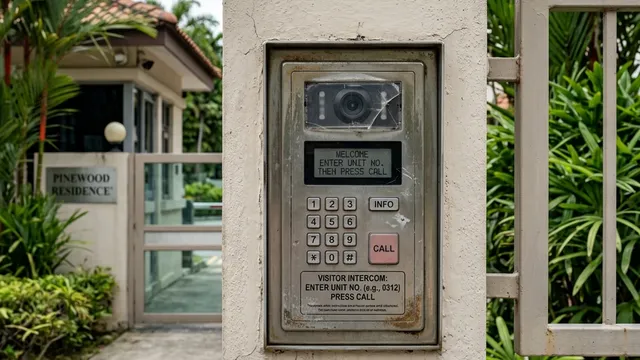
One of the most common conversations we have with MCST councils begins the same way: the system is old, but it is still working. Then we ask a few questions. How many units have faulty handsets that residents have stopped reporting because nothing happens? How many residents regularly miss visitor calls because the audio quality has degraded below the point of usefulness? How often are spare parts being sourced, and from where? How many workarounds; guards noting down which units cannot be reached, managing agents maintaining a list of known faults; have quietly become normal operating procedure?
The answers usually paint a different picture from "still working." The reality is that many condominium intercom systems continue operating long after they have reached the end of their practical life. Not because they are performing well, but because everyone involved has learned to work around the problems. The guards know which units cannot be reached by intercom and use their mobile phones instead. Residents know which handsets are unreliable and leave the front entrance unlocked when they are expecting a visitor. The managing agent knows which components cannot be replaced and authorises temporary fixes that address the symptom without touching the cause. The system survives. But that is not the same thing as working properly, and the distinction matters, particularly for councils with a duty of care to residents.
KEY POINT
The gap between "still operating" and "operating properly" is easy to overlook when everyone involved has adapted to its limitations. An honest assessment asks not whether the system functions, but whether it is delivering the security and resident experience it was installed to provide.
Most Intercom Upgrades Start With Complaints
Technology rarely drives an intercom replacement at the estate level. Residents do. The progression follows a recognisable pattern. The first warning signs appear as isolated incidents; a handset stops working in one block, a visitor call fails to connect on a particular floor, an audio problem develops at one of the entrance panels. Each incident is addressed individually, reported to the managing agent, passed to the maintenance contractor, and repaired or patched. The council logs it, closes it, and moves on.
Then another complaint appears. And another. The repairs become more frequent. The same units generate repeated complaints. The response time from the contractor lengthens as the faults become harder to fix with available parts. Individual incidents that were previously resolved in days now take longer. Residents who reported faults and received prompt repairs stop reporting them, having concluded that the system is simply unreliable and nothing will permanently fix it.
In our experience, once intercom issues appear consistently in council meeting minutes, management reports, or AGM discussions rather than as isolated maintenance tickets, the estate is approaching a decision point whether or not it recognises it as such. The technology may still be technically functional. Resident confidence in the system is not. And resident confidence is what determines whether the system is actually serving its purpose.
KEY POINT
Track complaint volume as a metric alongside fault rate. A rising complaint pattern; even when individual faults are being resolved; indicates eroding resident confidence that repair activity alone will not reverse.
Warning Signs That an Upgrade Is Approaching
| Warning Sign | What It Means | Recommended Action |
|---|---|---|
| Residents stop reporting faults | They have lost confidence that reporting makes a difference | Commission a full system assessment |
| Guards use mobile phones instead of the intercom | Operational workarounds have replaced system function | Review how many units are effectively unreachable |
| Same units generate repeated complaints | Symptom-level repairs are not addressing the root cause | Request a root-cause infrastructure review |
| Spare parts are becoming harder to source | Manufacturer support has ended or stock is depleted | Begin upgrade planning before the next failure |
| Intercom appears in AGM discussions | Resident frustration has reached formal governance level | Present upgrade options at the next council meeting |
| Maintenance costs are rising annually | Each repair is more complex and expensive than the last | Model repair cost trajectory against upgrade cost |
The Spare Parts Problem
Every security system eventually reaches a stage where finding replacement components becomes difficult. For condominium intercom systems, this typically happens in a predictable sequence. Initially, the maintenance contractor sources replacement handsets and panels from existing stock. When that runs low, they approach the distributor, who may still have inventory. When distributor stock is exhausted, the search extends to other contractors who may have salvaged components from decommissioned estates. Eventually, the answer is that the part is no longer available from any source.
In Singapore's condominium market, this situation is more common than councils often anticipate. Proprietary intercom systems installed in the late 2000s or early 2010s; during the significant wave of residential development in that period; are now reaching the age where manufacturer support has ended and components have left the supply chain entirely. A system that was correctly maintained and professionally installed can still reach this point simply because time has passed and the manufacturer has moved on to different product generations.
The consequences are immediate and financial. When spare parts are available, a faulty handset is a straightforward repair at modest cost. When spare parts are unavailable, the same fault becomes a conversation about whether to replace that unit with a different product, whether that product is compatible with the existing infrastructure, and whether compatibility cannot be achieved without a broader upgrade. What was a repair ticket becomes a capital expenditure discussion, and the council finds itself making an unplanned upgrade decision under pressure rather than a planned one at the right time.
KEY POINT
Ask your maintenance contractor at each annual review whether spare parts for your intercom system are still readily available. If the answer is becoming less certain, that is the right time to plan a proactive upgrade rather than wait for a component shortage to force an urgent decision.
The Problem Is Usually Bigger Than the Handset
When a condominium intercom fault is reported, the visible component; the handset inside the residential unit; is usually what the council focuses on. It is the part the resident sees, the part that generates the complaint, and the part that is most tangibly associated with the failure. But the handset is rarely where the root cause lies.
Condominium intercom systems are built around central infrastructure that is far less visible than the handsets it supports. Controllers that manage call routing across hundreds of units, power supply units that distribute current through the building's riser cabling, distribution frames that connect the central system to individual floors, and the communication architecture that ties the guard house panels to the residential handsets; all of these components age alongside the handsets but receive far less attention because they are out of sight in comms rooms and cable risers. When the central controller begins to degrade, the symptoms appear at the handsets; intermittent calls, audio quality issues, random failures in specific zones; because that is where the resident notices the effect.
Replacing individual faulty handsets in this situation is the right short-term response but an insufficient long-term one. It addresses the symptom without acknowledging the infrastructure that is producing it. A proper system assessment looks at the entire architecture; central equipment, power distribution, riser cabling condition, and panel hardware, not just the component that generated the most recent ticket.
KEY POINT
Request a full infrastructure assessment from your contractor rather than a handset-level fault report. If the central equipment is ageing significantly, the cost trajectory of continued individual repairs will exceed a planned upgrade within a few years.
What Residents Expect Today

Resident expectations for condominium intercom systems have changed significantly over the past decade, and they continue to evolve. The baseline expectation when most of Singapore's existing condominium intercom systems were installed was audio communication, basic visual verification of the visitor at the entrance, and a door release button in the apartment. A system that delivered those three functions reliably was considered adequate, and by the standards of that era, it was.
Today's residents arrive at their condominium having used video calling, app-based access systems, and remote management tools in other contexts. Many live in households where both adults work full-time and the apartment is empty for much of the day. They expect to receive visitor calls on their smartphone regardless of where they are, to see who is at the entrance before deciding whether to grant access, and to manage deliveries and contractors remotely without relying on a security guard as an intermediary. For residents who have moved from a newer development or from a property with a modern intercom system, the comparison is unavoidable.
The expectation gap is often larger than the technology gap. An older system that is technically still functioning may feel significantly inadequate to residents who experience the limitations daily; missed deliveries because nobody answered the handset, contractors who cannot access the estate without a physical escort, visitors who cannot reach a resident who is in the car park rather than in the apartment. These are not edge cases. They are routine frustrations that accumulate into the complaint patterns that eventually reach the council's agenda.
KEY POINT
Resident satisfaction surveys that include intercom experience as a specific question often reveal a larger gap between expectation and reality than the fault log suggests. Functional systems can still generate significant resident dissatisfaction when they fail to meet current expectations.
Why Mobile Integration Changes the Conversation
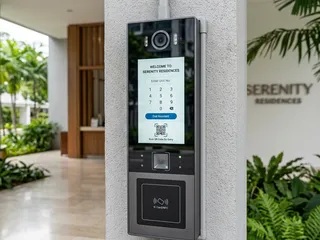
Mobile app integration is the single feature that most consistently changes the council's perspective on an intercom upgrade. In an older system, the fundamental constraint is physical presence: if the resident is not in the apartment, the visitor call goes unanswered. There is no workaround within the system itself; the guard must intervene, the visitor must wait, or access must be denied. For an estate with a significant proportion of units where both residents work during the day, this constraint produces a predictable volume of daily friction at the entrance.
Modern IP intercom systems route the visitor call to the resident's smartphone as a standard function. The resident sees the visitor on video, speaks to them, and releases the entrance gate or lobby door from wherever they are, at the office, at a hawker centre, overseas. Deliveries that would previously require a redelivery or a guard's intervention can be managed directly by the resident in thirty seconds. Contractors can be granted access without the resident needing to be physically present. Visitors can reach residents who have stepped out briefly without the guard having to make a phone call.
For councils considering the case for an upgrade, this capability translates directly into a reduction in guard workload at the entrance, a reduction in resident complaints about missed visitors, and an improvement in the resident experience that is immediately noticeable from the first day of operation. It is also the feature that residents who have experienced it in other buildings most frequently request when their own estate's system is under review.
KEY POINT
Mobile integration does not just improve resident convenience; it reduces operational burden on security staff and reduces the volume of access management that currently requires human intervention at the guard post.
The Biggest Misconception About the Upgrade
The objection we hear most frequently from councils when an intercom upgrade is first discussed is that it will require re-cabling every apartment in the estate. For a development of several hundred units, the prospect of accessing each apartment to run new cable is understandably daunting, in terms of cost, resident disruption, and the practical challenge of coordinating access to occupied units.
In most projects, this concern turns out to be overstated. Modern IP intercom systems are designed with the reality of Singapore's existing condominium cabling infrastructure in mind. The principal work in a typical upgrade involves the visitor call panels at the estate entrances and lobbies, the network infrastructure in the comms rooms, the central management system, and the guard house equipment. The connection to residential units in many installations can be achieved through the building's existing structured cabling or through wireless connectivity, without requiring new cable runs to every apartment. Residents typically receive a new handset or a software application on their existing smartphone rather than a tradesperson at their door with a drill.
Every estate is different, and the specific cabling situation should be assessed rather than assumed. But councils that have deferred an upgrade decision based on the assumption that it inevitably involves a full re-cable of every unit should seek an assessment before accepting that assumption, in many cases, the disruption is significantly less than anticipated.
PLANNING POINT
Commission a cabling assessment before forming a view on upgrade feasibility. The condition and type of existing riser and distribution cabling significantly affects the scope and cost of the project, and the answer is often more favourable than councils expect.
The Real Question Is Not When the System Fails
The question most MCST councils ask is whether they can wait another year. In technical terms, the answer is often yes; a system that has been functioning with workarounds for five years can usually continue doing so for another twelve months. The more useful question is what the estate gains by waiting.
If complaint volumes continue to rise and resident satisfaction continues to decline, waiting produces no benefit; it simply defers the upgrade while accumulating the reputational and operational cost of a system that is visibly inadequate. If spare parts are becoming harder to source, each month of delay increases the probability that the next failure will force an emergency decision rather than a planned one. If maintenance costs are rising as faults become harder to resolve cheaply, the financial case for continuing to repair rather than replace weakens with each passing cycle. At some point, the estate stops saving money by deferring. It starts accumulating frustration, operational risk, and eventual cost, at a point where the decision will be made under pressure rather than on the council's preferred timeline.
KEY POINT
The right time to upgrade is when the assessment is favourable and the council has the planning capacity to manage the project well, not when a failure forces an urgent decision. Planned upgrades consistently produce better outcomes than reactive ones.
Beyond the Intercom: The Resident Experience Platform
One of the observations we share with councils that are approaching an upgrade decision is that the intercom is rarely the only thing that changes. Once an estate moves to a modern IP-based intercom platform, the underlying network and management infrastructure supports a range of capabilities that older proprietary systems never could.
Visitor management becomes significantly more capable; QR-code visitor passes issued by residents directly from their phones, with a digital record of each visitor's entry and exit time. Mobile credentials for access control can be integrated with the same resident app, eliminating the need to manage a separate physical card for amenity access or car park barriers. Lift access integration means that authorised visitors are automatically permitted to access only the floors relevant to their visit rather than the entire building. Facility booking, resident communication, and parcel management can all be delivered through the same platform that handles the intercom function.
We encourage councils to reframe the project as an upgrade to the estate's resident experience platform rather than as an intercom replacement. The intercom is usually the catalyst; the visible problem that brings the project to the agenda. But the investment, approached strategically, delivers capabilities that serve the estate for the next decade rather than simply restoring the function of the last one.
In Short
Most condominium intercom systems are not replaced because they stop working. They are replaced because they stop meeting the expectations of the residents using them, and because the combination of rising complaints, disappearing spare parts, and increasing maintenance costs eventually makes continued deferral the more expensive choice. The challenge for MCST councils is recognising that inflection point before a system failure forces an urgent and poorly planned response. A successful intercom upgrade is not really about replacing hardware. It is about giving the estate a reliable, modern platform that supports resident experience, reduces operational burden on security staff, and provides the capability to manage access, visitors, and estate services in the way that residents in Singapore now expect as standard.
Securevision's View
Most condominium intercom systems are not replaced because they stop working. They are replaced because they stop meeting the expectations of the residents using them, and because the combination of rising complaints, disappearing spare parts, and increasing maintenance costs eventually makes continued deferral the more expensive choice.
The challenge for MCST councils is recognising that inflection point before a system failure forces an urgent and poorly planned response. A successful intercom upgrade is not really about replacing hardware. It is about giving the estate a reliable, modern platform that supports resident experience, reduces operational burden on security staff, and provides the capability to manage access, visitors, and estate services in the way that residents in Singapore now expect as standard.
Frequently Asked Questions
How long should a condominium intercom system last in Singapore?
Most condominium intercom systems can provide between ten and fifteen years of reliable service when properly maintained. Some well-maintained systems from reputable manufacturers continue operating beyond that, though spare parts availability often becomes a limiting factor before the hardware fails outright. The more relevant question is not how long the system can last, but whether it continues to meet resident expectations and whether the supply chain supporting it remains intact.
Should we upgrade if the system is technically still working?
Possibly, and in many cases, yes. Many of the most successful condominium intercom upgrades we manage take place before the system reaches complete failure. When spare parts are becoming harder to source, when complaints are rising consistently, or when maintenance costs are increasing annually, the case for upgrading before failure is often stronger than the case for waiting. A planned upgrade produces significantly better outcomes than one forced by a system failure during the school holiday period or ahead of an AGM.
What is the most reliable warning sign that an upgrade is needed?
In our experience, residents stopping reporting faults is one of the clearest signals. It does not mean the problems have been resolved; it means residents have lost confidence that reporting achieves anything. By the time this happens, the system is usually well past the point where continued maintenance is the right strategy. Rising frequency of intercom issues in AGM discussions or council meeting minutes is the second clearest signal; it indicates that the problem has moved beyond the maintenance team and into formal governance.
How much does a condominium intercom upgrade cost in Singapore?
Costs vary significantly depending on the number of residential units, the number of entrance panels, the condition of existing riser cabling, and the scope of integration required; lift access, visitor management, and access control each add to the project scope. A proper cost assessment requires a site survey before any meaningful figure can be provided. What we can say is that the commonly held assumption that an upgrade inevitably involves full re-cabling to every unit is incorrect in many cases, and the actual cost is often more manageable than councils initially expect.
Will the upgrade require contractors to enter every apartment?
Not necessarily. Modern IP intercom platforms are designed with Singapore's existing condominium infrastructure in mind. In many projects, the principal work takes place at the lobby panels, comms rooms, and guard house equipment. Residents typically receive a new indoor monitor or use a smartphone app, and in many cases the installation at the unit level is straightforward and minimally disruptive. The extent of in-unit work depends on the existing cabling infrastructure, which a site assessment will determine.
Can the existing cabling in our estate be reused?
Often yes, partially. Whether existing riser and distribution cabling can be reused depends on its type, age, condition, and the requirements of the new platform. Some IP intercom systems can operate over existing structured cabling with adapters. Others may require new cable runs in specific locations. A cabling assessment carried out as part of the upgrade planning process will determine what can be retained and what needs replacement, and the answer is frequently more favourable than councils assume before the assessment is done.
How long does a condominium intercom upgrade typically take?
For a typical Singapore condominium of 100 to 300 units, an intercom upgrade generally takes between four and ten weeks from commencement of work to full commissioning, depending on the scope of infrastructure work required and the availability of unit access where needed. Larger developments or projects with significant cabling work may take longer. A detailed programme is normally provided as part of the project specification so the council and managing agent can plan around it.
What happens to lift access during an intercom upgrade?
In most projects, lift access remains operational throughout the upgrade. The integration of the new intercom system with lift controls is typically one of the later commissioning stages, completed after the core intercom infrastructure is working. We coordinate with the lift maintenance contractor to ensure that any temporary changes to lift access are planned in advance and communicated to residents before they take effect.
How do we get AGM approval for an intercom upgrade?
Most successful AGM proposals for intercom upgrades address three questions clearly: what is wrong with the current system, why continued maintenance is no longer the right strategy, and what the upgrade will deliver for residents. Councils that present a complaint history, a spare parts assessment, a projected maintenance cost trajectory, and a summary of resident experience improvements consistently receive stronger support than those presenting only a cost figure. We can assist councils with the technical documentation and specification needed to support a well-prepared AGM proposal.
What is the difference between an IP intercom and an analogue intercom system?
Analogue intercom systems use dedicated proprietary wiring between each door station and indoor handset. They are reliable but difficult to expand, integrate with other systems, or connect to mobile applications. IP intercom systems use standard network cabling and connect through the estate's network infrastructure. This allows visitor calls to be routed to smartphones, enables integration with access control and lift systems, and provides a management platform for visitor records and user permissions. Most new condominium intercom installations in Singapore today use IP-based platforms.
What is the biggest benefit residents notice after an upgrade?
Consistently, it is the ability to receive visitor calls and manage access from their smartphone. For residents who are away from home during the day, which describes most working households in Singapore; the ability to see who is at the entrance, speak to the visitor, and release the door without being physically present is the change they notice and appreciate most immediately. Reduced missed deliveries and reduced dependency on the security guard for routine visitor access are the secondary benefits that become apparent within the first few weeks of operation.
How do we begin the assessment process?
The right starting point is a site assessment that covers the full system; central equipment, riser cabling condition, spare parts status, entrance panel hardware, and guard house infrastructure; rather than a handset-level fault review. This gives the council a clear picture of where the system actually stands, what a planned upgrade would involve, and what the realistic cost and timeline look like. Securevision provides this assessment as part of our proposal process for MCST clients.