- Most existing auto gate motors can be upgraded for smartphone control without replacing the motor; a small WiFi module is added to the existing controller.
- Existing remotes continue working after the upgrade; smartphone control is an additional option, not a replacement.
- If the internet connection fails, the original gate remotes continue to operate independently; you are never locked out because of a connectivity issue.
- Smartphone control allows the gate to be opened remotely for contractors, deliveries, and family members without anyone needing to be physically at home.
- A lost phone can have its gate access revoked immediately; a lost remote cannot.
- For most Singapore landed homes, this is one of the simplest and most immediately useful smart-home upgrades available.
The Remote Always Seems to Fail at the Worst Moment
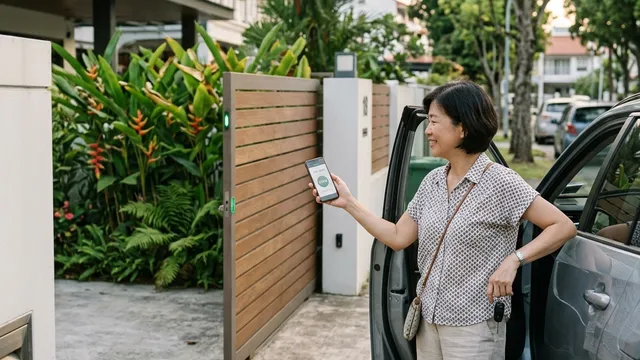
Gate remotes have a particular talent for failing at inconvenient moments. You arrive home in the rain, press the button, and nothing happens. The battery has chosen this moment to die. Or the remote is sitting on the kitchen counter because you left the house in a hurry. Or it is at the bottom of a bag you did not bring with you. Or someone borrowed the car and the remote went with it. Most homeowners with an auto gate have experienced some version of this.
The interesting thing is that most of us carry our smartphones almost everywhere, all day, every day. The phone is used to manage banking, navigation, communication, and dozens of daily tasks; yet we still rely on a separate, single-purpose device just to open the gate. The question worth asking is whether that still needs to be the case, and in most Singapore landed homes with an existing auto gate motor, the answer is that it does not.
KEY POINT
The question is not whether smartphone gate control is technologically possible; it is. The question is whether it would actually make daily life less frustrating. For most households with multiple vehicles, multiple users, and regular visitors, the answer is straightforwardly yes.
You Probably Don't Need a New Motor
The first concern most homeowners raise when smartphone gate control is mentioned is whether the existing motor needs to be replaced. In most cases, it does not. If the motor is functioning correctly, the upgrade works by adding a small WiFi control module to the existing motor controller. The motor remains exactly where it is. The gate operates exactly as it always has. The module connects the controller to the home's WiFi network, and the gate can then be operated through a smartphone app in addition to the original remotes.
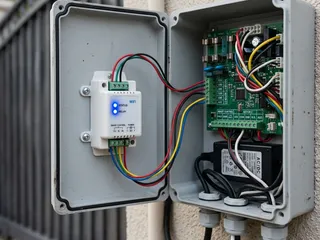
The process is closer to adding a new remote than replacing a system. The module installation typically takes less than an hour and requires no changes to the gate, the motor mounting, or the existing wiring beyond the connection at the controller. For a motor that is in good working condition, this is one of the most straightforward upgrades available; the investment is modest, the disruption is minimal, and the change in daily convenience is immediate.
KEY POINT
Compatibility depends on the motor model and controller type. Before assuming the upgrade is possible, ask a qualified installer to confirm that the specific motor can accept a WiFi module. Most current and recent-generation motors from established manufacturers support this.
Your Existing Remotes Keep Working
A common concern is that adding smartphone control somehow replaces or deactivates the existing remotes. It does not. The original remotes continue operating independently through their existing radio frequency link to the motor controller. The WiFi module provides an additional control path; it does not interfere with or replace the existing one.
In practice, this means the household can use whichever method is most convenient at any given moment. Driving in and reaching for the sun visor remote works as before. Walking in and tapping the app works through the new module. A family member whose phone has been added to the system can use their app. The domestic helper can use a physical remote that has been programmed for their use. All of these operate simultaneously without conflict. Nothing is taken away; only an additional option is added.
KEY POINT
The upgrade is additive, not substitutive. Households that prefer physical remotes for routine use can continue using them while gaining the smartphone option for situations where it is more useful.
Why Homeowners Find It Useful
The obvious benefit is opening the gate from your phone rather than a separate remote. But the more practical value for most Singapore households comes from the scenarios that the original remote was never designed to handle.
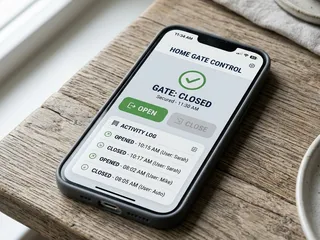
A contractor arrives to carry out work while both adults in the household are at the office. Without smartphone gate control, the options are to leave the gate open, arrange for a neighbour to let them in, or ask someone to come home to open it. With smartphone control, the resident receives a message that the contractor has arrived, opens the gate remotely from the office, and the contractor can access the property without anyone needing to leave work. The gate can be closed again once the contractor confirms they are inside.
Delivery management works similarly. Singapore's parcel delivery volumes have grown considerably, and most deliveries arrive during working hours when the household is out. A delivery that requires access to the compound; larger parcels, grocery deliveries, furniture; can be managed directly from the resident's phone without requiring the driver to leave and reattempt or to leave the parcel with a neighbour.
For households with multiple family members who each use the gate regularly, the app-based approach also simplifies access management. Rather than programming and distributing additional physical remotes, family members can be added to the system through the app. If a remote is lost or a household member's circumstances change, removing access through the app is immediate; no need to reprogram the controller or replace the remote.
KEY POINT
The most practical value is not replacing the daily remote; it is handling the situations the remote was never designed for: granting access when you are not home, managing deliveries, and giving temporary access to specific people without issuing a physical credential.
What Happens If the Internet Goes Down?
This is a reasonable concern and worth addressing directly. Smartphone gate control depends on the home's WiFi network and, for remote access from outside the property, on a working internet connection. If the internet connection fails, the smartphone app will not be able to communicate with the gate module.
The gate does not stop working. The original remotes continue operating through their direct radio frequency link to the motor controller, which does not require the internet or the WiFi module to function. The motor itself is unaffected. The WiFi module is an additional convenience layer sitting alongside the existing control system; it is not replacing the core operation of the gate. During an internet outage, the gate reverts to operating exactly as it did before the upgrade.
Singapore's residential internet infrastructure is generally reliable, and extended outages are infrequent. But for homeowners who want complete assurance that the gate will always be operable regardless of connectivity, the continued operation of the physical remotes provides that guarantee. The two systems are independent.
KEY POINT
Internet dependency is a genuine consideration but not a dealbreaker. The physical remotes are always the backup, and they are a backup that has been working reliably for years before the upgrade was installed.
Is It Secure?
Connecting anything to the internet raises legitimate security questions, and a gate is a meaningful access point to the property. The practical security of a well-implemented WiFi gate control system is generally good; access is protected by user account credentials, app authentication, and encrypted communication between the phone and the module. Unauthorised access requires compromising the account, not physical proximity to the gate.
The comparison with traditional remotes is relevant here. A lost remote can potentially be used by whoever finds it; there is no authentication, no account, and no way to revoke it remotely without reprogramming the motor controller. A lost phone with gate access can have that access revoked immediately through the account management interface, without any physical intervention at the motor. From a pure access management perspective, a well-secured smartphone app is a more controllable credential than an unaccounted-for physical remote.
As with all connected devices, good account security practices apply; a strong, unique password for the gate control account, and enabling any two-factor authentication the platform offers. These are the same practices that should apply to any account with access to the property.
KEY POINT
A physical remote that has been lost cannot be revoked remotely. A smartphone credential can. For households where remote loss or unauthorised sharing has been a concern, this is a meaningful practical advantage of the app-based approach.
Is This Upgrade Right for Your Home?
This upgrade makes the most sense for households where the gate is opened frequently for people other than the regular residents; contractors, delivery drivers, regular visitors, family members arriving at different times in different vehicles. The more often access needs to be granted remotely or managed across multiple users, the more immediately practical the smartphone control becomes.
For a household where one person is always home, the gate is opened by the same two or three remotes every day, and visitors are infrequent, the upgrade is a modest convenience rather than a meaningful change to daily operations. It still removes the battery and forgotten-remote frustrations, but the case is less compelling than for a household managing regular deliveries, contractors, and multiple access users.
The practical prerequisites are straightforward: the existing motor must be compatible with a WiFi module, and the WiFi coverage at the gate location must be adequate. Both are worth confirming with an installer before committing. Where both conditions are met, this is genuinely one of the simpler and more immediately useful upgrades available for a Singapore landed home.
Securevision Verdict
One thing I have observed consistently is that homeowners do not want more technology for its own sake. They want fewer frustrations. A WiFi gate upgrade is not really about technology; it is about removing the specific frustrations that a physical remote creates: the dead battery at the wrong moment, the remote left behind, the visitor who cannot get in because nobody is home.
The motor stays the same. The gate stays the same. The existing remotes keep working. The only thing that changes is that your phone becomes another way to manage the gate; one that works from anywhere, can be shared with family members without issuing hardware, and can be revoked immediately if circumstances change. For most Singapore landed homes with an existing auto gate, that is a straightforward improvement. And once people get used to it, they rarely want to go back.
In Short
The gate remote is one of the most complained-about objects in any home with an auto gate; lost, flat battery, broken, left in the wrong car. The smartphone alternative solves these problems without replacing the motor, without major installation work, and without removing the existing remotes. It is an incremental improvement to an already-functioning system, not a replacement. For most Singapore homeowners, the decision is not whether to add smartphone control but whether to add it now or wait until the next time a remote fails at an inconvenient moment.

Frequently asked questions
Can I control my auto gate from my smartphone?
Yes. A WiFi or GSM module connected to the gate motor's control board allows the gate to be operated through a smartphone app. This adds remote open and close capability from anywhere with an internet connection, without replacing the existing motor or removing the physical remote controls. Most gate systems can be upgraded with a compatible module regardless of the motor brand.
Do I need to replace my auto gate motor to get smartphone control?
No. Smartphone control is added through a module that connects to the existing gate motor's control board; the motor itself is unchanged. As long as the motor and control board are in working condition, smartphone integration can typically be added without any motor replacement. Your installer should confirm compatibility between the proposed module and your specific motor brand and model.
Will my existing gate remotes still work after adding smartphone control?
Yes. The smartphone module adds an additional control input to the gate system; it does not replace or disable the existing remote receivers. All existing remote controls continue to function as before. Smartphone and remote control operate independently and can be used interchangeably.
What happens to smartphone gate control when the internet goes down?
If the home internet connection is unavailable, smartphone control through a WiFi module will not function. Physical remote controls continue to work regardless of internet status. For a GSM module, control through the mobile network is available even if the home broadband is down. For properties where internet reliability is a concern, a GSM module provides more resilient remote access than a WiFi-only solution.
Is smartphone gate control secure?
Reputable smartphone gate control systems use encrypted communication between the app and the module. The app should require authentication; a password or biometric, to prevent unauthorised access. Confirm with your installer that the proposed module uses encrypted communication and that the app supports two-factor authentication or equivalent security. Avoid modules that use simple unencrypted HTTP commands.
Can I share gate access with family members through the app?
Most smartphone gate control platforms support multiple user accounts, allowing different family members to control the gate independently through their own phones. Some platforms also support temporary access; granting a contractor or visitor the ability to open the gate for a defined period. Check the specific platform's user management features before committing to a module.
Can I see who opened the gate and when?
Yes; most smartphone gate control platforms maintain an access log showing which user opened or closed the gate and at what time. This provides a simple audit trail that physical remote controls cannot match. The log is accessible through the app and can be reviewed at any time.
What is the difference between a WiFi and a GSM gate module?
A WiFi module connects to the home broadband network and transmits commands to the app over the internet. A GSM module uses the mobile data network and includes a SIM card, providing remote access independently of the home broadband connection. WiFi modules are typically lower cost; GSM modules provide more resilient connectivity. Some modules support both WiFi and GSM simultaneously.
How much does it cost to add smartphone control to an existing auto gate?
The cost depends on the module specification and the complexity of integration with the existing motor control board. A basic WiFi module installation for a standard residential gate typically costs between $200 and $500 installed, depending on the module brand and the installer. GSM modules with SIM plans add ongoing subscription costs. Contact us for a quote based on your specific gate motor and installation.
Who should install a smartphone gate control module?
A qualified gate motor installer or security system integrator can install a smartphone gate control module. The installer should be familiar with the specific motor brand installed, as the wiring integration varies between manufacturers. Confirm that the installer will test the full system, including smartphone open, close, and status; before completing the installation.