- Both RFID and LPR can automate vehicle access reliably; the meaningful difference is what the operational model looks like over the following ten years.
- RFID identifies a tag attached to the vehicle. LPR identifies the vehicle itself. That distinction changes everything about how access is managed.
- RFID requires ongoing credential management; issuing, recording, replacing, and collecting tags across hundreds of residents over many years.
- LPR eliminates the physical credential entirely. When a resident changes their car, the update is a database change rather than a physical exchange.
- Visitor management is significantly simpler with LPR; the visitor's licence plate is pre-registered by the resident, and the barrier opens automatically on arrival without any guard intervention.
- LPR performance depends on installation design and camera positioning, not just camera specification. The solution design matters as much as the hardware.
Both Systems Are Trying to Answer One Question
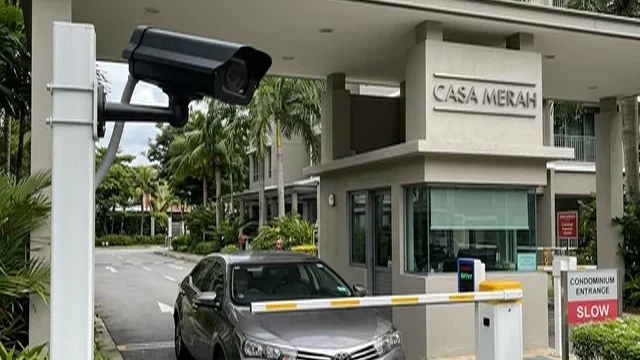
Every vehicle access system at a condominium barrier is trying to answer one question: is this vehicle allowed to enter? There are two common technologies for answering that question in Singapore's condominium market. The first is RFID; Radio Frequency Identification, where a tag attached to the vehicle is read by a reader at the barrier. The second is Licence Plate Recognition, or LPR, where a camera reads the vehicle's licence plate and checks it against an approved database.
Both work. Both are widely deployed in Singapore condominiums. Both can automate vehicle entry and exit reliably. The question is not which technology can open a barrier; either can. The question is what the operational model looks like over the following decade: how much administration is required, how visitor management is handled, how residents experience the system when their circumstances change, and what the management office workload actually becomes once the installation is complete and running.
KEY POINT
The hardware decision determines the operational model for the lifetime of the system. Understanding the downstream implications of each approach before committing to the hardware is the most important part of the selection process.
How RFID Works, and Where It Creates Work
RFID does not recognise the vehicle. It recognises the tag. A tag, typically a windscreen sticker with an embedded antenna, or a remote-style fob; is issued to the resident and associated with their parking lot in the system database. When the vehicle approaches the barrier, the reader detects the tag's signal and triggers the barrier to open. The system has no knowledge of the vehicle itself; it only knows that an authorised tag is present.
This model is simple, reliable, and proven. For many years it was the standard approach for Singapore condominium vehicle access, and in many estates it continues to function well. The technology itself is sound. The challenge is not the technology; it is the physical credential management that the technology requires.
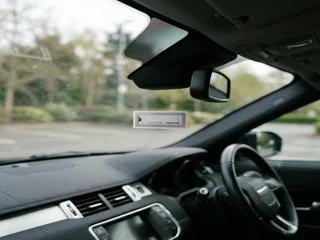
Every tag must be issued when a resident moves in, recorded in the system with the correct parking lot assignment, managed through the resident's tenancy or ownership period, replaced if it is lost or damaged, and collected when the resident leaves. Each of these steps is individually straightforward. Multiplied across a condominium of two or three hundred units with normal resident turnover, typically 10 to 20 percent per year in a Singapore condominium; it represents a continuous administrative workload that accumulates over time. Tags that were never collected from departing residents remain active in the system unless someone specifically deactivates them. Replacement tags issued for lost originals sit alongside the originals if the originals are subsequently found and not deactivated. The database drifts from reality unless actively managed, and active management requires consistent process discipline across every staff change and every resident transition over the lifetime of the system.
KEY POINT
The administrative challenge of RFID is not a technology flaw; it is an inherent characteristic of any physical credential system. Any credential that can be physically handed from one person to another needs to be tracked, and that tracking requires ongoing process discipline.
How LPR Works, and Why the Model Is Different
LPR takes a fundamentally different approach. Instead of identifying a tag associated with the vehicle, it identifies the vehicle directly by reading its licence plate. A camera positioned at the barrier approach captures an image of the front or rear plate, optical character recognition software extracts the plate number, and the system checks that number against the approved vehicle database. If the plate is authorised, the barrier opens. If it is not, the barrier remains closed and the guard is alerted.
There is no tag. No windscreen sticker. No battery. No physical credential attached to the vehicle or issued to the resident. The vehicle's own government-issued licence plate, which the vehicle already carries as a legal requirement; becomes the access credential. This changes the administrative model significantly. When a resident registers a new vehicle, the update is a database entry: add the new plate, remove the old one. There is nothing to issue, nothing to collect, and nothing to track physically.
The same model applies to visitor management, which is where the operational difference between the two systems becomes most apparent in daily practice. A resident expecting a visitor simply registers the visitor's plate number in the system; through a resident portal, a mobile app, or by calling the management office, and when the visitor arrives, the camera reads the plate, the system recognises it as a pre-registered visitor vehicle, and the barrier opens without any guard intervention required.
KEY POINT
The vehicle itself is the credential. This eliminates the entire category of physical credential management; issuance, loss, replacement, collection, and replaces it with database management, which is faster, more reliable, and requires no physical presence.
Visitor Management Is Where LPR Delivers the Most Value
Visitor vehicle management is the area where the operational difference between RFID and LPR is most visible and most consequential for the management office. In an RFID system, a visitor arriving by vehicle presents a problem the technology was not designed to solve; the visitor has no tag, and there is no mechanism for the barrier to recognise their vehicle. The standard response is a manual process at the guardhouse: the visitor identifies themselves, the guard contacts the resident to verify, the guard logs the visit, and the barrier is opened manually. This works, but it adds workload to the guard on every visitor arrival and creates a friction point that residents frequently raise as a quality-of-life concern.
Consider a 300-unit condominium with typical visitor volumes. On a typical weekend, the estate might receive 80 to 120 visitor vehicle entries. In an RFID system, each of those arrivals requires guard intervention; a phone call to the resident, a manual log entry, a manual barrier release. Across the course of a day, the guard post handles this process continuously alongside their other duties. In an LPR system, residents pre-register expected visitor plates through the resident portal. When the visitor arrives, the camera reads the plate, the system confirms the pre-registration, and the barrier opens automatically. The guard is only involved if the plate is not pre-registered or if there is a recognition issue. The difference in guard workload across a busy weekend is substantial.
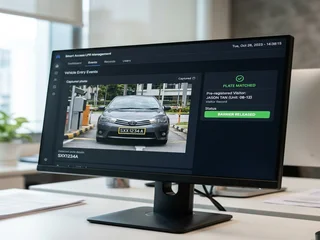
For estates with dedicated function rooms, regular delivery services, or frequent contractor access, the operational saving extends further. Deliveries from regular services can be pre-registered by plate. Contractors with multiple visits can have their vehicles registered for the duration of a project. The management office handles these as database updates rather than manual interventions at the guardhouse.
KEY POINT
Visitor management is the highest-volume manual process in RFID vehicle access systems. LPR pre-registration shifts the work from real-time guardhouse intervention to advance database management; a fundamentally more efficient model at any estate scale.
The Biggest Misconception About LPR Accuracy
A common concern when LPR is first discussed is whether the system will be accurate enough to function reliably in a live condominium environment. The concern is legitimate; an LPR system that frequently misreads plates, requires guard intervention on a significant proportion of vehicles, or struggles with certain lighting conditions would not represent an improvement over RFID. The answer is that accuracy depends almost entirely on the quality of the installation design rather than the camera hardware specification alone.
A well-designed LPR installation positions the camera at the correct height and angle to capture a clean, consistent image of the plate as the vehicle approaches. It accounts for the lighting conditions at that specific location at different times of day and in different weather; Singapore's afternoon sun angles, the shadow cast by the barrier canopy, the headlight glare at night. It specifies the appropriate lens focal length for the distance between the camera and the plate at the point of capture. It ensures that the approach lane geometry presents vehicles to the camera in a consistent orientation. None of these are camera specifications; they are installation design decisions.
A poorly designed LPR installation will underperform regardless of camera quality. A camera specified without regard for the specific site conditions, positioned at a height or angle that produces inconsistent plate images, or installed at a location where lighting is highly variable, will produce a recognition rate that frustrates guards and residents alike. The principle I apply is simple: do not choose an LPR camera; choose an LPR solution, and ensure the solution design addresses the specific physical conditions of the site before the hardware is specified.
KEY POINT
LPR accuracy is an installation design outcome, not a camera specification. Councils evaluating LPR proposals should ask specifically how the installation design addresses the site's lighting conditions, approach geometry, and lane configuration, not only which camera model is being proposed.
When RFID Still Makes Sense
Despite the operational advantages of LPR at scale, RFID remains a valid and often appropriate choice in specific circumstances. For smaller estates with fewer than 50 to 80 parking lots, the administrative overhead of RFID is genuinely manageable; the volume of credential transactions is low enough that the system does not create a significant ongoing workload. For estates where visitor vehicle access is infrequent or is already managed effectively through existing processes, the visitor management advantage of LPR is less compelling.
RFID also has a practical advantage in environments where consistent licence plate recognition may be challenging. Vehicles with non-standard plates, heavily tinted windscreens that obstruct front camera visibility of the plate, or approach lane configurations that make consistent camera positioning difficult are all situations where RFID's tag-based approach is more reliable than LPR. RFID is mature technology with a well-understood performance profile; it works consistently across a wide range of physical conditions without the site-specific design considerations that LPR requires.
The principle is not that LPR is superior to RFID in all situations. The principle is that the choice should be made based on the estate's specific operational priorities and physical characteristics rather than on a general preference for newer technology.
KEY POINT
RFID is a sound choice for smaller estates, estates with low visitor volumes, or sites where physical conditions make LPR installation design challenging. The goal is the right system for the estate, not the most technologically current one.
What Happens With Existing RFID Systems
Many Singapore condominiums installed RFID vehicle access systems ten to fifteen years ago. As those systems age and components become harder to service, councils naturally consider whether to replace like-for-like or to take the opportunity to migrate to LPR. The concern is usually disruption; replacing the entire vehicle access system feels like a major project affecting every resident simultaneously.
In practice, the scope of a migration from RFID to LPR is often less disruptive than councils anticipate. The physical barrier infrastructure; the boom arms, the barrier housings, the loop detectors or pressure pads embedded in the road surface, the power supply and cabling, typically remains in place. The barrier controller may be retained or replaced depending on its condition and compatibility. The principal changes are the addition of LPR cameras at the approach lanes and the replacement or upgrade of the access management software to one that supports plate-based authorisation. There are no windscreen stickers to remove from residents' vehicles, no new credentials to issue, and no physical changes required inside resident units.
The transition period; during which the new database is populated with resident vehicle plates and the system is configured and tested; is the main planning consideration. A well-managed migration typically runs the RFID and LPR systems in parallel during a transition period, allowing residents to continue using their existing tags while the new system is validated. Once the LPR system is confirmed to be performing reliably, the RFID infrastructure is decommissioned and tag collection from residents can proceed at the normal pace of resident turnover rather than as a forced simultaneous exercise.
KEY POINT
A migration from RFID to LPR does not typically require replacing the barrier infrastructure. The principal change is at the identification layer; cameras and software, which is less disruptive and often less expensive than councils initially expect.
The Question Worth Asking Before Choosing
When I discuss vehicle access with MCST councils, I rarely begin with the technology. The more useful starting point is the operational question: which aspect of the current system creates the most work for the management office, and which system would reduce that workload most effectively over the next ten years?
For most mid-size to large Singapore condominiums, the answers point consistently in the same direction. The highest-volume manual process is visitor vehicle management at the guardhouse. The most common resident complaint is the friction of having to call ahead for every visitor arrival. The most persistent administrative drain is credential management across resident turnover. LPR addresses all three of these directly. RFID does not.
For smaller estates or those with specific site characteristics that favour RFID, the calculation may be different. But for any council that is planning a new installation or considering a system upgrade, the question of operational workload over ten years deserves at least as much weight as the hardware cost comparison in the initial proposal.
Securevision Verdict
RFID and LPR are both proven technologies, and the decision between them is not a question of which is more technologically advanced. It is a question of which operational model suits the estate. RFID manages access by managing physical credentials. LPR manages access by recognising vehicles. Both open barriers reliably. The difference is what happens in the management office, at the guardhouse, and in the resident experience over the following decade.
In our experience working with Singapore condominiums, LPR typically delivers its greatest value not through the cameras themselves but through the simplification of the management process; fewer manual interventions, less credential administration, and a visitor management model that works without requiring anyone to be physically present at the barrier. Technology should simplify operations, not create more of them. That principle, applied to vehicle access, is usually what drives the decision.
In Short
LPR and RFID both answer the same question; is this vehicle authorised to enter?, but they answer it in fundamentally different ways, and the operational consequences of that difference are significant over the life of the system. RFID requires every vehicle to carry a tag; LPR requires every vehicle to have a readable number plate. RFID requires someone to manage the tag inventory; LPR requires someone to manage the plate number database. For estates where visitor management is the primary friction point and resident tag administration is the main operational burden, LPR typically delivers the more sustainable solution. For estates where visitor volumes are low and resident coverage is the primary concern, RFID remains a practical and cost-effective choice.

Frequently asked questions
What is LPR and how does it work for condo vehicle access?
LPR (Licence Plate Recognition) uses cameras and image processing software to read vehicle number plates automatically. When a vehicle approaches the barrier, the camera captures the plate number, the software looks it up against an authorised vehicle database, and the barrier opens automatically if the vehicle is authorised. No physical tag or card is required in the vehicle.
What is RFID vehicle access and how does it work?
RFID vehicle access uses a radio frequency tag mounted in or on the vehicle that communicates with an antenna at the estate entrance. When an authorised vehicle approaches, the tag is detected and the barrier opens automatically. The system does not read or verify the vehicle's number plate; it identifies the tag regardless of which vehicle it is in.
What is the main practical difference between LPR and RFID for residents?
With RFID, residents must ensure their tag is fitted and working in every vehicle they wish to use for authorised access. With LPR, residents simply have their number plate registered in the system; no tag is required and the system works with any vehicle associated with the registered plate. LPR eliminates the tag management burden for residents but requires accurate number plate data in the system database.
How does visitor management differ between LPR and RFID systems?
RFID requires visitors to be issued a temporary tag at the guardhouse, which must be returned on exit. LPR can authorise visitor vehicles by entering their number plate; either by pre-registration through a resident app or manually at the guardhouse, and the visitor's vehicle is recognised automatically. LPR visitor management scales more easily and eliminates the physical tag inventory and recovery process.
What is the biggest misconception about LPR accuracy?
The most common misconception is that LPR will fail on dirty, damaged, or partially obscured plates. Modern LPR systems using AI-based recognition perform well even on imperfect plates. Accuracy depends far more on camera placement, lighting conditions, and the speed at which vehicles approach the camera than on plate condition. A well-installed LPR system achieves consistently high recognition rates under normal Singapore conditions.
When does RFID still make more sense than LPR?
RFID may be more appropriate when: the estate has a small, stable resident population with few visitor vehicles; the budget for the initial system is limited; the existing infrastructure is already wired for RFID and the system is working well; or the estate's specific configuration makes optimal LPR camera placement impractical. For smaller estates where visitor volumes are low, the operational advantages of LPR may not justify the higher system cost.
Can an estate run both LPR and RFID simultaneously?
Yes; hybrid systems that use LPR for number plate recognition alongside RFID for vehicles without readable plates (motorcycles, foreign-registered vehicles) are a practical approach for estates transitioning from RFID to LPR. The two systems can share the same barrier and controller, with the management software handling both credential types.
What happens to existing RFID tags when an estate upgrades to LPR?
Existing RFID tags do not automatically become invalid when LPR is added. A hybrid approach is typically used during the transition; the RFID system remains active, and LPR is added as an additional recognition method. Over time, as the LPR database is populated with resident number plates, reliance on RFID tags reduces. A full transition to LPR-only is possible once the database is complete and residents have been informed.
How long does it take to implement LPR in a condominium?
A typical LPR implementation for a condominium of 200 to 500 units takes four to eight weeks from contract to go-live. This includes camera installation, server setup, database population with resident number plates, staff training, and a parallel-running period where both the old and new systems operate simultaneously to verify performance before the old system is decommissioned.
What ongoing administration does an LPR system require?
LPR requires management of the number plate database; adding new residents and vehicles, updating plates when vehicles change, and removing former residents. This is simpler than RFID tag management because there is no physical inventory to track, but it requires someone responsible for keeping the database current. Most modern LPR platforms support resident self-service registration through an app, reducing the administrative burden on the management office.