- Most mechanical locks rely on technology that has changed very little in over a hundred years, and the key distribution problem they create is the real security vulnerability.
- Keys can be lost, copied, shared, or never returned, and unlike a digital credential, a physical key cannot be remotely revoked.
- Many lock attacks exploit human behaviour; copied keys, unreturned keys, forgotten spares; rather than defeating the lock mechanism itself.
- Digital locks eliminate the key management problem entirely: access is granted or revoked instantly without physically changing anything.
- The audit trail a digital lock provides, who entered, when, which credential; is something a mechanical lock can never deliver.
- The question has changed from "can this lock stop someone?" to "can I control who has access?", and that is a question mechanical locks cannot answer.
The Question I Like to Ask

Whenever I visit a property, I sometimes ask the owner a simple question: how many keys exist for this door? The answer is usually silence. Then they start counting.
One for each adult in the household. One for each child old enough to come home alone. One for the domestic helper. One with the neighbour for emergencies. One with the contractor who fitted the kitchen two years ago. One that went missing sometime last year. And very quickly they realise something; nobody actually knows the full count. That is the first weakness of a mechanical lock. Not the lock itself. The key. Because once a key leaves your possession, you lose control over who can copy it, share it, or keep it.
KEY POINT
The lock itself may be excellent. The security it provides is only as strong as the control you have over every copy of the key that opens it, and in most households and offices, that control is considerably weaker than people assume.
Mechanical Locks Are Built on Trust
For more than a hundred years, mechanical locks have protected homes and businesses around the world, and to be fair, they have done a reasonably good job. The concept is simple: you have a key, the lock recognises the key, the door opens. The problem is that this system assumes the key remains under your control at all times. In the real world, that assumption is rarely justified.
Keys get lost on public transport or in taxis. They get copied by locksmiths during what seemed like a routine errand. They get lent to a family member for one occasion and never returned. They get left with a contractor for a renovation that finished six months ago. They get given to a previous domestic helper who has since been replaced. Each of these situations leaves the lock itself working perfectly; turning smoothly, latching firmly, doing exactly what it was designed to do; while the security it was supposed to provide has already been silently compromised. The lock continues working perfectly. But the security may already be lost.
KEY POINT
A mechanical lock secures a door against people who do not have a key. It provides no security at all against people who do; regardless of whether they were supposed to still have one.
The Real Problem Is Rarely the Lock Mechanism
When people think about lock attacks, they often imagine a burglar carefully picking a cylinder in the middle of the night. The reality is usually far less dramatic. Lock picking requires skill, time, and equipment that most opportunistic criminals do not have or use. The far more common vulnerabilities are the ones that do not require defeating the lock mechanism at all.
A copied key handed to someone who then copied it again. A spare key left under a mat or in a plant pot that was observed being retrieved on one occasion. A former employee who had a key cut during their time with the company and never returned it when they left. A domestic helper who kept a copy after their employment ended. Over the years I have seen businesses change staff, households change helpers, and properties change contractors; yet the locks remained unchanged throughout, because changing locks is inconvenient and the risk feels abstract until something happens.
These are not failures of the lock's mechanical quality. They are failures of key management, and key management is a problem that mechanical locks are structurally incapable of solving, because they have no way to distinguish between an authorised copy and an unauthorised one. If the key fits, the door opens.
KEY POINT
The most common access security failure is not a defeated lock; it is an unrevoked credential. Former employees, former helpers, former contractors who retain physical keys create a persistent vulnerability that only changing the lock eliminates.
What Happens When a Key Goes Missing?
When a mechanical key goes missing, the options are limited and none of them are comfortable. You can decide to hope nobody finds it; a choice that leaves the uncertainty unresolved indefinitely. You can continue using the same lock and accept the risk. You can replace the lock entirely, which means new keys for everyone and the cost of a locksmith visit. You can have the lock re-keyed, which achieves the same result at slightly lower cost but still requires a physical intervention.
Most people delay this decision because it involves time, cost, and disruption, and because the risk feels manageable until it is not. The delay is understandable. The uncertainty it creates is not. With a mechanical lock, there is no way to remotely revoke a missing key. The lock has no intelligence about which key is currently authorised and which one should no longer work. Every copy that was ever cut continues to open that door until the lock itself is changed.
KEY POINT
Every day that passes after a key goes missing without changing the lock is a day of unquantifiable exposure. Most households accept this because the alternative; changing the lock; feels disproportionate. Digital locks eliminate this dilemma entirely.
What Digital Locks Actually Change
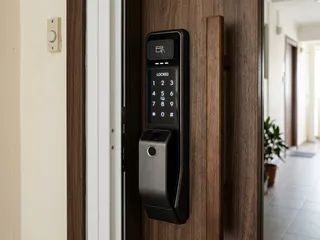
Many people think of digital locks primarily in terms of convenience; fingerprint entry, PIN codes, mobile app control. Those benefits are real. But from a security perspective, the more significant advantage is control. Specifically, the ability to grant and revoke access instantly without any physical change to the lock or the door.
When a domestic helper leaves, their fingerprint is removed from the system immediately, not when someone gets around to it, not after a locksmith visit, immediately. When a contractor finishes a job, their PIN or access credential is deleted. When an employee leaves an office, their card or mobile credential is revoked before they reach the car park. The lock remains exactly where it is. Nothing physical needs to change. The access profile of the lock is updated in minutes rather than days, at no material cost, with no physical disruption to the door or the building.
This represents a fundamentally different security model from the mechanical lock. The mechanical lock is static; it opens for any correctly cut key until someone physically changes it. The digital lock is dynamic; it opens for currently authorised credentials, and that authorisation can be modified at any time, from anywhere, by whoever manages the system. For properties where access frequently changes; households with helpers and contractors, offices with staff turnover, commercial buildings with multiple tenant organisations, that dynamic control is not a convenience feature. It is the core security proposition.
KEY POINT
The security advantage of a digital lock is not that it is harder to defeat mechanically. It is that access can be controlled precisely; granted when needed, revoked when circumstances change, without any physical intervention at the door.
The Audit Trail Changes Everything
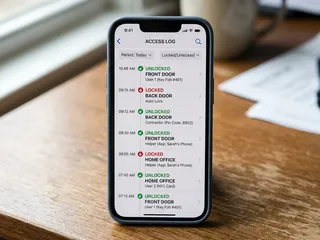
A mechanical lock can tell you that the door is locked or unlocked. It cannot tell you who opened it, when they opened it, or how many times it was opened while you were away. That absence of information is rarely noticed until something prompts the question, and by then, there is nothing to review.
A digital lock maintains a record of every access event. Who entered, which credential was used, the exact date and time. For a household with multiple family members, helpers, and regular contractors, this visibility provides a level of accountability that keys never could. If something is found missing or disturbed after a period when multiple people had access, the audit log narrows the window significantly. For businesses, this becomes an operational tool; reviewing who accessed a restricted room during a discrepancy investigation, confirming a contractor's attendance on site, or identifying the source of an after-hours access event that was not expected.
The audit trail also changes behaviour. People with access to a digital lock know that their entries are recorded. That awareness; even when the log is never actually reviewed; creates accountability that is simply absent when a physical key is the only credential. Keys leave no record. Digital credentials always do.
KEY POINT
The audit trail is not just retrospective evidence; it is prospective accountability. People behave differently when they know their access is recorded. That change in behaviour has security value independent of whether the log is ever actually reviewed.
Singapore's Particular Challenge
Singapore is consistently ranked among the safest countries in the world for residential security. That is a genuine achievement and reflects well on the community. It also creates a complacency that is worth examining honestly.
Many Singapore homes still rely entirely on a mechanical lock at the main door, a gate padlock, and perhaps a window grille. The underlying assumption is that because crime is rare, the risk from inadequate key management is also low. That reasoning conflates frequency with consequence. A break-in in Singapore is rare. The financial and psychological consequences of one are not minor because it happens infrequently. Security should be measured by what happens when something occurs, not by how often something occurs.
There is also the domestic employment context specific to Singapore. Many households employ domestic helpers who live in the property and have ongoing unrestricted physical access. Staff turnover in this arrangement is common, and the management of physical keys through multiple helper transitions, who has a copy, which copies have been returned, whether any copies were made; creates an access control situation that most households have never formally assessed. Digital locks address this specifically and practically, making it straightforward to manage credential transitions without changing the lock each time.
PLANNING POINT
Think about every person who currently has physical access to your property; family, helpers, contractors, neighbours, and how that list has changed over the past three years. The gap between who should have access and who actually does, based on keys still in circulation, is the clearest way to assess whether mechanical-only security is still adequate.
Does This Mean Mechanical Locks Are Useless?
Not at all. A well-specified deadbolt remains an important layer of physical security, and most quality digital locks still include a mechanical locking mechanism behind the electronic credential system. The point is not that mechanical locks are bad; they are not. The point is that they should not be the only layer of security, and that the key management problem they create is a genuine vulnerability that digital alternatives solve directly.
The parallel with car keys is useful. Modern vehicles no longer rely solely on a mechanical key that anyone could copy. Transponders, proximity fobs, and smartphone credentials have replaced or supplemented the mechanical key precisely because the mechanical key alone could not provide adequate control in a world where cars are high-value targets and key management is difficult. Residential and commercial security is following the same trajectory, not because locks have stopped working, but because the world around them has changed and the expectation of what security should provide has evolved.
KEY POINT
Digital and mechanical security are not mutually exclusive. The strongest installations combine both; the mechanical resistance of a quality deadbolt with the access control and audit capability of a digital credential system.
The Question Has Changed
For many years the central security question about a lock was whether it could stop someone from getting in; how resistant it was to picking, drilling, or forced entry. That remains a relevant question. But it is no longer the most important one for most residential and commercial properties.
The more important question today is whether you can control who has access. Not just physically at the door on any given day, but over time, who currently has a valid credential, when was the last change made, who had access during the period when something went wrong. These are questions that mechanical locks simply cannot answer, and they are questions that matter more and more as households and organisations become more complex, more mobile, and more dependent on people who regularly move in and out of their lives.
Securevision Verdict
Mechanical locks have served property owners well for generations. The problem is not that they have stopped working; they work exactly as designed. The problem is that the world around them has changed, and the expectation of what security should provide has evolved beyond what a purely mechanical system can deliver.
Keys can be copied without detection. Access changes frequently in any active household or organisation. People move in and out of our lives and our buildings. Modern security is increasingly about control, accountability, and flexibility; the ability to know precisely who has access, to change that instantly when circumstances change, and to review what actually happened when something goes wrong. Those are capabilities that mechanical locks cannot provide, and they are the capabilities that matter most in Singapore properties today.
In Short
Mechanical locks remain a necessary component of any access security arrangement, but they are no longer sufficient on their own. The problem is not the lock mechanism; it is the key, and everything that happens to keys over the life of a tenancy or an organisation: copying, loss, handover without return, and the impossibility of knowing who has a copy and when. Digital locks and access control systems do not necessarily provide a stronger physical barrier than a good mechanical lock, but they change what happens when a key goes missing, and that changes everything.

Frequently asked questions
Why are mechanical locks no longer enough for modern security?
Mechanical locks provide a physical barrier but cannot track who has access, when access occurred, or whether keys have been copied or not returned. When a key is lost or a staff member leaves without returning a key, the only remedy is to rekey the lock, which is disruptive and expensive. Digital locks and access control systems address these limitations by making credentials auditable and instantly revocable.
What is the difference between a mechanical lock and a digital lock?
A mechanical lock uses a physical key to operate a mechanical cylinder. A digital lock replaces or supplements the mechanical cylinder with an electronic credential; a PIN code, an RFID card, a fingerprint, or a smartphone. The main advantages of digital locks are: no physical key to lose or copy; credentials can be changed or revoked without rekeying; and access events are logged, creating an audit trail.
What is key control and why does it matter?
Key control refers to the management of who holds keys to a property and ensuring that keys are accounted for at all times. Poor key control, where keys are routinely copied, lent, or not returned; erodes physical security regardless of lock quality. Digital access systems replace key control with credential management, which is more reliable because digital credentials cannot be physically duplicated without the system's knowledge.
What happens when a key goes missing in an organisation?
When a key goes missing, the secure response is to rekey the lock; replace the cylinder so the missing key no longer works. In a property with many locks, rekeying is expensive and disruptive. In practice, many organisations do not rekey when a key goes missing, accepting an unknown security exposure rather than incurring the cost. Digital access systems eliminate this problem; a lost card or fob is deactivated in seconds from the management software.
What is an access audit trail and why is it useful?
An access audit trail is a digital log of every entry event, who entered, through which door, and at what time. This log is automatically generated by a card access or digital lock system and can be reviewed when an incident occurs. The audit trail can help establish who was on the premises at a given time, verify whether an access event occurred as reported, and identify patterns of unusual access that might indicate a security concern.
Are digital locks more secure than mechanical locks?
Digital locks are not necessarily more resistant to forced entry than quality mechanical locks; the physical barrier can be comparable. What digital locks provide is better credential management: the ability to revoke access instantly, see who has entered and when, and avoid the key duplication and loss problems that undermine mechanical lock security over time. The security improvement is in management capability, not in barrier strength.
What is Singapore's particular challenge with mechanical lock security?
Singapore's high-density urban environment, high staff turnover in service industries, and the prevalence of HDB and condominium living with shared access points mean that key management is a persistent challenge. The number of people who need access to a typical commercial property; staff, contractors, cleaning crews, maintenance personnel; creates a key inventory that is difficult to control reliably with mechanical systems alone.
Can I upgrade from mechanical locks to digital locks without major renovation?
In most cases, yes. Many digital lock formats are designed as direct replacements for standard door hardware, requiring only the lock replacement without changes to the door frame or structure. Mortise lock replacements, rim locks, and digital cylinders that fit standard European profile keyways are all available and commonly used in Singapore residential and commercial applications.
What types of digital locks are most common in Singapore?
The most common types in Singapore residential applications are: standalone digital locks with PIN and RFID card access (widely used for HDB and condominium unit doors); video door phones with electric strike release (for main entry gates); and for commercial applications, networked card access systems with door controllers and readers that provide central management across multiple doors.
Do I still need a mechanical lock if I have a digital lock?
Most digital locks include a mechanical key override as a backup, for power failure or system fault. This is an appropriate design. The mechanical key in this context is an emergency backup, not the primary access method, and the number of keys in circulation is much smaller and more controlled. The combination of digital primary access with mechanical backup provides both modern credential management and resilience against power or system failure.