- Motion detectors have evolved significantly over the last fifty years, from simple ultrasonic units to intelligent sensors with advanced signal processing.
- Early motion detectors were prone to false alarms and environmental interference. Modern ones are significantly more capable of distinguishing genuine intrusions.
- Features such as pet immunity, dual-technology sensing and cross-zoning have dramatically improved reliability in real-world environments.
- A detector that still functions is not the same as a detector that performs as well as current technology allows.
- Upgrading an alarm panel without upgrading ageing detectors may limit the improvement in overall system reliability.
- The goal of detector technology has never changed; detect the intruder, ignore everything else. Getting closer to that goal has taken decades of innovation.
"My Detector Still Works. Why Should I Replace It?"
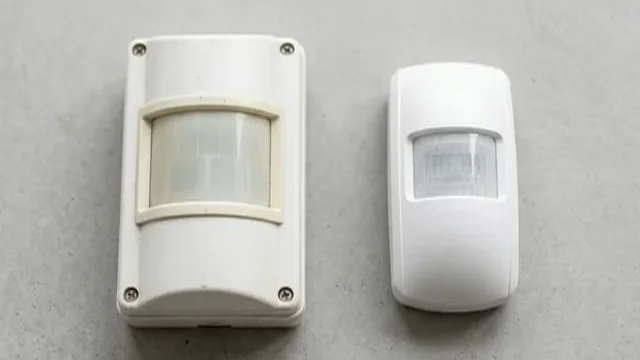
This is a question I hear quite often. A homeowner decides to upgrade an ageing alarm system. The alarm panel is replaced. The keypad is replaced. The mobile app is added. Then I recommend replacing the motion detectors, and the response is usually some version of: why? They still work.
In many cases the homeowner is right. The detector may still be functioning. But the real question is not whether it works. The real question is whether it performs as well as what is available today. For detectors more than ten years old, the answer is usually no, and the gap matters more than most people realise.
This article picks up where the previous article on false alarm causes left off. Understanding why modern detectors are better helps answer the question of when replacement is actually worth doing.
KEY POINT
A detector that still triggers an alarm is not the same as a detector that triggers the right alarms. The difference is in how well the sensor distinguishes a genuine intrusion from an environmental disturbance, and that capability has improved substantially over the last two decades.
The Challenge That Has Never Changed
Today's motion detectors are the result of more than fifty years of development. The objective has always been the same: detect intruders, avoid false alarms.
That sounds simple. In reality, it is surprisingly difficult. A detector must be sensitive enough to catch a genuine intruder while ignoring sunlight, airflow, temperature changes, pets, and every other environmental variable present in a real property. The history of detector technology is largely a history of manufacturers getting progressively better at solving that problem.
KEY POINT
The fundamental challenge of motion detection has not changed. What has changed is how much processing power and intelligence manufacturers can pack into a device the size of a small box on a wall, and how much better that intelligence has become at making the right call.
The Early Days: Ultrasonic Detection
Some of the earliest commercial motion detectors used ultrasonic technology. The detector filled a room with high-frequency sound waves. When movement disrupted those waves, the detector triggered an alarm.
The concept worked. The problem was that it reacted to many things that were not burglars. Moving curtains, air currents, and environmental changes were enough to trigger an activation. These early systems were an important first step in the development of intrusion detection, but they were far from reliable in real-world conditions.
KEY POINT
Ultrasonic detectors filled a room with sound and waited to see if anything disturbed it. The problem was that plenty of non-human things disturb sound waves, which is why a better approach was needed.
The PIR Revolution
The biggest breakthrough came with the introduction of Passive Infrared technology; PIR. Instead of filling a room with sound and waiting for a disturbance, PIR detectors look for changes in infrared energy, which is essentially heat. When a person walks across the detection pattern, the detector sees the heat change and generates an alarm.
This was a major improvement. False alarms were reduced. Reliability improved. PIR detectors quickly became the industry standard and remain one of the most widely used forms of intrusion detection today. The technology proved durable because its underlying principle is sound; human beings give off heat, and that heat is detectable.
KEY POINT
PIR technology was transformative because it detected something specific to people; body heat; rather than detecting any disturbance in a room. That specificity made it far more reliable than what came before.
Why Older PIR Detectors Sometimes Struggled
PIR detectors were a major improvement, but they still had limitations. The detector could see a change in heat, but it could not always determine why the change occurred. Sudden sunlight through a window, heat reflections from a sun-heated floor, air-conditioning effects on room temperature, and broader environmental temperature swings could all trigger activations in older, less sophisticated units.
The detector was doing exactly what it was designed to do. The challenge was that its design could not always distinguish a person from everything else that creates a heat change. That limitation drove the next wave of innovation.
KEY POINT
The limitation of early PIR was not sensitivity; it was specificity. The detector was good at detecting heat changes. It was less good at knowing whether that heat change was caused by a person or by the afternoon sun.
Requiring Confirmation Before Generating an Alarm
One of the first improvements was straightforward in concept. Instead of generating an alarm immediately after detecting a single heat change, some detectors required multiple detections within a short time window before reporting an intrusion.
In simple terms, the detector would confirm before committing. A single heat pulse; possibly caused by a gust of warm air or a beam of sunlight; would not be enough. The detector looked for a pattern consistent with someone moving across the detection field rather than a momentary disturbance. This approach eliminated many nuisance alarms caused by brief environmental changes and was one of the first examples of intelligence being deliberately built into detector hardware.
KEY POINT
Requiring multiple confirmations before alarming was a simple but effective improvement. A person walking through a room creates a sustained pattern of heat changes. A beam of sunlight or a gust of air typically does not. That difference is what the detector learned to use.
Dual-Technology Detectors Changed the Game
The next major breakthrough was dual-technology detection. Instead of relying on a single sensing method, manufacturers combined two independent technologies in one unit, typically PIR and microwave. The detector would only generate an alarm when both technologies agreed that something was happening.
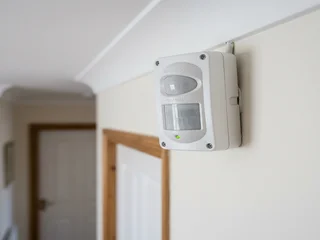
Think of it as requiring two independent witnesses before making a decision. PIR alone might be triggered by a heat change. Microwave alone might react to vibration or a passing vehicle. But both triggering simultaneously, within the same time window, is a much stronger indication that something is actually moving in the room.
This dramatically reduced false alarms and made detectors viable in environments where single-technology PIR had struggled; commercial kitchens, spaces with large temperature swings, and areas with direct sun exposure. Many commercial installations continue to use dual-technology detectors today for exactly this reason.
DESIGN RULE
Dual-technology detectors are not a universal upgrade; they are the right choice for specific environments where single-technology PIR cannot reliably distinguish the target from the background. Used in the right zones, they are highly effective. Used everywhere as a blanket upgrade, they add cost without proportionate benefit.
Modern Detectors Are Surprisingly Intelligent
Today's detectors contain far more processing power than most people realise. Where an older detector applied a simple threshold, if the heat change exceeds X, trigger; modern sensors analyse the full character of what they are detecting. Movement patterns, the size and temperature signature of the target, the direction and speed of travel, and the broader signal characteristics all contribute to the detector's decision.
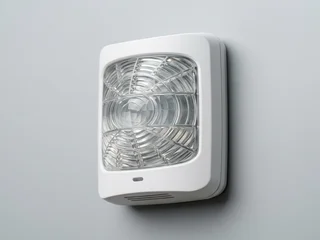
Some detectors can ignore animals below a specified weight or height threshold; pet immunity. Others apply signal processing algorithms that have been trained on large datasets of genuine intrusion events and common false alarm triggers, allowing them to make more accurate judgements in ambiguous situations. Leading manufacturers have spent decades refining these capabilities, with the consistent focus of reducing false alarms without reducing detection performance.
The practical result is a detector that is significantly harder to fool by accident than its predecessors, and significantly better at catching the events it was designed to catch.
KEY POINT
The intelligence built into modern detectors is not a marketing claim; it is the accumulated result of decades of engineering investment in the specific problem of distinguishing people from everything else in a real-world environment.
Alarm Panels Have Become Smarter Too
The detectors are not the only part of the system that has become smarter. Modern alarm panels add another layer of intelligence at the system level that older panels simply could not provide.
Cross-zoning is one example. Instead of generating an alarm from a single detector activation, the panel can be programmed to require confirmation from two detectors in related zones within a specified time window; a Living Room PIR followed by a Staircase PIR, for instance, or a Ground Floor PIR followed by a Dining Area PIR. That sequential pattern is consistent with someone moving through a property. A single activation in one zone, with nothing following it, may not be.
Combined with the improved accuracy of modern detectors, cross-zoning at the panel level produces a system that is substantially more reliable than the sum of its individual components. Fewer nuisance alarms. Greater confidence when the alarm does fire.
DESIGN RULE
Cross-zoning is a configuration decision, not a hardware feature. It requires thought about how an intruder would actually move through the property, which zones would they trigger, in what order, in what time window. Getting this right during installation takes experience. Getting it wrong reduces both security and reliability.
When to Consider Replacing Older Detectors
This brings us back to the original question. A detector that still works is not the same as a detector that performs as well as current technology allows. But that does not mean every ageing detector needs immediate replacement.
The practical indicators worth looking at are: how old are the detectors, are they generating recurring false activations, are they single-technology PIR units installed more than ten to fifteen years ago, and has the environment around them changed significantly since installation? If the answer to most of those questions is yes, replacement is likely to produce a meaningful improvement in reliability, not just a newer-looking device on the wall.
When we upgrade an alarm system, we look at the detectors as part of the overall assessment. Sometimes the greatest improvement in system performance comes not from the panel itself but from replacing the sensors connected to it. A modern panel driving ageing detectors is still limited by the weakest link in the chain.
PLANNING POINT
If your alarm system is more than ten years old and has been generating persistent false alarms, the detectors are worth assessing as part of any upgrade. The panel may be serviceable. The sensors feeding it may be the actual source of the problem.
The Goal Has Never Changed
Over the last fifty years, alarm technology has moved from ultrasonic sensors to PIR detectors, through dual-technology units and into today's intelligent analytics-capable devices. The hardware has changed dramatically. The objective has not.
Detect the intruder. Ignore everything else. That has always been the goal. It has taken decades of sustained engineering effort to get meaningfully closer to achieving it, and the gap between what a detector installed in 2005 can do and what one installed in 2025 can do is real, measurable, and relevant to anyone deciding whether to keep or replace their existing sensors.
The best time to assess your detectors is before an incident, not after one. An alarm system that generates false alarms will be ignored. An alarm system that is trusted will be acted on. The difference is often in the quality of the sensors doing the detecting.
Securevision Verdict
Modern motion detectors are smarter, more reliable and far better at reducing false alarms than the detectors installed twenty or thirty years ago. While older detectors may still function, they often lack the intelligence and signal processing found in today's sensors.
This is one reason we frequently recommend assessing detectors as part of any alarm system upgrade, not simply to install newer equipment, but to create a system that performs reliably in the real-world environment it is protecting. A well-specified modern detector in the right location will outperform an older unit in almost every meaningful way. That performance difference is what homeowners and business owners are actually paying for.
In Short
Modern burglar alarm detectors are significantly more capable and reliable than the equipment installed in most homes and businesses across Singapore over the past two decades. The improvements are not cosmetic; they address the fundamental challenges of false alarms and missed detections that defined the limitations of earlier technology. For many older installations, the detectors are the weakest link in an otherwise serviceable system. Updating them is often the single most cost-effective improvement that can be made to an existing alarm installation.

Frequently asked questions
What makes modern burglar alarm detectors better than older ones?
Modern detectors combine multiple sensing technologies, onboard processing, and adaptive algorithms that were not available in earlier equipment. They are significantly better at distinguishing genuine intrusion from environmental false alarm causes; heat sources, insects, air movement, and some can identify the specific characteristic of a human presence rather than simply detecting any movement in the zone.
What is a dual-technology detector?
A dual-technology detector combines PIR (passive infrared) and microwave sensing in a single unit. Both technologies must confirm movement simultaneously before an alarm is raised. This dramatically reduces false alarms because a non-human trigger; a heat source, an insect, a draught; is unlikely to activate both the infrared and microwave sensors simultaneously. Dual-technology detectors are the most common false-alarm mitigation upgrade for problem zones.
What is anti-masking in a burglar alarm detector?
Anti-masking is a feature that detects attempts to blind or cover a detector, such as spraying foam over the lens or placing an object in front of it. The detector generates a tamper alarm when masking is detected, alerting the monitoring centre to a possible attempt to defeat the detection system before an intrusion. Anti-masking is standard in modern commercial-grade detectors.
What is adaptive sensitivity in a modern PIR detector?
Adaptive sensitivity refers to the ability of modern detectors to adjust their sensitivity in real time based on environmental conditions. A detector with adaptive sensitivity can reduce its threshold slightly during periods of high ambient temperature, when the contrast between a person's heat signature and the background is lower, to maintain consistent detection performance. This is handled automatically by the detector's onboard processor.
When should I consider replacing my existing detectors?
Consider replacement when: detectors are generating recurring false alarms that cannot be resolved by repositioning; the detector model is no longer supported with spare parts; the installation environment has changed significantly since the original installation; your installer identifies detectors that are showing signs of deterioration during a service visit; or you are upgrading the panel and want to ensure the entire system is performing to current standards.
Can I keep my existing alarm panel and just upgrade the detectors?
In most cases, yes. Standard alarm detectors use conventional wiring connections that are compatible across panel brands. Replacing detectors with modern equivalents while retaining the existing panel and wiring is a common and cost-effective upgrade approach. Your installer should confirm compatibility between the new detectors and the existing panel before proceeding.
What is ultrasonic detection in alarm systems?
Ultrasonic detection was an early motion detection technology that worked by emitting high-frequency sound waves and detecting changes in the reflected signal caused by movement. It was sensitive to air conditioning, ventilation, and other sources of air movement, which caused high false alarm rates. Ultrasonic detection has been almost entirely superseded by PIR and dual-technology detectors, which are more reliable in typical building environments.
What is the PIR detection zone and how far does it reach?
A standard PIR detector covers a field of view typically described as a cone or curtain pattern; most residential detectors cover a range of 10 to 15 metres and a horizontal angle of 90 to 110 degrees. Longer-range and wider-angle variants are available for larger spaces. The effective detection zone depends on correct mounting height and angle; detector placement should be specified based on the dimensions of the space being covered.
Do modern detectors require less maintenance than older ones?
Modern detectors generally require less corrective maintenance; their improved false alarm rejection means fewer call-outs to investigate spurious activations. However, preventive maintenance remains important: cleaning detector lenses, checking tamper covers, testing detection performance, and confirming correct sensitivity settings should all be part of an annual service inspection regardless of detector age or model.
Are wireless detectors as reliable as wired detectors?
Modern wireless detectors are significantly more reliable than earlier wireless technology; battery life is longer, radio communication is more robust, and supervision features provide real-time confirmation that each detector is communicating with the panel. However, wired detectors remain the preferred choice for permanent installations where cabling is feasible, because they eliminate battery management as a maintenance consideration and are not subject to radio interference.
What should I ask an alarm installer when considering a detector upgrade?
Ask: which specific detector model is being proposed and what are its key specifications? Is the proposed detector compatible with my existing panel without modification? What false alarm mitigation features does it include; dual-technology, adaptive sensitivity, anti-masking? What is the manufacturer's warranty period? Will the installer test the detection zone after installation to confirm performance?