
Choosing a security system is important. Choosing the right contractor is even more important. Most security systems look impressive on the day they are installed. The real test comes months or years later when you need support, expansion, troubleshooting, or replacement parts. This guide will help you evaluate contractors and avoid expensive mistakes before signing a contract.
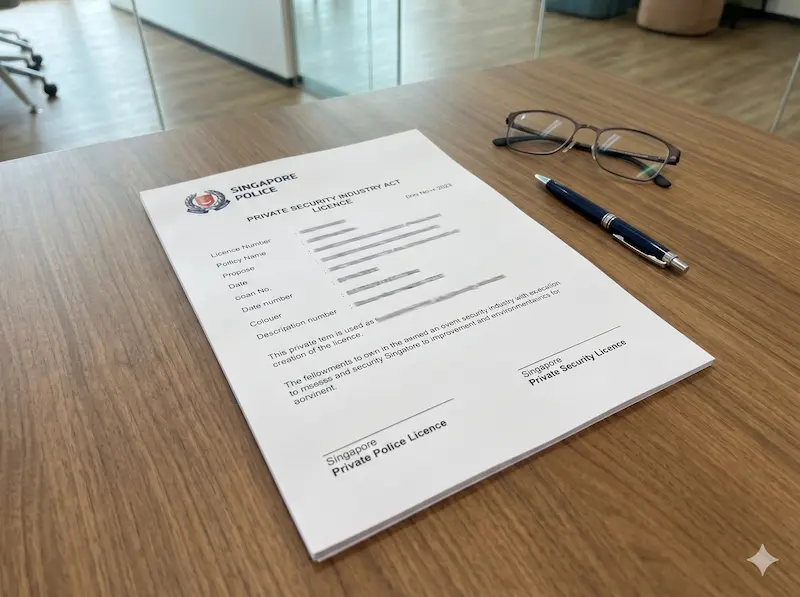
- Licensing is the minimum requirement, not the final qualification. A contractor must hold a valid PLRD licence under the Private Security Industry Act before being permitted to install security systems in Singapore. Always verify before engaging.
- The cheapest quotation is rarely the best value. Two quotations that appear similar in price may differ significantly in equipment specification, installation scope, warranty coverage, and long-term support.
- A proper site assessment before any recommendation is made is one of the clearest signals of a competent contractor. A contractor who proposes a solution without first understanding the site is making assumptions.
- Administrator credentials belong to the owner: not the contractor. A contractor who provides administrator access at handover is not giving away something that belongs to them. They are returning control of the system to its rightful owner. A properly completed handover includes credentials, documentation, user manuals, and user training.
- A security system may remain operational for ten years or more. The quality of the support relationship often matters more than the quality of the installation itself.
- For cloud-managed systems, confirm who owns the software licence and what happens to access and data if the contractor closes or changes direction.
- Cybersecurity is part of the installation. Default passwords on all networked devices must be changed during commissioning. A contractor who does not address this is leaving the system vulnerable.
- The best final question to ask before signing any contract: "If something goes wrong three years from now, would I still feel confident calling this contractor for help?"
Why This Guide Exists

The goal is to help you choose the right contractor: whoever that turns out to be.
Most people buy a security system only a few times in their lives. A contractor, on the other hand, installs security systems every day. That creates an information gap. The contractor knows which questions should be asked. The buyer often does not.
Securevision has been designing and installing security systems across Singapore since 2006, working with homeowners, MCSTs, factories, schools, and commercial properties across more than 2,000 installations. That experience is the basis for everything in this guide.
After more than 35 years in the security industry, we have seen the same situations arise repeatedly: choosing based solely on price, accepting vague quotations, engaging unlicensed contractors, receiving no documentation at handover, discovering years later that the system cannot be expanded. In many cases, the equipment itself was not the problem. The real issue was that the buyer did not have enough information to make a well-informed decision. Most of these situations can be avoided by asking the right questions before work begins.
This guide was written to help homeowners, business owners, facility managers, managing agents, and MCST councils understand what to look for when selecting a security contractor. The goal is not to help you choose Securevision. The goal is to help you choose the right contractor.
1. Verify That the Contractor Is Properly Licensed
Before discussing brands, pricing, or technology, there is one simple check every buyer should make. Is the contractor properly licensed? Many people assume that if a company has a website, an office, and a sales representative, it must be authorised to perform security work. Unfortunately, that is not always the case.
In Singapore, security system companies are required to hold a licence issued by the Police Licensing and Regulatory Department (PLRD) under the Private Security Industry Act (PSIA). This is not a voluntary accreditation: it is a legal requirement. A company installing security systems without a valid PLRD licence is operating outside the law.
While licensing alone does not guarantee quality, it provides an important starting point. Think of it as the minimum requirement rather than the final qualification. A licensed contractor can still provide poor service. An unlicensed contractor immediately raises questions about compliance, accountability, and professionalism. For larger projects, licensing may also be required by consultants, insurers, property managers, or building owners. Securevision holds Police Licence and has maintained its licence since the licensing regime began.
Why Licensing Matters
Licensing does not guarantee a good contractor. However, it does confirm that the company is operating legally and can be held accountable if problems arise. Think of licensing as the starting point rather than the final qualification.
Questions to Ask
Before proceeding with any proposal, ask whether the company is currently licensed, what type of security work they are licensed to perform, and whether they can provide their licence details. PLRD licence details can be verified through the PLRD OneStop portal at police.gov.sg. A professional contractor should have no difficulty answering these questions. If the response is vague or evasive, consider it a warning sign.
2. Evaluate Experience and Track Record
Security systems are not all the same. A contractor who specialises in landed homes may not necessarily have experience with condominiums or factories. Similarly, a contractor who installs CCTV may have limited experience with integrated access control, intercom systems, or visitor management platforms. Experience matters because every environment presents different challenges. The more closely a contractor's experience matches your environment, the more likely they are to anticipate problems before they occur.
Look for Relevant Experience
Ask whether the contractor has completed projects similar to yours: landed homes, HDB developments, condominiums, offices, factories, schools, commercial buildings, or mixed-use developments. The objective is not to find a contractor who has completed the exact same project. The objective is to find one who understands the operational challenges associated with your type of property.
Ask for Examples
Experienced contractors are usually willing to discuss previous projects. Ask for case studies, reference sites, project photographs, or customer testimonials. You are not simply evaluating the finished installation. You are evaluating whether the contractor understands the needs of similar clients.
Experience Matters Most When Problems Arise
Installing equipment is often the easy part. The real test comes later: when a system needs troubleshooting, when multiple technologies need to work together, when existing equipment requires upgrading, or when a manufacturer discontinues a product. This is where experience becomes valuable. Many problems can be resolved quickly by someone who has encountered them before. Without that experience, simple issues can become expensive lessons.
Who Will Actually Do the Work?
It is not uncommon to encounter situations where the company that sold the project is different from the company that actually carried out the installation. In one such case, a property owner experienced problems with a relatively new system and attempted to contact the original contractor. The sales company was still operating: but the installation work had been performed by a subcontractor that was no longer involved. The technicians who understood the system had moved on and documentation was incomplete. A relatively simple issue became difficult and expensive to resolve.
The lesson is not that subcontracting is bad: many successful projects involve subcontractors. The important question is who remains responsible for the system after installation. Before signing a contract, ask who will perform the installation, whether subcontractors will be involved, who provides ongoing support, and who should be contacted if something goes wrong. A contractor does not need to have completed your exact project before. However, they should understand the operational challenges associated with your type of property. The more closely their experience matches your environment, the more likely they are to anticipate problems before they occur rather than discover them after installation has begun.
Experience Is Not Just Years in Business
Many buyers naturally ask how long a company has been operating. It is a reasonable question, but it is often not the most important one.
A contractor who has been in business for twenty years but specialises in small residential jobs may have very limited experience with the operational requirements of a condominium or a factory. A contractor experienced in office installations may not have encountered the integration challenges of a large mixed-use development. A contractor whose work is almost entirely wired CCTV may be less familiar with the wireless access control systems that are now standard in many managed living environments.
A more useful question is: how many projects similar to mine have you completed? Not the exact same project: but the same type of property, the same scale, the same operational environment. Ask for specific examples. Ask what challenges they encountered on those projects and how they resolved them. The quality of those answers tells you more than any number of years in business.
Years in business matter. Relevant experience matters more.
3. Understanding Security Quotations
One of the biggest mistakes buyers make is comparing quotations based solely on the total price. A quotation should explain exactly what is being supplied, installed, and supported. If two quotations differ significantly in price, there is usually a reason. Unfortunately, many buyers never discover that reason until after the project has started.
What Should Be Included?
A professional quotation should clearly identify equipment models, quantities, installation scope, warranty terms, exclusions, and completion timelines. The more specific the quotation, the easier it is to compare competing proposals.
Beware of Generic Descriptions
Descriptions such as "CCTV Camera" or "Door Access System" are usually insufficient. A quotation should identify specific models where possible. Without model numbers, buyers often find themselves comparing prices without understanding what they are actually purchasing.
Clarify What Is Excluded
Many disputes occur because assumptions were made. The customer assumes something is included. The contractor assumes it is excluded. Common exclusions may include network infrastructure, electrical works, civil works, lift contractor interfaces, internet connectivity, and third-party integration costs. Clarifying exclusions before work begins is far easier than resolving disagreements later.
Understand the Payment Terms
Payment terms are an important component of any quotation that many buyers overlook. A professional contractor typically follows a staged payment schedule: a deposit on signing, a progress payment on equipment delivery, and a final payment on completion and sign-off. A contractor who requires full payment upfront before any work begins represents a higher risk. Confirm payment terms before signing.
Clarify How Variations Are Handled
Variation orders: additional charges raised during a project for work not included in the original scope: are a common source of disputes. Before work begins, confirm that any additional work requires written approval from the owner before it is carried out. A contractor who raises verbal variations without written confirmation creates unnecessary risk.
4. Why Three Quotations Can Differ by Thousands of Dollars
Two quotations may differ significantly: often because they are not quoting for the same thing.
One of the most common questions property owners ask is why quotations are so different when everyone appears to be quoting for the same project. The answer is simple: they are often not quoting for the same thing.
Two quotations may both propose eight CCTV cameras. At first glance, they appear similar. However, one may use 8MP cameras while the other uses 2MP cameras. One may include surge protection while the other does not. One may provide annual maintenance while the other does not. One may include user training and documentation while the other does not.
Similarly, two access control quotations may both propose the same number of doors: but one may use older 125kHz proximity cards vulnerable to cloning, while the other specifies modern 13.56MHz encrypted smart cards. The price difference is real. So is the security difference.
The result is that two quotations that appear similar can differ significantly in both price and long-term value. Before comparing prices, compare scope. The objective is not to find the cheapest quotation. The objective is to understand exactly what you are receiving for the money being spent.
5. The Importance of a Proper Site Assessment
A site assessment is often the difference between a system that performs well and one that disappoints. No two properties are identical. The best contractors understand this. Before recommending equipment, they take time to understand the environment, the users, and the operational requirements.
What Should a Site Assessment Include?
Depending on the project, the assessment may include building layout, access routes, lighting conditions, existing infrastructure, network availability, user requirements, and future expansion plans. These factors often influence the final design more than the equipment itself.
Why Site Visits Matter
Many security systems fail because important details were overlooked: CCTV blind spots, poor lighting conditions, doors unsuitable for certain lock types, weak Wi-Fi coverage, insufficient power availability. These issues are often identified during a proper site survey. That is why experienced contractors usually prefer to visit the site before making final recommendations.
Plan Security Alongside Renovation
If a property is undergoing renovation, the site assessment should happen at the planning stage: not after walls and ceilings are closed. The best time to install CCTV cabling, access control wiring, and intercom infrastructure is during renovation, before finishes are completed. A contractor who raises this point proactively is thinking about the owner's long-term interests rather than simply closing the sale.
Be Wary of Instant Solutions
Be cautious if a contractor proposes a complete solution without first understanding your requirements. Good contractors ask questions. They seek to understand the problem before recommending products. The quality of the questions often tells you more about the contractor than the brands they represent.
Design Before Products
A contractor who starts by recommending products before understanding your requirements may be approaching the project in the wrong order. Good contractors usually begin by understanding the problem: what you are trying to protect, how people use the building, what has gone wrong before, what the operational requirements are. The equipment comes later. If the first conversation is about brands and specifications rather than objectives and site conditions, that is worth noting.
The quality of the site assessment often tells you more about the contractor than the equipment they recommend. A contractor who takes time to understand your objectives is more likely to deliver a solution that continues meeting your needs years after the installation is complete.
6. Warning Signs to Watch For
Not every problem is obvious at the beginning of a project. Many problematic projects show warning signs early on. The challenge is that most buyers do not recognise them at the time. One warning sign alone does not necessarily indicate a problem. However, several warning signs together should prompt further questions.
No Site Survey Conducted
A contractor who proposes a solution without first understanding the site may be making assumptions. For larger or more complex installations, assumptions often lead to problems later. If a contractor is unwilling to visit the site, ask how confident they can be that the proposed solution is appropriate.
Vague Quotations
A quotation should clearly describe what is being supplied. If important details are missing, it becomes difficult to compare proposals or hold anyone accountable later. Without model numbers and scope details, you may not know what you are actually purchasing.
Unusually Low Pricing
Unusually low quotations should always be examined carefully. The lowest price is not necessarily a problem: the question is why it is lower. Possible reasons include different equipment specifications, reduced scope, limited support, shorter warranty periods, or missing components. Always understand the reason before making a decision.
Verbal Commitments Not in Writing
A common warning sign is a contractor who makes commitments verbally but does not put them in the written quotation or contract. "We'll include that at no extra charge" or "We can add that later" are common verbal promises that disappear after signing. If a commitment is genuine, it should appear in writing.
Pressure Selling
We have encountered contractors who tell prospective clients that a quoted price is "only valid today" or that "another client is interested in this installation slot." Professional contractors confident in their proposal and their relationship with the client have no need to create artificial urgency. When we see these tactics used against property owners evaluating multiple proposals, it is almost always a sign that the contractor cannot compete on capability and is trying to close before the comparison is complete.
Professional contractors do not pressure buyers into decisions. Be cautious of tactics such as "this price is only valid today" or "we have another client interested in this slot." Pressure tactics often signal that the contractor is more interested in closing the sale than in the right outcome for the client.
Reluctance to Discuss Warranty or Support
A contractor should be willing to explain warranty coverage, response times, support procedures, and maintenance options. If these conversations are avoided or dismissed, consider it a warning sign. The installation may last a few days. The support relationship may last many years.
Refusal to Provide Administrator Access
Administrator credentials are the username and password combination that gives full control of a security system's management interface: the ability to add and remove users, change settings, view logs, and configure the system. These credentials are what allow the owner to manage the system independently of the original contractor. The system belongs to the owner: not the contractor. Administrator credentials should be handed over upon project completion. A contractor who refuses to provide access creates unnecessary dependency and future complications. If this issue arises before the contract is signed, treat it as a significant warning sign.
7. What Happens If the Contractor Goes Out of Business?
Most buyers focus on the installation. Few think about what happens five or ten years later. Unfortunately, businesses change. Companies may close, merge, change ownership, or change direction. If that happens, your security system should still remain supportable.
Why Documentation Matters
Imagine that five years from now you need to add additional cameras, issue new access cards, replace an intercom handset, or update software. If the original contractor is no longer available, another contractor should be able to step in and assist. That becomes much easier when proper documentation exists: including administrator credentials, programming backups, equipment schedules, as-built drawings, and user manuals.
The Cloud Platform Risk
For systems managed through a cloud platform, there is an additional consideration beyond hardware documentation. If the contractor's cloud platform subscription lapses: or if the contractor closes: access to the management software may be affected. Before committing to a cloud-managed system, confirm who owns the software licence, what happens to your data if the platform becomes unavailable, and whether the system can continue operating locally if the cloud connection is lost.
A Common Situation
It is not uncommon to encounter sites where the original contractor is no longer involved and nobody knows how the system was configured. The system itself may still be working. However, something as simple as adding a user, replacing a device, or changing a setting becomes difficult because no documentation exists. Every new contractor must first spend time understanding the system before any actual work can begin. The cost of recovering this information often exceeds the cost of documenting it properly during the original installation.
Questions to Ask Before Signing
Ask whether you will receive administrator passwords, programming backups, as-built drawings, equipment schedules, user manuals, and warranty documentation. These items should not be viewed as optional. They are part of responsible system ownership.
8. Evaluating Equipment, Brands and Supply Channels
Many buyers spend considerable time comparing brands. Brand selection is important. However, it is only one part of the decision. A well-designed system using mid-range equipment will often outperform a poorly designed system using premium equipment.
Ask Better Questions
Instead of asking "which brand is best?", consider asking whether the product is still actively supported by the manufacturer, whether local support is available, whether spare parts are readily obtainable in Singapore, whether the system can be expanded later, and whether the product is widely used locally. These questions are often more important than brand popularity.
Equipment Must Match the Application
Different environments have different priorities. Homeowners often prioritise ease of use, mobile access, and simplicity. Offices typically prioritise reliability, user management, and reporting. Industrial environments often require durability, scalability, and integration with existing systems. MCSTs frequently focus on long-term support, resident convenience, future upgrade capability, and spare parts availability. The best equipment is the equipment that suits the environment and the operational requirements.
Beware of Discontinued Products
A common mistake is evaluating equipment solely based on features. Before approving a proposal, ask whether the model is still current, whether it is actively supported by the manufacturer, and whether replacement stock is available. A product that appears attractive today may become difficult to maintain if it is already approaching end of life.
Cybersecurity for Networked Systems
Modern CCTV cameras, access control systems, intercoms, and visitor management platforms are all networked devices. A contractor who does not address cybersecurity during installation is leaving the system vulnerable. Before installation is complete, default passwords on every camera, recorder, controller, and reader must be changed to strong, unique credentials. Firmware should be updated to the current stable release. Where practical, security devices should be placed on a separate network segment. Ask the contractor how cybersecurity is addressed during commissioning: the answer tells you a great deal about the standard of their work.
Grey Market Equipment
One topic many buyers never consider is where the equipment comes from. Not all products enter Singapore through the manufacturer's authorised distribution network. Grey market equipment refers to genuine products imported outside authorised channels. The equipment itself may be genuine: but support arrangements may differ significantly. Possible concerns include limited warranty support, firmware compatibility issues, difficulty obtaining replacement units, and lack of local technical support. These issues may not appear immediately: they often surface years later when support is required. Before accepting a proposal, ask whether the equipment is sourced through authorised channels, who provides warranty support, and whether firmware updates are available locally.
Many buyers spend considerable time asking which brand is best. In practice, the more useful question is whether the proposed solution is appropriate for the site, supported locally, and capable of meeting future requirements. A well-designed system using mid-range equipment will often outperform a poorly designed system using premium equipment. Brand is one factor in the decision: system design and installation quality are usually more important ones.
9. Security Contractor vs Electrician vs IT Vendor
Property owners sometimes ask whether their electrician can install CCTV, or whether their IT vendor can install access control. The answer is sometimes yes. The better question is whether they have the experience required for the specific application.
Electricians
Electricians typically understand power distribution, electrical regulations, and cable routing: all important skills in many security projects. However, electricians may not specialise in CCTV coverage design, access control workflows, alarm programming, or security risk assessment.
IT Vendors
IT vendors typically understand networks, servers, cybersecurity, and connectivity: skills that are increasingly important as security systems become more connected. However, IT vendors may not specialise in physical security design, door hardware, security regulations, or alarm detection strategies.
Security Contractors
Security contractors specialise in security risk assessment, security system design, hardware integration, regulatory requirements, and long-term maintenance. For larger projects or projects with complex integration requirements, specialised security experience often becomes important.
The Best Projects Usually Involve Collaboration
Many successful projects involve cooperation between security contractors, electricians, IT teams, main contractors, and facility managers. Each party contributes different expertise. The objective should always be achieving the best outcome for the owner. For projects involving significant civil or structural works, confirm that the relevant contractors hold the appropriate BCA registrations for the scope of work involved.
10. Who Should Be Involved in the Decision?

MCST council reviewing a security proposal: involving the right stakeholders early avoids costly changes.
Many security projects encounter problems because the wrong people are consulted too late. Security systems affect more than just the person signing the quotation. The earlier the relevant stakeholders are involved, the smoother the project tends to be.
Landed Homes
Consider involving homeowners, family members who will use the system regularly, and domestic helpers where relevant. Their daily usage often determines whether the system is convenient or frustrating in practice.
Offices
Consider involving management, IT personnel, facilities teams, and security personnel. Different users often have different operational requirements, and a system that satisfies management but frustrates daily users is rarely considered a success.
Condominiums and MCSTs
Consider involving MCST council members, managing agents, security providers, and residents where appropriate. A system that works operationally but creates resident dissatisfaction is rarely considered a success. MCSTs should also pay particular attention to long-term support, documentation quality, spare parts availability, future expansion options, and handover procedures: because the committee signing the contract today may not be the committee managing the system in three years.
11. Warranty, Maintenance and Support
The installation is only the beginning of the relationship. Over time, systems may require adjustments, repairs, expansion, software updates, and user support. This is why support arrangements should be considered before the project begins: not after something goes wrong.
What Represents a Reasonable Warranty?
A professional security installation in Singapore should carry at minimum a one-year warranty on parts and labour. For equipment, the manufacturer's warranty period is separate and typically longer. Be cautious of short warranty periods: 90-day warranties or labour-only warranties that exclude equipment: which may indicate lower-quality components or a contractor with low confidence in their installation. Clarify the warranty coverage, duration, exclusions, and the process for making a claim before signing.
Maintenance Agreements
For larger systems, a maintenance agreement may be worthwhile. Typical maintenance activities include system inspections, firmware updates, battery testing, performance verification, and user support. Preventive maintenance often costs less than emergency repairs: and for systems where downtime has real operational or security consequences, planned maintenance is a sound investment.
Support Responsiveness Matters
When evaluating contractors, ask how service requests are submitted, what the response times are, whether telephone support is available, and whether spare parts are stocked locally. A contractor who is responsive and well-stocked before the sale will usually remain so afterwards. A contractor who is difficult to reach before the sale is unlikely to improve.
Design Before Products
A contractor who starts by recommending products before understanding your requirements may be approaching the project in the wrong order. Good contractors usually begin by understanding the problem: what you are trying to protect, how people use the building, what has gone wrong before, what the operational requirements are. The equipment comes later. If the first conversation is about brands and specifications rather than objectives and site conditions, that is worth noting.
Many buyers spend considerable time comparing equipment specifications and very little time thinking about what happens after the project is completed. Anyone can install. The real question is who will still be answering the phone three years from now: when the system needs an upgrade, when something fails at an inconvenient time, or when the original engineer who programmed the system has moved on. Choose a contractor you believe will still be supporting the system years after the installation is complete. Security systems are long-term investments. The quality of the support relationship often determines whether that investment continues delivering value over time.
12. Handover Requirements
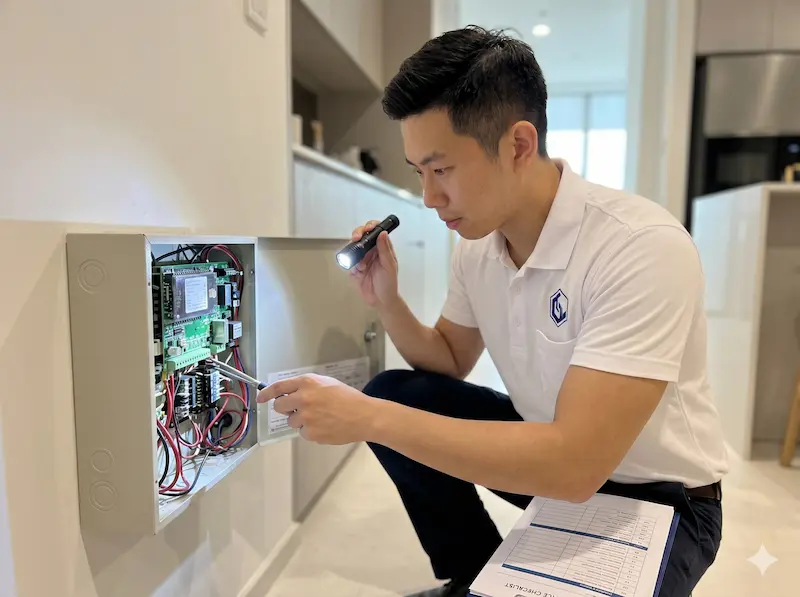
Complete handover package: credentials, as-built drawings, manuals and warranty documentation.
The installation is complete. The cameras are recording. The doors are unlocking. The intercom is working. The project has been signed off. What happens next? For many property owners, this is where the contractor leaves and the system owner takes over. Unfortunately, this is also where many future problems begin. Months or years later, someone needs to add a user, replace a device, or troubleshoot a fault: and only then discovers that important information was never handed over.
What Should Be Included in a Handover?
At minimum, the owner should receive user training, administrator credentials, warranty information, equipment schedules, user manuals, and maintenance recommendations. For larger projects, additional documentation should include as-built drawings, network diagrams, programming backups, and asset schedules. The objective is straightforward: the owner should be able to manage and maintain the system after the contractor leaves.
Administrator Credentials Belong to the Owner
The system belongs to the owner. Administrator credentials should be handed over upon project completion. At handover, all default passwords should have been changed to strong, unique credentials during commissioning, and these documented credentials should be provided to the owner securely. This does not prevent the contractor from providing ongoing support. It simply ensures that the owner retains control of the system they have purchased.
Why Documentation Matters
A security system may remain operational for ten years or more. During that time, contractors may change, staff may change, managing agents may change, and MCST councils may change. Good documentation ensures continuity. Poor documentation often results in unnecessary troubleshooting costs and frustration later.
User Training Matters
Even the best security system can become frustrating if users do not understand how to operate it. Training should cover mobile app usage, user management, video playback, visitor management, and basic troubleshooting. A contractor should ensure the owner understands the key functions before the project is considered complete.
13. Eleven Questions to Ask Every Security Contractor
Before signing any proposal, ask these questions. The quality of the answers often tells you as much about the contractor as the quotation itself.
1. Are you properly licensed?
Licensing demonstrates compliance with Singapore's regulatory requirements. Ask for the PLRD licence number and verify it through the PLRD OneStop portal at police.gov.sg. A professional contractor will provide this without hesitation.
2. Have you completed similar projects before?
Relevant experience often reduces mistakes and improves outcomes. Ask for specific examples similar to your property type and operational requirements.
3. Can you provide references or examples?
Past projects provide valuable insight into the contractor's capabilities and their relationship with existing clients.
4. What equipment models are being proposed?
Specific model numbers allow meaningful comparison between quotations and allow you to verify that the equipment is current, locally supported, and sourced through authorised channels.
5. What is excluded from the quotation?
Understanding exclusions helps avoid disputes later. Common exclusions include network infrastructure, electrical works, civil works, and third-party integration costs.
6. What warranty is provided?
Clarify coverage, duration, and limitations. A minimum of one year on parts and labour is a reasonable baseline for a professional installation.
7. What support response times can I expect?
Support quality often becomes more important than installation quality over the life of the system. Understand the response commitment before signing.
8. Will I receive administrator credentials at handover?
The answer should always be yes. If the contractor hesitates, consider it a significant warning sign.
9. Can another contractor support the system in future?
A properly designed system using mainstream, locally supported equipment should remain maintainable regardless of who installed it. If the answer is unclear, ask why.
10. What documentation will I receive at handover?
Documentation protects the owner's long-term interests. At minimum: administrator credentials, warranty information, user manuals, and equipment schedules. For larger projects: as-built drawings, network diagrams, and programming backups.
11. How is cybersecurity addressed during installation?
For any networked security system, ask how default passwords are handled, how firmware is updated, and whether devices are placed on a separate network segment. A contractor who cannot answer this question clearly has not considered it adequately.
14. Making the Final Decision
After reviewing licences, experience, quotations, equipment, and support arrangements, many buyers still ask which contractor they should choose. The answer is rarely determined by price alone.
Look Beyond the Quotation
A quotation only shows part of the picture. Also consider experience, communication quality, documentation standards, support capabilities, and how well the contractor understood your requirements. The best contractor is often the one who understands your objectives most clearly: not the one who submitted the lowest number.
Trust the Process
A good contractor will usually ask questions before recommending products, conduct a site assessment before finalising a proposal, explain alternatives and their respective trade-offs, clarify assumptions rather than making them silently, and document recommendations clearly. These steps may take more time. However, they often prevent costly mistakes later. A contractor who skips these steps to close the sale faster is optimising for their own convenience, not yours.
Think Long-Term
Most security systems remain operational for many years. Before making a decision, ask yourself whether the system can grow with your requirements, whether support will still be available in five years, whether you understand what you are buying, and whether you trust this contractor to support you after installation. These questions often prove more valuable than comparing specifications.
The Cheapest Quotation Is Rarely the Lowest Cost
Price is important and every buyer has a budget. However, focusing only on the lowest quotation can sometimes create significantly larger costs later. Additional costs frequently appear through variation orders for work not clearly scoped, missing documentation that requires reconstruction, limited warranty coverage, poor after-sales support that results in paying full rates for work that should have been included, early equipment replacement due to inferior specification, and difficulty expanding the system because a proprietary or poorly supported platform was chosen to keep the initial price down.
Two contractors may differ by a few thousand dollars today. The long-term cost difference: over a system life of eight to twelve years: may be considerably larger. Evaluate quotations on total value rather than initial price alone.
If you are deciding between two contractors and both quotations were exactly the same price, which contractor would you choose? The answer often reveals which contractor you actually trust: and trust, over the life of a security system, is usually worth more than a few hundred dollars of price difference.
Choosing a security contractor is about much more than selecting equipment. It is about selecting a partner who will design, install, and support the system throughout its lifecycle. The best projects rarely begin with the lowest quotation. They begin with a clear understanding of what the client is trying to achieve, followed by a contractor who takes the time to explain the options, document the work properly, and remain available long after the installation is complete. Successful projects share one common characteristic: the owner understands not only what is being installed, but also why it is being installed and how it will be supported in the future. Before signing a proposal, ask yourself one final question: if something goes wrong three years from now, would I still feel confident calling this contractor for help? If the answer is yes, you are looking at more than just a supplier. You are looking at a long-term partner.
Frequently Asked Questions
How do I check if a security contractor is licensed?
Ask for the contractor's PLRD licence details and verify them through the PLRD OneStop portal at police.gov.sg. A professional contractor will provide their licence number without hesitation.
What is a PLRD licence?
A PLRD licence is an authorisation issued by the Police Licensing and Regulatory Department (PLRD) under Singapore's Private Security Industry Act (PSIA). It is a legal requirement for companies installing security systems: including CCTV, access control, burglar alarms, and intercom systems: in Singapore. Companies operating without a valid PLRD licence are doing so outside the law, and systems installed by unlicensed contractors may not be recognised by insurers or building management. Licence details can be verified through the PLRD OneStop portal at police.gov.sg. Securevision holds Police Licence .
What questions should I ask a security contractor?
The eleven most important questions to ask before signing any security contract are: Are you properly licensed? Have you completed similar projects before? Can you provide references or examples? What equipment models are being proposed? What is excluded from the quotation? What warranty is provided? What are your support response times? Will I receive administrator credentials at handover? Can another contractor support the system in future? What documentation will I receive at handover? And: how is cybersecurity addressed during installation? These questions cover licensing, experience, scope, support, and handover: the five areas where most problems in security projects arise.
Should I always get three quotations?
Three quotations provide a useful benchmark, but understanding the differences between them is more important than simply collecting them. A quotation from an unlicensed or underqualified contractor adds no useful information.
Why are security quotations so different?
Differences usually arise from equipment specification, installation scope, warranty terms, documentation standards, and support commitments: not simply from profit margin. Before comparing prices, compare scope.
What is a site assessment?
A site assessment is a visit by the contractor to the property before any recommendation or quotation is finalised. A proper assessment covers building layout, access routes, lighting conditions, existing infrastructure, network availability, user requirements, and future expansion plans. A contractor who proposes a solution without first conducting a site assessment is making assumptions: and assumptions in security system design often lead to problems after installation. The quality of the site assessment is often one of the clearest indicators of how the contractor will approach the rest of the project.
Can I use an electrician instead of a security contractor?
For simple single-system projects, sometimes. For larger, integrated, or regulated installations, specialised security experience is generally beneficial. Confirm the electrician's experience with the specific system type before proceeding.
What is grey market equipment?
Equipment imported outside the manufacturer's authorised distribution channels. The product may be genuine but warranty support, firmware updates, and local technical support may differ from officially distributed stock.
What documents should I receive at handover?
At minimum: administrator credentials, warranty information, user manuals, and equipment schedules. For larger systems: as-built drawings, network diagrams, and programming backups should also be included.
What is a variation order?
A variation order is a written instruction to carry out additional work not included in the original contract scope, typically at additional cost. In security system projects, common variations include additional cabling where the original route was obstructed, additional civil works discovered during installation, or scope changes requested by the client after work has begun. Before signing any contract, confirm that all variations must be approved in writing by the owner before work is carried out. Written approval before work proceeds protects both parties.
What payment terms should I expect from a professional security contractor?
A professional security contractor typically follows a staged payment structure: a deposit on signing (usually 20 to 30 percent of the contract value), a progress payment when equipment is delivered to site, and a final payment upon completion, commissioning, and sign-off. Be cautious of contractors who require full payment upfront before any work begins or equipment is delivered: this removes the buyer's main point of leverage if problems arise during the project. Payment milestones should always align with project milestones, not with the contractor's cash flow needs.
Do I own the passwords to my security system?
Yes. The system belongs to the owner and administrator credentials should always be handed over upon project completion. A contractor who withholds administrator access after project completion is creating unnecessary dependency.
What happens if the contractor closes down?
A properly documented system using mainstream, locally supported equipment can usually be maintained by another contractor. For cloud-managed systems, confirm before signing who owns the software licence and what happens to your access and data if the platform becomes unavailable.
How long should a security system last?
This varies by system type and environment. As general guidance: CCTV cameras typically last 5 to 10 years with the NVR lasting 7 to 10 years; access control systems typically last 8 to 12 years; intercom systems typically last 8 to 15 years. Maintenance quality, environmental conditions, and the quality of the original installation all affect longevity.
How important is after-sales support?
Very important. Many issues arise years after installation: when support responsiveness, parts availability, and institutional knowledge of your system become critical. Choose a contractor you would still feel confident calling three years from now.
Can different security systems be integrated together?
Yes. Many modern systems integrate CCTV, access control, intercoms, alarms, and visitor management into a single platform. Confirm integration capability and any associated costs before committing to a platform.
What should an MCST look for when choosing a security contractor?
MCSTs face specific challenges that individual homeowners and businesses do not. Committee members and managing agents change over time, making long-term documentation and support continuity particularly important. An MCST should prioritise: confirmation of current PLRD licensing; demonstrated experience with condominium or managed estate environments; a detailed quotation specifying equipment models; documented warranty and maintenance terms; a structured handover package including as-built drawings, administrator credentials, and programming backups; and clear evidence that the contractor will remain available for support across the full service life of the system. A system that is well-documented and installed by a contractor with a long-term support commitment remains manageable even when the council that commissioned it has entirely changed.
How should an MCST evaluate security tenders?
Security tenders should be evaluated on capability as well as cost. A scoring framework that awards points for licensing status, relevant experience, equipment specification quality, warranty terms, documentation standards, and support commitments: not price alone: generally produces better long-term outcomes than a price-only evaluation. Where possible, ask all tenderers to respond to a common scope document so that proposals can be compared on equal terms. Verify PLRD licensing before shortlisting any tender: an unlicensed contractor should be disqualified at the first stage regardless of price. And remember that the committee signing the contract today may not be the committee managing the system in three years: documentation quality and long-term support commitments matter as much as the installation itself.
How often should security systems be serviced?
Most commercial systems benefit from annual professional maintenance. Heavily used systems: condominium barriers, high-traffic access control points: may warrant more frequent inspection. Preventive maintenance almost always costs less than emergency repairs.
What should I look for in a security maintenance contract?
A maintenance contract should specify the scope of work covered at each visit, the committed response time for service calls, the frequency of preventive maintenance visits, whether spare parts are included or charged separately, and the notice period required to cancel the agreement. Annual preventive maintenance is the standard recommendation for most commercial security systems. Read the exclusions carefully: a maintenance contract that excludes consumables, batteries, and wear items provides significantly less coverage than one that includes them.
Should I buy the latest technology?
Not necessarily. The best solution is usually the one that meets your operational requirements while remaining reliable, maintainable, and supported by a contractor who will still be available in five years. Technology for its own sake is rarely a good investment.