- A burglar alarm continues operating locally even if the internet connection is cut; the panel, detectors, and siren all function independently of the internet.
- Losing internet access affects remote notification and monitoring centre communication, but not the alarm's ability to detect an intrusion and activate the siren.
- The siren is not just a communication tool; it is a deterrent. Most burglars will not stay in a property once an alarm is sounding.
- The time pressure created by a siren is one of the most effective defences available, regardless of whether a monitoring centre has been notified.
- Modern alarm systems with 4G cellular backup can continue communicating even when broadband is cut; the backup path activates automatically.
- A well-designed alarm system treats internet loss as a fault condition and reports it through the backup path, so the monitoring centre is aware immediately.
What If the Burglar Cuts the Internet?
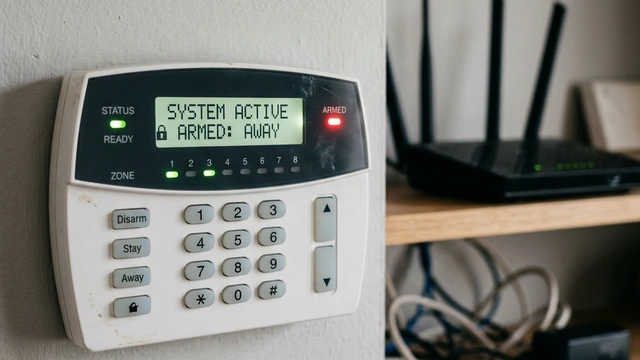
This is a question I hear regularly, and it reflects a genuine concern. Modern alarm systems use mobile apps, cloud services, and IP monitoring. If the internet goes down; whether by accident or because someone has deliberately cut the connection; does the alarm stop working?
The short answer is no. The alarm panel, detectors, and siren continue operating regardless of whether the internet is available. Understanding why requires separating two things that are often confused: the alarm system itself, and the communication paths it uses to reach the outside world.
KEY POINT
The internet is one communication path the alarm uses, not the alarm itself. Losing the internet affects how the alarm communicates with the monitoring centre and your phone. It does not affect whether the alarm detects intrusions and activates the siren.
The Alarm and the Internet Are Not the Same Thing
The alarm panel is a self-contained device. It continuously monitors every zone; door contacts, motion detectors, glass break sensors; processes the signals it receives, and makes decisions based on its programming. None of that requires an internet connection. The panel powers on from mains supply with battery backup, the detectors are wired or wirelessly linked directly to the panel, and the siren is connected to the panel's output.
Think of the internet as a communication channel the alarm uses to reach people outside the property. If that channel is cut, the alarm does not stop running; it loses one of its ways of telling people what is happening. The detectors still detect. The panel still processes. The siren still activates. What changes is that the push notification to your phone may not arrive through the broadband route, and the monitoring centre may not receive the signal through the primary IP path.
This is an important distinction. A burglar who cuts the internet has not disabled the alarm. They have disrupted one communication path. The alarm is still very much running, and the moment they open a protected door or enter a protected zone, the system responds.
KEY POINT
Cutting the internet is not the same as cutting the alarm. The two are distinct. A burglar who understands one but not the other has not neutralised the system; they have only affected its ability to send a remote notification through one specific route.
The Burglar Still Has a Problem
Assume for a moment that a burglar has successfully cut the internet connection before entering the property. What actually happens when they breach a protected zone?
The detector activates. The alarm panel recognises the intrusion. The siren sounds. The strobe light flashes. The alarm may not be able to reach the monitoring centre through the broadband route, but the burglar now faces a different and more immediate problem: a loud alarm that everyone nearby can hear.
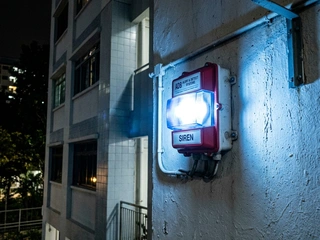
This is where the design assumption behind most burglar alarm systems becomes relevant. The siren is not simply a notification device. It is a deterrent, and in many cases, the most effective deterrent available at the moment of intrusion. It announces to the street that something is wrong. It draws attention to the property. It removes the two things a burglar depends on most: time and privacy.
KEY POINT
A siren cannot be ignored the way an app notification can. It is audible to anyone in range, it cannot be silenced remotely, and it immediately changes the risk calculation for anyone inside the property. That is its primary job, and it performs that job regardless of whether the internet is connected.
Burglars Hate Noise and Attention
One principle I have held throughout my career is that most burglars want to spend as little time as possible inside a property. The longer they remain, the greater the risk of discovery. They are looking for situations that offer time, privacy, and predictability. A triggered alarm removes all three.
When the siren activates, the pressure begins immediately. A neighbour hears the alarm and looks out. A passer-by notices the strobe light. A family member in a nearby property becomes aware that something is happening. Someone calls the police. Each second that passes increases the likelihood of discovery, intervention, or identification. Most burglars who enter a property with no alarm will take their time. Most burglars who trigger an alarm will leave as quickly as possible.
This deterrent effect operates entirely independently of internet connectivity. The siren does not need a broadband connection to make noise. The strobe does not need a monitoring centre subscription to flash. The pressure they create on an intruder is immediate, local, and independent of whether any remote notification has been successfully delivered.
KEY POINT
The alarm's most immediate protective function is not notification; it is disruption. It disrupts the burglar's plan, their timeline, and their confidence that they can complete the job undetected. That disruption is fully intact even when the internet is not.
The Alarm When Someone Is Home
There is another dimension to this that people rarely consider. Most discussions about alarm systems assume the property is empty; the homeowner is out or away, and the alarm is the primary protective layer. But alarms also matter when someone is at home.
If a burglar enters a property while occupants are present, the alarm changes the situation significantly. The intruder now knows the property is aware of their presence. Attention is being drawn to the premises. Their time is severely limited. Even in a worst-case scenario, where the homeowner is asleep and the initial entry is made without their knowledge; the alarm's siren provides immediate warning and dramatically increases the pressure on an intruder who had assumed the property was unaware of them.
For families in Singapore landed properties, this deterrent value within the property is arguably more important than the remote notification function. A siren that wakes the household and draws attention from neighbours is a powerful protective tool regardless of whether a monitoring centre has received an alert. The internet being cut makes no difference to this function at all.
PLANNING POINT
When assessing your alarm system's value, do not focus only on the monitoring centre notification. Consider what happens at the property itself when the alarm activates, and whether the local response that creates is sufficient for your situation.
Modern Systems Have a Backup Plan
Beyond the local deterrent effect, modern alarm systems add another layer of resilience through dual-path communication; a concept covered in detail in the earlier article on communication paths.
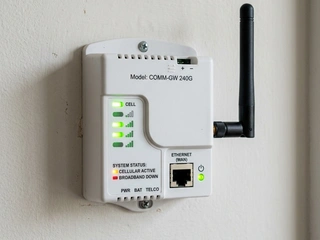
A well-specified alarm system uses IP as its primary communication path and 4G cellular as an independent backup. If the broadband connection is cut, the system detects the loss of the primary path and automatically switches to cellular. The monitoring centre is notified through the mobile network. The homeowner receives their notification through 4G. The internet being cut does not silence the alarm's remote communication; it simply routes it differently.
Additionally, a properly supervised alarm system treats an unexpected loss of internet connectivity as a fault condition in its own right. The monitoring centre may receive an alert that the panel has lost its primary communication path before any intrusion has even occurred. That alert is itself a signal worth investigating.
DESIGN RULE
A 4G cellular backup module is not an optional extra for a monitored alarm system; it is the answer to the question this article is addressing. With cellular backup in place, cutting the internet does not cut the alarm's ability to communicate. It simply forces it to use the other path.
What This Means in Practice
The concern behind the question; what if the burglar cuts the internet; is legitimate. A sophisticated intruder who understands that modern alarm systems use IP communication might try to disrupt that path before entering. It is a real attack vector, and it deserves a real answer.
The answer has two parts. First, cutting the internet does not disable the alarm locally; detection, panel processing, and siren activation all continue. The intrusion will still be detected and the alarm will still sound. Second, a properly specified alarm system with 4G cellular backup will continue communicating remotely even when broadband is cut. The backup path activates automatically and the monitoring centre is still notified.
A determined and knowledgeable burglar who wanted to defeat both would need to cut both the broadband connection and the cellular signal simultaneously; a significantly higher bar than simply unplugging a router. At that point they are dealing with a system that was designed to resist exactly that scenario. That is what good alarm design means in practice.
Securevision Verdict
Cutting the internet does not automatically disable a burglar alarm. A properly designed system continues to detect intrusions, activate the siren, and protect the property even when communications are interrupted. The siren alone; audible, attention-drawing, and impossible to ignore remotely; is a powerful deterrent that operates entirely independently of internet connectivity.
Modern systems add further resilience through 4G cellular backup, which ensures that remote communication continues even when broadband is cut. The purpose of an alarm is not only to send notifications; it is to make the intruder's situation untenable. Burglars prefer time, privacy, and certainty. A triggered alarm takes all three away, whether or not the internet is working.
In Short
Cutting the internet is not the straightforward way to defeat a burglar alarm that it might appear. Modern alarm systems are designed with this scenario in mind; the panel detects the loss of internet connectivity immediately and either switches to mobile data backup or triggers a communication-fault alert at the monitoring centre. The deterrent value of a properly installed alarm; the siren, the strobe, the monitoring response; remains intact regardless of what happens to the broadband connection.

Frequently asked questions
What happens to my burglar alarm if the internet goes down?
A well-configured modern alarm system is not dependent solely on the internet. Most panels today have a mobile data (GSM/4G) backup module that activates automatically when the broadband connection is lost. The monitoring centre also receives a communication-fault alert when the internet path goes offline, so they are aware of the situation even before any alarm is triggered.
Can a burglar disable my alarm by cutting the internet cable?
Cutting the internet cable will disrupt broadband-only alarm systems, but modern dual-path systems switch to mobile data automatically. The act of cutting the cable also generates a communication-fault event at the monitoring centre, which may itself trigger a response. Additionally, the alarm's local siren, strobe, and any wireless functionality continue to operate independently of the internet connection.
Does my alarm need the internet to work?
The alarm panel, detectors, keypad, and siren operate independently of the internet; they communicate with each other through wired connections or local radio frequencies. The internet is used only for the communication path to the monitoring centre or to a smartphone app. If the internet fails, the panel continues to detect intrusions and sound the siren. The only function affected is remote monitoring and notification.
What is a GSM backup module and should I have one?
A GSM backup module is a mobile data component inside or connected to the alarm panel that provides an alternative communication path to the monitoring centre when the broadband connection is unavailable. For properties where continuous professional monitoring is important, a GSM backup module is strongly recommended. For properties where monitoring is less critical, it is still useful for receiving notifications during internet outages.
How quickly does a dual-path alarm switch to mobile data?
Switchover time varies by system and configuration, but most modern dual-path systems detect broadband failure within seconds and switch to the mobile data path within a minute or less. The monitoring centre receives a path-failure alert during this switchover period. The transition is automatic and requires no manual intervention.
Will my alarm app stop working if the internet is cut?
Yes, if the internet connection to your home is severed, the smartphone app will lose its connection to the alarm panel until the connection is restored. However, if your panel has a GSM module, the panel may be able to send SMS or push notifications through the mobile network independently of your home broadband. Check with your installer whether your specific panel and monitoring service support this.
What should I do if my alarm reports a communication fault?
A communication fault means the alarm panel cannot reach the monitoring centre through one or more of its configured paths. Check your broadband router and internet connection first. If the connection appears normal, contact your alarm monitoring centre; they may already have received a fault notification and can advise you. If the fault persists, arrange for your installer to inspect the panel and communication module.
Can a burglar jam the mobile signal to defeat my alarm?
Signal jamming devices are illegal in Singapore and their use by burglars is extremely rare. Consumer-grade mobile jamming equipment is not readily available and its use creates significant legal risk for the user. Most professional alarm systems also detect jamming attempts; a sudden loss of both primary and backup communication paths simultaneously is treated as a suspicious event by the monitoring centre.
Does my alarm work during a total power outage?
Yes. A properly installed alarm panel has a sealed lead-acid backup battery that maintains full operation during a mains power failure. This includes the panel, detectors, keypad, siren, and communication modules. Battery capacity varies by installation; most systems provide between 8 and 24 hours of backup depending on the battery size and the system's power consumption.
How do I test that my alarm communication is working?
Ask your monitoring centre to conduct a full communication test. This involves the panel sending a test signal through each configured path and the monitoring centre confirming receipt. The test should be repeated periodically, at least once a year, and more frequently for high-security installations. Some modern monitoring platforms perform automated path testing continuously and will notify you if a path fails.