- Age alone does not determine whether a system should be repaired or replaced; the real question is whether it still delivers the protection you need today.
- The right question is not "can it be repaired?" but "is it still worth repairing?" Almost anything can be fixed if you spend enough money.
- When multiple components fail in a short period, repeated repairs may cost more than a targeted upgrade, and still leave you with an ageing system.
- Physical infrastructure; cabling, conduit, mounting points, typically outlasts the electronics connected to it by many years.
- Selective upgrades; replacing cameras, recorders, or controllers while retaining sound cabling and infrastructure; often deliver most of the benefit of a new system at a fraction of the cost.
- The decision should start with an assessment of what still has value and what does not, not with a quote for complete replacement.
One of the Most Common Questions I Get
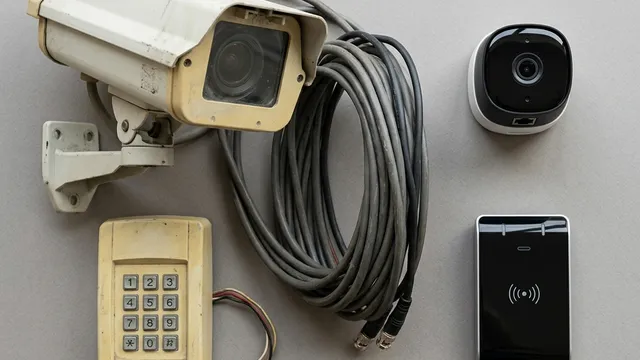
One of the most common questions I hear from property owners is some version of this: my system is about ten years old; should I repair it or should I replace it? The question comes up across all types of security systems; CCTV, access control, alarm panels, intercoms, and my answer is almost always the same: it depends.
If a ten-year-old camera fails, replacing that camera may be all that is required. If the recorder fails, the answer might be different. If multiple components are starting to fail in quick succession, spending money on individual repairs may simply be delaying the inevitable at significant cost. The real question is not whether the system can be repaired; almost anything can be repaired if you are willing to spend enough. The real question is whether it is still worth repairing.
An earlier article covered this question specifically for alarm systems; the four-question framework for deciding whether to upgrade or replace an alarm. This article takes a broader view, covering all the security system types that typically age together in a Singapore property, and the framework I use when helping customers make a decision that is right for their specific situation.
KEY POINT
The question is not whether the system is ten years old. The question is whether it still delivers the protection, reliability, and functionality you need today, and whether spending money on it now is the most sensible way to get there.
The Old Car Analogy
When I explain this decision to customers, I often compare it to owning an ageing car. Imagine you have a vehicle that is ten years old. The tyres are worn. The air-conditioning has failed. The suspension is showing its age. The transmission occasionally gives problems. Each of these can be repaired; there is nothing about any of them that is technically unfixable. The question is whether you should keep repairing them.
At some point, the calculation changes. You stop asking whether the car can be fixed and start asking whether it is still worth fixing. Each repair extends the car's life by some amount, but if the underlying condition is one of general decline, each repair simply buys time before the next one. The total cost of those repairs, accumulated over a few years, often exceeds what a more decisive upgrade would have cost, and at the end of that period, you still have an old car.
Security systems follow exactly the same logic. A single component failure in an otherwise sound system is a repair. Multiple failures in quick succession, difficulty sourcing spare parts, and degrading performance across the board are signs of a system in general decline. At that point, you are no longer maintaining the system; you are funding its retirement. That is usually the moment to take a step back and look at the bigger picture rather than approving the next repair invoice.
KEY POINT
A single repair on an otherwise sound system is good engineering. Repeated repairs on a system in general decline is a different decision entirely. Recognising which situation you are in is what makes the difference between a sensible maintenance budget and money spent on an outcome that was inevitable anyway.
The First Question I Ask
When I visit a site to assess an ageing system, the first question I ask is not about the brand or the age of the equipment. It is about what the property owner is actually trying to achieve. This changes the conversation significantly; because sometimes the system is old but still performing its intended role adequately, and sometimes the system is functioning perfectly but no longer meets the owner's current expectations.
A CCTV system from ten years ago may still record video reliably. But if the resolution is too low to identify a face at the gate, or if the system cannot provide the mobile access and smart notifications that the owner now expects as standard, then functioning is not the same as adequate. The system works. It simply does not work well enough for the environment and expectations of today.
The same applies to access control, alarm systems, and intercom systems. Technology has moved on. User expectations have moved on. A system that was correctly specified for a property's needs in 2015 may no longer reflect the risk profile, the operational requirements, or the integration possibilities of 2025. Understanding what the property owner actually needs today, not what they needed when the system was installed; is where the assessment has to start.
PLANNING POINT
Before discussing repair costs, clarify what you actually want the system to do. If what you want is materially different from what the existing system can deliver even when repaired, the repair decision is already answered.
When Repair Makes Sense
There are genuinely good reasons to repair rather than replace, and treating repair as automatically inferior to replacement is as much a mistake as deferring replacement indefinitely. Repair is the right answer when the failure is isolated to a single device in an otherwise sound system. One camera with a failed sensor, one access control reader with a damaged antenna, one intercom handset that has stopped working; these are component failures, not system failures, and replacing the component is the correct response.
Repair also makes sense when the system's manufacturer still supports the product, spare parts are readily available, and the overall architecture remains sound and appropriate for the property's current needs. If the customer is satisfied with the functionality and the system is delivering adequate protection, there is no reason to replace it simply because it has been installed for ten years. Good engineering is about solving the actual problem, not replacing everything in sight because it is old.
KEY POINT
A single fault in an otherwise performing system is a repair. The system has not declined; one component has failed. Replacing that component and nothing else is the proportionate, cost-effective response.
When Replacement Starts Making Sense
The signal that repair is no longer the right answer is usually not one large failure; it is a pattern of smaller ones. Multiple components failing within a short period, spare parts becoming difficult to source or significantly more expensive than they once were, manufacturer support ending for the platform, mobile apps or cloud services being discontinued, or repeated service calls for different faults on the same system. Any one of these is a warning. Several together are a clear indication that the system is in the decline phase.
There is also the performance gap to consider. A ten-year-old CCTV system that has been repaired to full working order still records at ten-year-old resolution, still lacks AI analytics, still requires manual footage review, and still cannot provide the mobile integration and smart notifications that current systems deliver as standard. Repairing it to working condition does not close that gap; it simply keeps a less capable system operational for longer.
When the cost of the next repair approaches a meaningful fraction of a targeted upgrade, and when that upgrade would deliver significantly better capability and several more years of manufacturer support, the repair decision becomes harder to justify. Funding the retirement of a system that will need replacement in eighteen months regardless is rarely the best use of a security budget.
KEY POINT
Ask what the repair actually buys you. If the answer is another year before the next repair on the same ageing platform, the total cost of that approach over three years may well exceed the cost of a targeted upgrade that would have resolved the situation definitively.
The Selective Upgrade; Often the Best of Both
One of the most common misconceptions I encounter is the assumption that replacement means starting from scratch; new cabling, new conduit, new trunking, new infrastructure throughout the property. This is not usually the case, and assuming it is often leads property owners to defer decisions that would otherwise be straightforward.
Physical infrastructure; cabling, conduit, mounting points, cable trays, typically outlasts the electronics connected to it by many years. A properly installed coaxial or CAT cable run may still be in excellent condition long after the cameras, recorder, or controller it supports have been overtaken by better technology. Identifying what the existing infrastructure can still support is always the first step before specifying any upgrade.
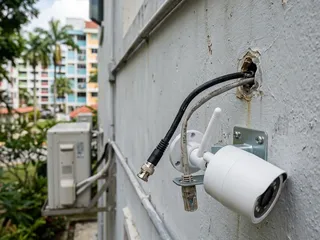
For a CCTV system, a selective upgrade might mean retaining the existing cabling and conduit runs while replacing the cameras with current-specification IP units and upgrading the recorder to a modern NVR with AI analytics and mobile app connectivity. The disruption is minimal; camera positions are retained, walls stay intact, but the performance improvement is substantial. The new cameras deliver higher resolution, better low-light performance, smarter detection, and the mobile integration the owner has been wanting.
For an access control system, the same logic applies. Existing door locks, power supplies, and cable infrastructure may remain perfectly serviceable while the controllers, readers, and management software are upgraded to a current platform. The doors operate as before. The credentials, mobile access, and reporting capabilities are transformed. For an intercom system, existing cabling between apartments or floors can often carry modern IP intercom signals, making the upgrade primarily about the handsets and main unit rather than the wiring behind the walls.
DESIGN RULE
Before specifying any upgrade, test the existing cabling. If it passes, the most expensive part of the original installation can be retained, and the upgrade focuses exclusively on the components where the improvement in technology actually delivers value.
What Has Changed in the Last Ten Years
One reason the gap between an ageing system and a current one matters so much is that security technology has moved unusually quickly over the past decade. Ten years ago, most CCTV cameras recorded at 1MP or 2MP resolutions that made face identification at any distance difficult. Today, 4MP and 8MP cameras are standard, and AI-based smart detection; distinguishing between people, vehicles, and irrelevant movement; is available at mainstream price points. The difference in what a camera can actually tell you about an incident is significant.
Access control has changed similarly. Ten years ago, most systems used physical cards and fobs as the primary credential. Today, mobile credentials on a smartphone are common, facial recognition is available at entry-level commercial price points, and cloud management allows access permissions to be updated remotely in seconds. A system installed in 2015 that is still using 2015 credentials and 2015 management software is not just old; it is missing capabilities that have become operationally standard.
Remote management, video verification, smart search, and cloud-based reporting have all moved from premium features to baseline expectations in that same period. A property owner who last reviewed their security system in 2015 and assumed it was "still working fine" may be significantly more exposed than they realise, not because the system has failed, but because the world it was designed for has changed substantially.
KEY POINT
A ten-year-old system that is working correctly is not the same as a ten-year-old system that is adequate. The gap between what it can do and what a current system can do is real, measurable, and relevant to any serious assessment of whether it still meets your needs.
The Question Worth Asking
When most property owners think about a repair decision, they focus on the cost of the repair. That is a reasonable starting point but not the complete picture. The more useful question is what the repair actually returns. If a repair costing a few hundred dollars restores a component in an otherwise sound system that will serve reliably for another five years, the repair is clearly worthwhile. If the same spend restores one component in a system where three other components are also approaching failure, and where the platform itself is no longer supported by the manufacturer, the calculation is different.
A clear-eyed assessment of the overall system condition; what still has value, what is in decline, what the property actually needs today, and what a selective upgrade would cost compared to continued repair; is the only reliable basis for making this decision well. Approving a repair invoice without that broader context is how property owners end up spending more over three years on a declining system than a targeted upgrade would have cost in year one.
Securevision Verdict
Most security systems do not suddenly become obsolete at a particular age. The real question is whether they continue to provide the level of protection, reliability, and functionality the property needs today, and whether the money spent on repairs still represents good value given the system's overall condition and trajectory.
Sometimes the answer is a straightforward repair. Sometimes it is a selective upgrade that retains sound infrastructure while replacing the components that have been overtaken by better technology. Sometimes it is a more comprehensive replacement. The right answer comes from understanding what you actually have, which is why every decision of this kind should start with an honest assessment, not a repair quote and not an assumption that everything needs to be replaced.
In Short
The repair-or-replace decision is almost never as simple as the age of the system. We have serviced alarm systems that were fifteen years old and performing well, and we have recommended replacing systems that were three years old because the communication module was already obsolete. The decision should be driven by a clear-eyed assessment of what has failed, whether parts are available, whether the communication path is current, and whether the system as it stands can meet the security requirement for the next five years. The right answer is rarely obvious without that assessment.

Frequently asked questions
How do I decide whether to repair or replace my security system?
The decision should be based on four factors: what specifically has failed and whether repair is practical; whether parts for the existing system are still available; whether the communication path is current (IP/GSM rather than PSTN); and whether the system can meet the security requirement for the next five years if repaired. A system that fails on more than two of these factors is generally a replacement candidate.
At what age should a burglar alarm be replaced?
Age alone is not the right trigger for replacement. A well-maintained alarm system with current communication and available spare parts can remain serviceable for 15 to 20 years. The more relevant indicators are: the communication path it uses, the availability of spare parts, the frequency of service calls in the past two years, and whether the detection coverage still matches how the property is used.
What is the old car analogy for security system decisions?
Just as you would not spend $8,000 repairing a fifteen-year-old car worth $3,000 when a $15,000 replacement would serve you reliably for the next decade, the economics of security system repair need to be assessed against the cost of replacement. When annual repair costs approach or exceed 30 percent of replacement cost, and when the system is approaching end-of-support, replacement typically delivers better long-term value.
What is a selective upgrade in a security system?
A selective upgrade replaces specific components while retaining others. For example: replacing the alarm panel and communication module while keeping the existing detectors and wiring; or replacing the CCTV cameras and NVR while keeping the existing cable infrastructure. Selective upgrades make sense when the retained components are in good condition and compatible with the new equipment, and when full replacement would be disproportionately expensive.
Can alarm wiring be reused when replacing the panel?
In most cases, yes. Alarm wiring, typically 4-core or 6-core alarm cable; has a very long service life and is compatible with both older and modern alarm panels. Retaining existing wiring when replacing the panel significantly reduces the cost and disruption of the upgrade. The decision to replace wiring should be driven by the cable's condition, not by the age of the system or the fact that the panel is being replaced.
When does repair make more sense than replacement?
Repair makes sense when: the failed component is a single, clearly identifiable item with readily available spare parts; the rest of the system is in good condition; the panel supports a current communication path; and the repair cost is a small fraction of replacement cost. A single failed PIR detector on a well-maintained, modern alarm system is almost always worth repairing rather than triggering a full replacement.
When does replacement make more sense than repair?
Replacement makes sense when: the panel manufacturer no longer supports the model with firmware or spare parts; the system still uses PSTN communication; multiple components have failed in the past year; the detection coverage no longer matches the property's current usage; or the cumulative repair costs over the past two to three years approach the cost of a new system. If two or more of these conditions apply, the economics of repair versus replace have typically shifted in favour of replacement.
What has changed in security technology in the last ten years?
The most significant changes are: the shift from PSTN to IP and GSM communication; the move from analogue to IP cameras with dramatically higher resolution; the introduction of AI-based detection in cameras and recorders; the availability of dual-path monitoring as a standard rather than a premium feature; and the emergence of cloud-connected management platforms that enable remote access and monitoring without dedicated infrastructure.
How do I get an honest repair-or-replace recommendation?
Ask an installer who is willing to give you a written assessment before quoting for work. A company that inspects thoroughly, documents the findings, and explains the reasoning behind their recommendation, including the option of not replacing if repair is the more sensible choice; is giving you an honest assessment. Be cautious of recommendations to replace that arrive without a detailed inspection and a clear explanation of why repair is not viable.
Who should assess my security system for repair or replacement in Singapore?
A company licensed under the Police Licensing and Regulatory Department (PLRD) with experience servicing your specific system type. Ideally the original installer, if they are still operating and servicing the brand installed. If you are changing service providers, ask any new company to provide a written assessment report before quoting for replacement; this confirms they have actually inspected the system rather than defaulting to a replacement proposal.