- Most ageing alarm systems do not need complete replacement; a targeted upgrade of the right components is often more cost-effective.
- The decision hinges on four factors: cable condition, panel support status, communication technology, and detector performance.
- Upgrade when cables are good, the zone layout still makes sense, and only specific components have been overtaken by newer technology.
- Replace when cabling is damaged, the original design was poor, spare parts are unavailable, or security requirements have changed fundamentally.
- Communication technology is often the single most urgent reason to act; a PSTN dialler that can no longer reach a monitoring centre makes the rest of the system irrelevant.
- The right answer requires a site assessment; two properties with identical alarm panels may need completely different recommendations.
The Question Every Homeowner Eventually Asks
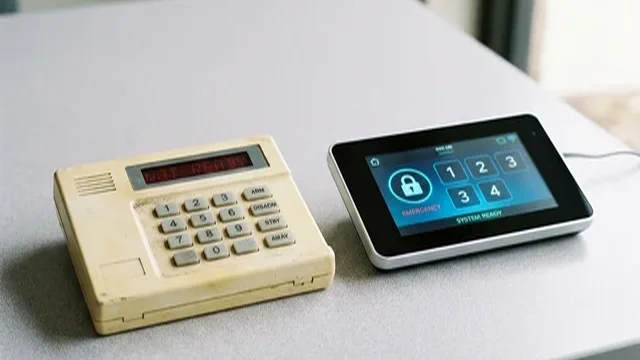
Most alarm systems do not fail overnight. They age gradually. A keypad becomes unreliable. A detector starts producing false alarms. The monitoring service stops working because the communication path is no longer supported. Spare parts become difficult to find. Eventually, the homeowner faces a decision: repair and upgrade what exists, or start fresh.
The previous article covered the question of whether existing alarm wiring can be reused, and in most Singapore properties with a properly installed wired system, the answer is yes. This article takes that a step further: given what can typically be retained, how do you actually decide whether to upgrade specific components or replace the system entirely?
The honest answer is that most homeowners approach this decision the wrong way. They frame it as repair-everything versus replace-everything, when the real question is more granular: which components still deliver value, which have been meaningfully overtaken by better alternatives, and which represent a liability that will cost more to maintain than to replace?
KEY POINT
The upgrade-or-replace decision is not binary. It is a component-by-component assessment of cables, detectors, panel, keypad, and communication module; each with its own useful life and each affected differently by technology advances.
The Four Questions That Drive the Decision
In practice, the upgrade-or-replace decision comes down to four questions asked about the existing system. The answers to these questions, taken together, usually point clearly in one direction.
The first question is about the cables. Are they intact, continuous, and free from insulation damage? As covered in the previous article, alarm cables in completed Singapore properties are expensive and disruptive to replace. If the cables are in good condition, that significantly favours a targeted upgrade; the most costly part of a new installation is already in place. If the cables are damaged, short-circuiting, or inaccessible, the calculus shifts towards replacement.
The second question is about the alarm panel. Is it still supported by the manufacturer, and can spare parts be obtained? A panel that works today but whose manufacturer has ceased support or whose parts are no longer available is a panel that cannot be maintained. The next fault may be unfixable. Replacing a panel whose support life has ended is not an optional upgrade; it is deferred maintenance that will eventually be forced.
The third question is about communication. Does the existing communicator still work with current telecommunications infrastructure, and does it support the monitoring configuration the property needs? A PSTN dialler that cannot reach a monitoring centre because the copper network has been retired makes the rest of the system; however functional; unable to complete its primary job. Communication obsolescence is often the most urgent driver of alarm upgrades.
The fourth question is about detectors. Are they performing reliably, or are they generating false alarms, and how old are they? A detector that triggers correctly but also produces regular nuisance activations is not a functioning detector; it is a system credibility problem. Age matters here too: detectors more than ten to fifteen years old may be functioning but significantly behind current capability in terms of false alarm rejection and environmental compensation.
KEY POINT
In most upgrade assessments, cables pass, the panel has reached end of support, communications are obsolete, and detectors are borderline. That combination points to a targeted upgrade: retain cables, replace panel and communicator, assess detectors zone by zone.
When a Targeted Upgrade Is the Right Answer
A targeted upgrade makes the most sense when the cable infrastructure is sound, the zone layout still reflects how the property is actually used, and the components driving the decision to act are specific and well-defined, typically the panel, the communicator, or a subset of detectors in problematic zones.
A practical example: a landed property with a fifteen-year-old wired alarm system. The cables were professionally installed in conduit during the original build. They test clean. The zone layout; main entrance, ground floor windows, interior motion, back gate; still makes logical sense for how the family uses the property. The alarm panel is an older model whose manufacturer discontinued support five years ago, and spare parts are increasingly hard to source. The communicator is a PSTN dialler that cannot reach the monitoring centre since the telephone line was migrated to fibre VoIP. Three of the detectors are original; two were replaced four years ago and are performing well.
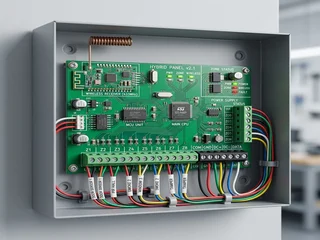
In this scenario, the right approach is to replace the panel with a current model, install an IP and cellular communicator, retain the two newer detectors, and replace the three original PIR sensors in their existing cable positions. The cables stay, the zone positions stay, and the upgrade is completed in a day at a fraction of the cost of full replacement. The homeowner ends up with a system that performs like a current installation.
PLANNING POINT
When cables are sound and zone positions are logical, a targeted upgrade typically costs significantly less than full replacement while delivering equivalent, or in some components, superior; performance. The cost saving is real; the performance improvement is also real.
When Full Replacement Makes More Sense
Full replacement becomes the more sensible option when the problems with the existing system are structural rather than component-specific. Damaged or inaccessible cabling is the clearest trigger, if the cables cannot be trusted or cannot be tested, building on that foundation creates ongoing uncertainty. Replacing everything with a clean installation eliminates the risk of future faults in concealed wiring that cannot be easily located or repaired.
Poor original design is the second scenario. Some alarm systems were installed with a zone layout that never really reflected the risk profile of the property; perhaps because it was done cheaply, or because the original brief was inadequate. A detector in a poor location with bad cables running to it is not improved by a new panel. Retaining a poor design and connecting it to better electronics still produces a poorly designed system. In these cases, a full replacement allows the zone design to be reconsidered from the beginning, which may be worth more than any individual component upgrade.
Multiple simultaneous component failures provide a third scenario. When cables are marginal, the panel is unsupported, detectors are old and problematic, and the communicator is obsolete; replacing each component individually may cost more in total, and generate more disruption in aggregate, than a single comprehensive replacement. The calculation is not just cost per component but total cost including labour and the disruption of returning multiple times to do piecemeal work.
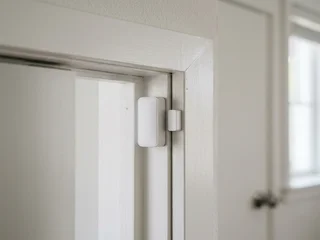
Finally, significantly changed security requirements may make a clean replacement appropriate even when the existing system is technically functional. A property that has been extended, had its layout significantly reconfigured, or changed from residential to mixed residential and commercial use may need a zone design that bears no relationship to the original. In that scenario, retaining the existing infrastructure may constrain the new design in ways that cost more to work around than to replace.
KEY POINT
Full replacement is not a failure; it is the right answer when the existing system's problems are structural, when multiple components need attention simultaneously, or when the property's security requirements have changed enough that the original design is no longer the right foundation.
Communication Is Often the Most Urgent Factor
Of the four questions raised in Section 2, the communication question is often the one that forces the timeline. A panel with fading support can still be maintained for a while longer. Older detectors can be tolerated if they are not causing active problems. But a communicator that can no longer reach a monitoring centre is a system that is not monitored, and an unmonitored alarm is a fundamentally different security proposition from a monitored one.
As covered in the earlier article on PSTN to IP monitoring, Singapore's telecommunications infrastructure has progressively moved from copper to fibre. Properties that still have PSTN diallers in their alarm panels are running communicators whose underlying network is being retired. Some have already lost monitoring capability and may not know it, if the copper line has been replaced by VoIP, the PSTN dialler may appear to function but cannot actually reach the monitoring centre's receiving equipment.
For these properties, the communication upgrade is not optional and should not wait for the broader upgrade-or-replace decision. Replace the communicator with an IP and cellular module. That single change restores monitoring capability immediately, and can be done regardless of whether the rest of the system is subsequently upgraded, replaced, or left as is.
KEY POINT
If your alarm system uses a PSTN dialler and your property has been migrated to fibre broadband, verify that your monitoring centre is still receiving signals from your panel. Do not assume communication is working because the keypad shows no fault. The fault may be silent.
How to Approach the Assessment
The starting point for any upgrade-or-replace decision is a proper site assessment, not a price estimate based on assumptions, but an actual review of the installed system. This means testing cable continuity on every zone circuit, checking each detector for correct operation and reviewing false alarm history on that zone, establishing whether the panel is still supported and parts are available, and verifying that the communicator can reach the monitoring centre.
It also means reviewing the zone layout against current property use. Have rooms changed function? Has the property been extended? Are there entry points that were not in the original design? A zone layout that made sense in 2008 may have gaps in 2026 that have nothing to do with the age of the equipment and everything to do with how the property is used now.
From that assessment, the recommendation should be specific: retain these components, replace these components, adjust these zone configurations, address this communication issue first. A recommendation that defaults to full replacement without testing the cables or verifying the detector condition is not an assessment; it is a sales approach. A recommendation that retains everything to minimise cost without acknowledging genuine component age or communication obsolescence is similarly incomplete.
PLANNING POINT
Ask any security company giving you an upgrade quote what they tested before making their recommendation. If the answer is that they quoted based on a walkthrough and the age of the system rather than actual cable and detector tests, the quote may not reflect what the system actually needs.
Two Properties, Two Different Answers
The clearest way to illustrate why a universal answer is impossible is to consider two properties with identical alarm panels.
Property A is a fifteen-year-old terrace house where the original installer ran cables in conduit through the wall cavities. The cables test clean. The zone layout covers all current entry points. The panel is end-of-support but the detectors are relatively recent replacements. The communicator is a PSTN dialler on a fibre line. The right recommendation: replace the panel, install an IP and cellular communicator, retain cables and detectors.
Property B is a fifteen-year-old apartment where the original installer surface-ran cables behind skirting boards that were later painted over and partially damaged during a bathroom renovation. Two zone circuits test as intermittent faults. The zone layout omits the service entrance that was added to the property three years ago. The detectors are original and have been producing regular false alarms. The communicator is similarly obsolete. The right recommendation: full replacement; new cables, new detectors, new panel, new communicator, revised zone design that includes the service entrance.
Same panel age. Same communicator obsolescence. Completely different recommendations; because the right answer depends on the actual condition and design of the specific system, not on the age of the equipment as a proxy for everything else.
Securevision Verdict
Most homeowners facing an ageing alarm system assume the choice is between repairing it indefinitely and replacing everything at once. The reality is more nuanced, and usually more affordable than the full replacement scenario suggests.
In many cases, the right answer is a targeted upgrade: retain sound cables, replace the panel and communicator, assess detectors zone by zone. Done properly, this delivers a system that performs like a current installation at a fraction of the cost of starting from scratch. The key is making the decision based on what the system actually needs, which requires a proper assessment, not a standard quote built on age assumptions.
In Short
There is no universal answer to the upgrade-or-replace question, and anyone who gives one without inspecting the system first is guessing. The decision depends on four things: which components have failed or are obsolete, whether the existing wiring is reusable, whether the current panel can support a current communication path, and what the security requirements actually are today versus when the system was first installed. Getting the assessment right saves money; both by avoiding unnecessary replacement and by avoiding repeated repairs to a system that should have been replaced.

Frequently asked questions
Should I upgrade or replace my burglar alarm system?
The answer depends on a site assessment rather than the age of the system alone. If the panel is still supported, the wiring is intact, and the main issue is an outdated communication module or a few failed detectors, a targeted upgrade is usually the more cost-effective approach. If the panel is obsolete, spare parts are unavailable, or the system no longer meets the security requirements of the property, replacement is the better long-term decision.
What is a targeted alarm upgrade?
A targeted upgrade involves replacing specific components of the existing system while retaining the rest. Common targeted upgrades include: replacing a PSTN dialler module with an IP or GSM communicator, replacing outdated detectors in specific zones, adding a mobile app integration module to an existing panel, or upgrading the external siren and strobe. Targeted upgrades are most cost-effective when the panel and wiring infrastructure are still in good condition.
What does a full alarm system replacement involve?
A full replacement involves removing the existing panel, detectors, and associated components and installing an entirely new system. The existing wiring is often reused during a full replacement, which reduces cost and disruption. A full replacement is typically recommended when the panel is obsolete or unsupported, when the system cannot be upgraded to support current communication standards, or when the detection coverage needs to be fundamentally redesigned.
How do I know if my alarm panel is obsolete?
Ask your installer whether the manufacturer still supports the panel with firmware updates and spare parts. A panel is effectively obsolete when: the manufacturer has discontinued the model, replacement parts are no longer available, the panel cannot be configured to use current communication paths, or the panel cannot be connected to a modern monitoring platform.
Can the communication module be upgraded without replacing the whole panel?
In many cases, yes. Modern alarm panels are often designed to accept interchangeable communication modules, allowing the PSTN dialler to be replaced with an IP or GSM module without changing the panel itself. Whether this is possible depends on the specific panel model and the availability of compatible modules. Your installer can confirm whether a module upgrade is feasible for your system.
What communication path should a modern alarm system use?
A modern alarm system should support dual-path communication: broadband internet as the primary path and mobile data (GSM/4G) as the backup. A system that communicates only through a single path; whether internet, mobile, or the now-decommissioned PSTN telephone line; has a vulnerability that should be addressed.
How much does an alarm upgrade cost compared to full replacement?
A targeted upgrade, for example, replacing a communication module and one or two detectors; might cost $300 to $800 depending on the components involved. A full system replacement for a typical Singapore residential property, reusing existing wiring, typically ranges from $800 to $2,500 depending on the size of the property and the specification. These are indicative ranges; a site assessment is needed for accurate pricing.
If I replace my alarm system, do I need to rewire the whole house?
Usually not. Alarm cable; the wiring that connects detectors to the panel; has a very long service life and can typically be reused when the panel and detectors are replaced. The decision to replace cabling is driven by the condition of the cable and connectors, not by the age of the system or the fact that the panel is being replaced.
What should a good alarm upgrade assessment include?
A thorough assessment should cover: the current condition of the panel, wiring, and all detectors; the communication path configuration and whether it meets current standards; the adequacy of the backup battery; the state of the external siren and strobe; and whether the current zone layout and detection coverage matches how the property is actually used. The output should be a clear recommendation with a rationale.
How do I find a reliable alarm company to assess my system in Singapore?
Look for a company licensed under the Police Licensing and Regulatory Department (PLRD). Ask for a written assessment rather than an immediate sales proposal; a company that inspects thoroughly before recommending is more likely to give you an appropriate solution. Check whether they service the specific panel brand already installed, as this affects their ability to advise on upgrade options.