Improve Visitor Management Without Slowing Down Your Entrance
From vehicle access to pedestrian entry, we help properties replace manual checks with a faster, more controlled visitor flow.
Designed for condominiums and managed properties across Singapore since .
In Short
What Visitor Management Actually Needs to Do
Visitor management is not just about registering visitors. It is about creating a smooth, controlled process for residents, guests, contractors, deliveries, taxis, and service providers: each of whom has a different relationship with the estate and requires different handling. The best visitor management systems reduce guard workload, improve resident convenience, and create clear digital records without adding friction to the entry process.
The objective is not more administration. The objective is better visibility and control: knowing who is on-site, how they entered, who approved their visit, and when they left. A system that answers those questions quickly is worth far more than one that simply replaces a paper logbook with a digital one.
Visitor Management Breaks Down When Everything Depends on Manual Checks
Many properties still rely on guards to verify vehicles, answer intercom calls, log visitors, and decide who can enter. That creates delays at the gantry, inconsistent handling, and incomplete records: especially during busy periods, shift changes, or after hours. The result is not just inconvenience. It is a weaker visitor process with less visibility and less control.
Bottlenecks at the Entrance
Guards checking vehicles manually, queues at peak periods, and inconsistent handling of different visitor types create daily friction. The bottleneck is rarely the barrier opening speed: it is the decision and verification time before the barrier is allowed to open.
Poor Visitor Visibility
Incomplete records, fragmented paper logs, and weak accountability for who is actually on-site at any given time. Most estates only discover how difficult paper records are when they need to investigate an incident from several months ago and nobody can locate the relevant entry quickly.
Fragmented Visitor Flow
Vehicle visitors managed one way, pedestrians another, with no unified logic or control across the estate. The result is two separate processes and no single view of who is actually on-site: which means the guard cannot answer basic accountability questions without consulting multiple registers.
Paper Logs, Manual Checks, and Guardhouse Decisions Do Not Scale Well
Traditional visitor management depends heavily on human judgement and repeated manual effort. Guards are expected to ask who the visitor is here to see, record names and vehicle details by hand, decide whether entry is allowed per unit, handle taxis and drop-offs, and respond to pedestrian intercom calls: all simultaneously during peak arrival periods. Over time, this creates slower entry, higher workload, inconsistent records, and operational disputes that are difficult to resolve without reliable documentation.
Adding more manpower does not solve the root issue. A guard doing manual checks under pressure during a busy Friday evening shift will process people faster than a guard following a careful procedure: which means the process itself breaks down precisely when it matters most.
The Operational Reality
Inconsistent enforcement: Rules change between guard shifts because the process depends on individual judgement rather than system logic. What one guard allows another may refuse.
Data gaps: Missing or illegible paper visitor records mean that an investigation relying on visitor logs from three months ago is often inconclusive before it begins.
Resident frustration: Long queues at the entrance during peak hours are among the most consistently raised complaints in MCST resident surveys: and they are almost always caused by the visitor verification process, not the barrier.
Scalability failure: Manual systems work acceptably at low visitor volumes. They degrade rapidly as visitor volume grows, shift patterns change, or management requirements become more demanding.
Common Mistakes We See in Visitor Management Projects
After reviewing visitor workflows across condominiums and managed properties in Singapore, several issues appear repeatedly.
Solving the Queue with More Guards
Adding manpower may reduce immediate pressure at the entrance, but it rarely solves the underlying workflow problem. The bottleneck is the process: the steps required to verify, log, and approve each visitor: not the number of people performing those steps. A second guard performing the same manual verification process does not halve the queue; it processes the same inefficiency in parallel.
Managing Vehicle and Pedestrian Visitors Separately
Many estates manage these independently: a barrier system for vehicles and an intercom for pedestrians, with separate records in separate places. The result is inconsistent documentation and no unified view of who is actually on-site. An incident investigation that requires correlating a pedestrian visitor record with a vehicle entry log from the same evening becomes a manual reconciliation exercise across two disconnected systems.
Automating the Registration Step Without Reviewing the Full Journey
Visitor management improvements often focus on the registration step: adding a kiosk, a QR code, or a digital form: without reviewing what happens before and after. Approval, arrival, entry, escorting, and exit all need to be considered. A digital registration form that still requires a guard phone call to the resident for approval has not solved the bottleneck; it has moved it one step earlier.
Launching Without a Resident Communication Plan
Even the best visitor management system will generate complaints if residents do not understand how it works: why their previous arrangement no longer functions, how to pre-register a visitor, how to release the intercom from their phone. The technical installation is rarely the difficult part. The resident communication plan: what changes, when, and how to use the new process: determines whether the project is perceived as an improvement or an inconvenience.
A Practitioner Observation
The most important question to ask before designing a visitor management system is not "what technology should we use?" It is "where in the current visitor journey does the process break down?" The answer to that question determines everything else: whether the problem is the verification step, the approval step, the recording step, or the resident communication. Getting the diagnosis right before selecting a solution is what separates a project that works from one that automates a broken process.
Design the Visitor Journey First: Then Apply the Right Technology
We improve visitor management by looking at the full entry journey, not just one checkpoint. We design separate but connected flows for residents and visitors, then bring them together through integrated technologies.
A Smarter Visitor Flow for Vehicles and Pedestrians
The goal is not just to automate entry. It is to make every visitor interaction more controlled, more traceable, and less dependent on manual intervention.
Vehicle Visitor Access Logic
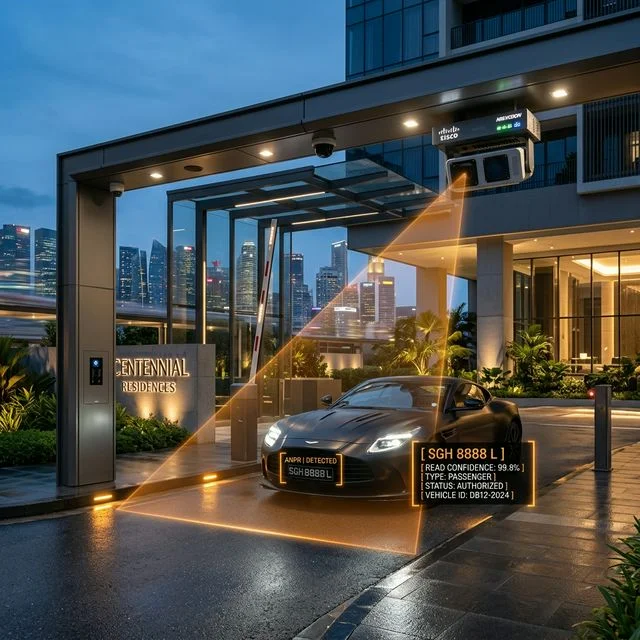
Our vehicle visitor management system handles the vehicle entry flow for residents, registered visitors, pickups, and short-stay arrivals. It recognises resident licence plates for automatic entry, captures visitor vehicle details at the guardhouse, and logs all arrivals automatically against a digital record. Each vehicle category: resident, pre-registered visitor, taxi, delivery, contractor: follows a distinct workflow appropriate to its risk profile and expected duration on-site.
Resident Pre-Invite and Approval Logic
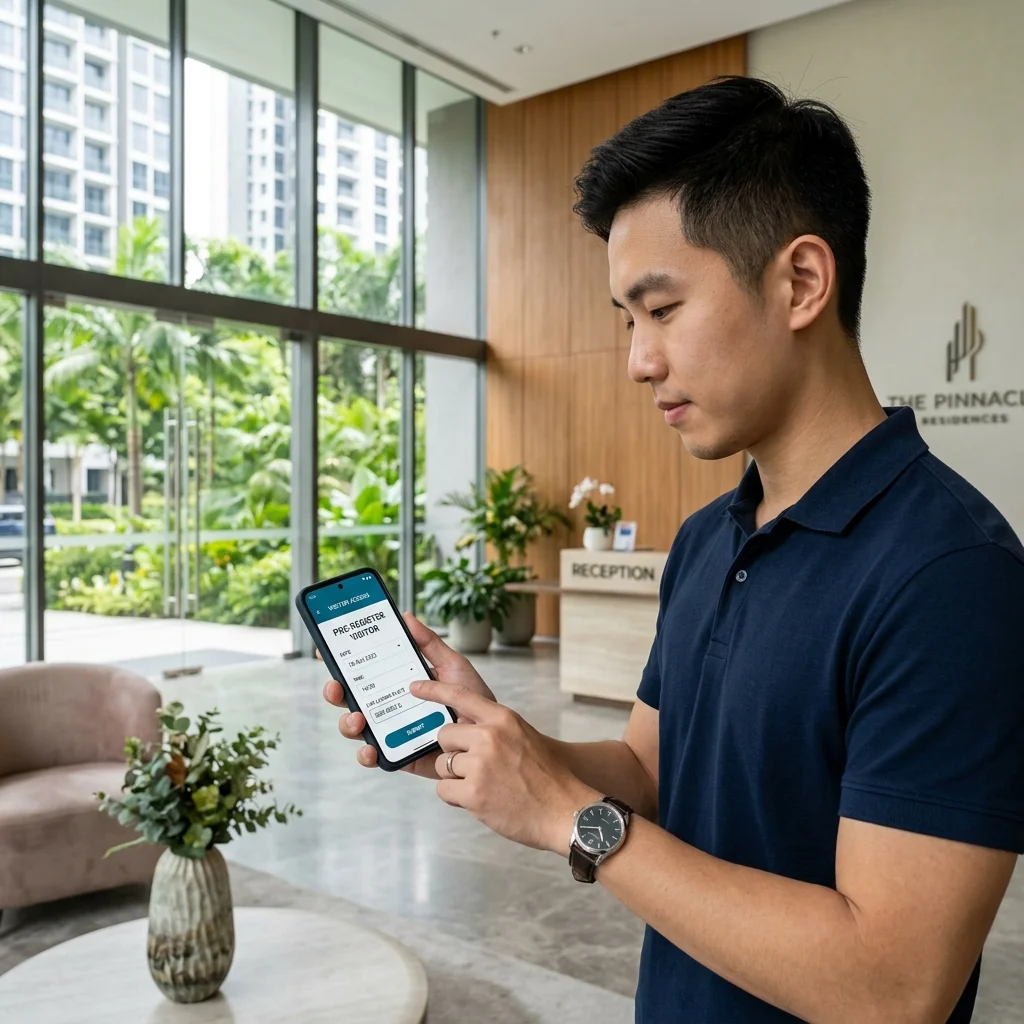
Residents pre-register expected visitors through a mobile interface before arrival. Approved vehicles or guests move through the entrance with less friction while remaining under estate control: the guard confirms identity against the pre-registered record rather than creating a new entry from scratch, which eliminates the verification delay at the barrier. Configurable estate rules determine which visitor types require pre-registration and which can be handled on arrival.
Pedestrian Verification and Resident Contact
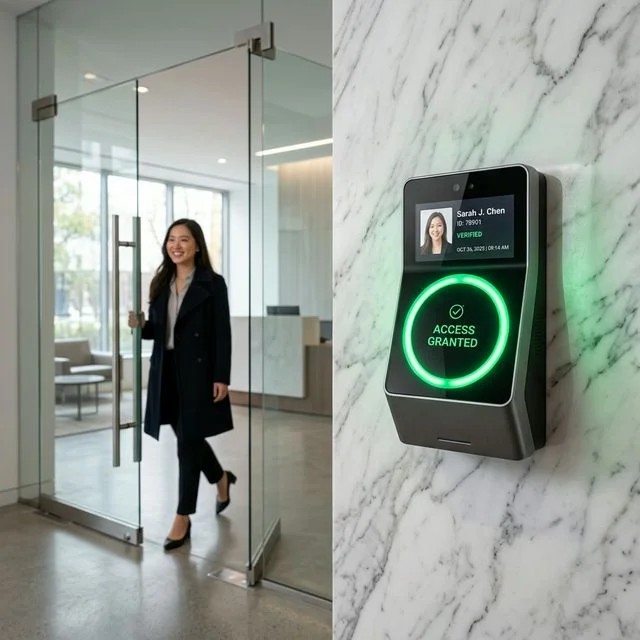
Visitors intercom residents directly at the pedestrian entrance. Depending on the setup, residents may allow entry via remote release from their mobile device, a temporary PIN sent to the visitor's phone, or a QR-based invitation issued in advance. Residents receive the intercom call on their mobile rather than a wall-mounted handset: so they can manage visitor entry regardless of where they are in the estate or whether they are at home.
Better Records and Accountability
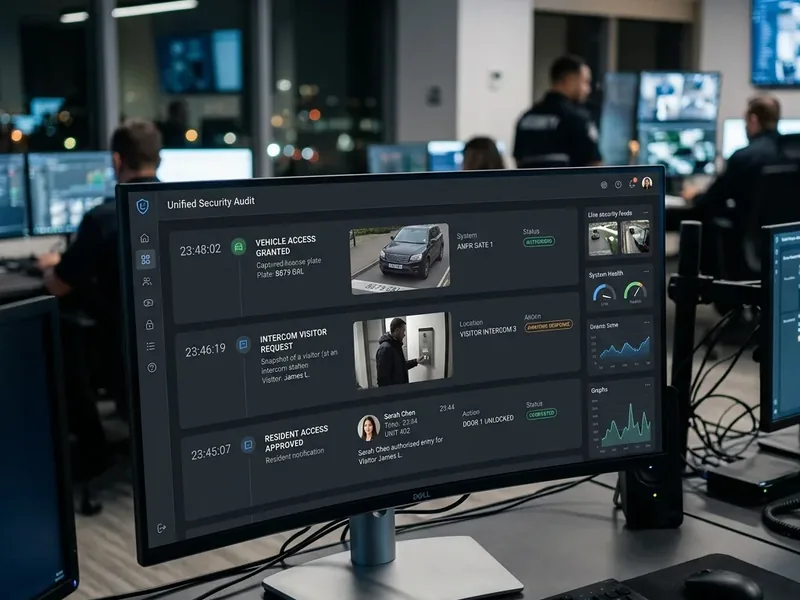
Vehicle and pedestrian entries are linked to digital audit records that are searchable by date, individual, entry point, or visitor category. The estate gains a clear, unified history of who entered, when, and under what access path: available to management within seconds rather than requiring a manual search through paper registers. The record can be filtered and exported for MCST governance reviews, incident investigations, or managing agent reporting.
Especially Effective for Properties with Mixed Visitor Flows
This approach works best where resident convenience, visitor control, and guard efficiency all matter at the same time.
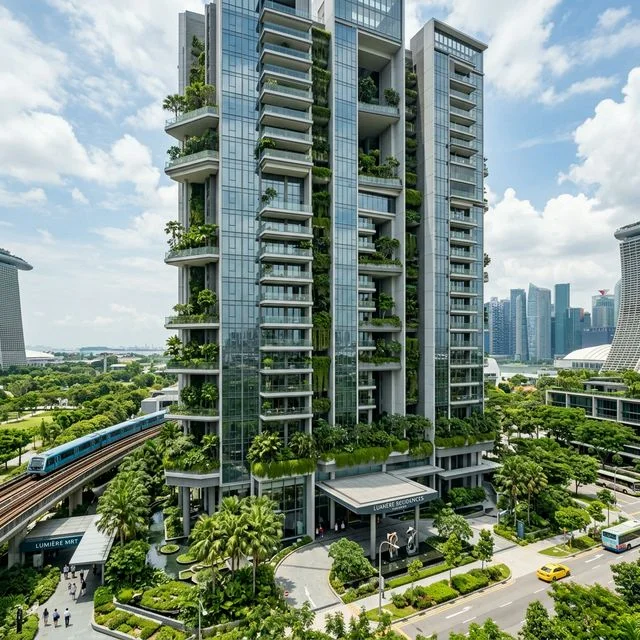
Condominiums & MCSTs
For estates managing residents, guests, taxis, deliveries, and contractors through one entrance system: where inconsistent guard judgement across shifts is the most common source of resident complaints and management disputes.
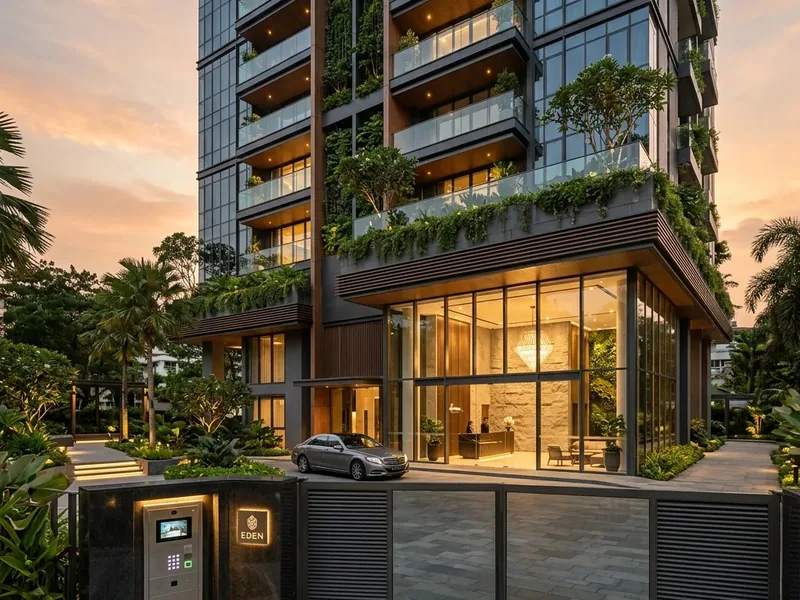
Managed Residential
For sites that need a better resident experience: faster entry for expected visitors, mobile-controlled release, and a reliable digital record: without sacrificing entry control or security standards.

Commercial & Mixed-Use
For locations where vehicle and pedestrian access need a clearer and more auditable operational workflow: particularly where compliance documentation, contractor management, or multi-tenant visitor separation is required.
What Better Visitor Management Improves
A stronger visitor process does more than speed up entry. It redesigns the operational baseline for the entire estate. The guard's role shifts from manual checker to exception handler. Residents stop receiving complaints from visitors held at the gate. Management gains a searchable record that actually supports investigations and governance reviews rather than a paper register that cannot be reliably located when needed.
Reduced gantry wait times for pre-registered visitors
Searchable visitor log replacing paper registers
Key Areas of Improvement
Consistency at the gate across all shifts: the same rules are enforced regardless of which guard is on duty, because the process is driven by the system rather than individual judgement. Resident convenience through pre-registration and mobile approvals. High-quality digital records of all visitor and vehicle interactions. Clear accountability for who is on-site and when they arrived. Operational clarity for both guards and management teams reviewing activity after the fact.
What Affects the Cost of a Visitor Management Upgrade?
Two estates with the same number of units may require very different solutions depending on visitor behaviour, entry point count, and integration requirements.
Number of Entry Points
Each vehicle entry lane and pedestrian access point requires its own hardware: LPR camera, intercom station, barrier integration, and cabling. A single-entrance estate and a large estate with four vehicle lanes and three pedestrian gates represent fundamentally different scopes, even at similar unit counts.
Vehicle Visitor Volume
Estates with high visitor vehicle volumes: busy weekend visiting, frequent deliveries, active contractor access: require more robust visitor capture workflows and proportionally more guardhouse terminal configuration than low-volume estates where most traffic is registered residents.
LPR Integration Requirements
Adding LPR cameras for visitor vehicle capture and pre-registered visitor automatic entry requires cameras, processing hardware, and integration with the visitor management platform. Whether LPR is introduced at all entry points or only at the main vehicle entrance significantly affects the scope.
Intercom and Mobile App Integration
Enabling resident mobile approvals: so residents receive intercom calls on their phones and can release the entrance remotely: requires an IP intercom system compatible with mobile integration. If the estate's existing intercom is analogue or an older proprietary IP system, an intercom upgrade may be part of the visitor management project scope.
Existing Infrastructure
Estates with existing IP intercom, managed network switches, and functioning cabling often require less installation work than estates where the network infrastructure needs to be built. We assess existing infrastructure reuse potential during the site survey before any scope is finalised.
Resident Onboarding Requirements
Introducing a resident mobile app or pre-registration workflow requires a resident communication programme: informing residents of the change, guiding them through app installation, and managing the transition period. The complexity of this process scales with the number of units and the speed at which the estate needs to transition from the old process to the new one.
A Practitioner Observation
In our experience, the most cost-effective visitor management projects start with a clear understanding of where the current process is breaking down: which specific step is generating the most complaints or creating the most guard workload: and address that step first. A targeted improvement to the vehicle visitor workflow, or the pedestrian intercom process, often delivers the majority of the operational benefit without the full cost of a complete system replacement.
Why Properties Use Securevision to Redesign Visitor Flow
We Design for Real Estate Operations
We do not treat visitor management as a standalone software product. We design it around real guardhouse workflows, estate rules, resident expectations, and the operational reality of what happens at a condominium entrance on a busy Friday evening when residents, deliveries, taxis, and contractors all arrive at the same time.
Vehicle and Pedestrian Logic Together
Many systems solve only one side of the problem: either vehicle access or pedestrian intercom, but not both. We connect vehicle visitor management, LPR, intercom, and resident approvals into one operational flow with a single unified record, so there is no gap between the vehicle log and the pedestrian log.
Built for Singapore Estate Realities
Our solutions are designed around MCST governance requirements, managing agent reporting needs, and the everyday traffic patterns of Singapore estates: including the specific challenges of taxi and delivery management that most overseas visitor management platforms do not address.
Frequently Asked Questions
Questions we hear from MCSTs, managing agents, and property managers evaluating visitor management upgrades.
Can visitor management integrate with existing intercom systems?
In most cases yes. Modern IP intercom systems support integration with visitor management platforms so that visitor records, intercom events, and resident approvals are linked in a common log. Whether your existing intercom can be integrated depends on its brand and protocol. We assess integration feasibility during the site survey before recommending any hardware changes.
Can residents approve visitors from their mobile phones?
Yes. Resident mobile approval is one of the most common improvements we implement. When a visitor arrives and calls via the estate intercom, the resident receives the call on their mobile device and can release the door or barrier remotely without being at home or near a wall-mounted handset. For pre-registered visitors, the resident can approve the visit in advance from the same app: so the visitor moves through the entrance with minimal guard interaction.
What happens if a visitor arrives without pre-registration?
Unregistered visitors follow the standard guard-assisted verification workflow: they contact the guardhouse or use the intercom to reach the resident, who approves or declines entry. The visitor's details are captured at that point and logged against the resident and entry time. The system handles both pre-registered and walk-in visitors; pre-registration simply reduces the time required for the verification step.
Can visitor management be linked to vehicle access and LPR?
Yes. Vehicle visitor management and LPR are closely linked. A visitor vehicle's licence plate can be pre-registered by the resident before arrival, allowing the barrier to open automatically on plate recognition without a guard manually verifying the vehicle. For unregistered visitor vehicles, the guard captures the plate, registers the visit, and opens the barrier: the plate is logged for the duration of the visit and flagged if the vehicle overstays.
Do we need to replace our existing barriers to improve visitor management?
Not necessarily. In many projects, the existing barrier remains in place. The improvement comes from adding the visitor management platform, LPR cameras, and workflow logic around the barrier rather than replacing the barrier mechanism itself. Before recommending any replacement, we assess barrier condition, integration capability, and duty cycle to determine whether the existing hardware can support the new visitor workflow.
How long does a visitor management upgrade take?
For a standard condominium with one main vehicle entrance and one pedestrian intercom point, installation and configuration typically takes two to three days. Larger estates with multiple entry points, more complex visitor workflows, or resident app onboarding requirements take longer. We present a phased schedule as part of the proposal so there are no surprises on the handover date.
Can contractors and deliveries be managed differently from regular visitors?
Yes. Contractor and delivery management is configured as a separate workflow from resident visitor access. Contractors can be issued time-limited credentials tied to specific areas and working hours. Delivery vehicles can be handled with a purpose-coded entry: the guard assigns the delivery type, the system logs the entry and exit, and the vehicle is flagged if it overstays the expected delivery window.
What records are retained for audit purposes?
The system retains a timestamped record of every visitor interaction: including visitor identity, the resident or area being visited, entry and exit time, the access method used, and the guard or resident who approved the entry. Vehicle visitor records include the licence plate captured at entry. All records are searchable by date, individual, entry point, or visitor category and can be exported for MCST governance reviews or incident investigations.
Explore Related Insights
How Condominiums Can Reduce Guard Costs with Automation
Explore the operational and financial case for integrated security systems for MCSTs looking to optimise estate operations.
Read Insight →Replacing Logbooks with Digital Visitor Records
The risks of paper-based visitor management and the practical move towards fully digital audit trails for Singapore estates.
Read Insight →Upgrading Intercom Systems for Modern Estate Living
How IP-based intercoms improve security and resident convenience: and what to consider before specifying a replacement.
Read Insight →Ready to Improve Your Visitor Flow?
Tell us about your site. We will assess your current visitor process, map the friction points, and design a system that works from vehicle entry to pedestrian access.
Licensed by the Police Force: Licence · Serving Singapore since 2006