- A burglar alarm system is not a single device; different components have very different lifespans, and the right question is not "how old is the system" but "which parts are still performing reliably?"
- The critical distinction is failure versus obsolescence; a component can become a liability before it stops working.
- Backup batteries are the shortest-lived component in any alarm system, typically three to five years, and a failed battery is one of the most common causes of silent monitoring gaps.
- Alarm wiring, when installed correctly, can remain serviceable for decades. The cabling is usually the last thing that needs replacing.
- Panels and communicators age technologically faster than physically; they may still work long after the platform they depend on has been retired.
- A well-maintained alarm system reliably outlasts a neglected one of the same age. Maintenance is the single biggest determinant of useful system life.
The Answer Is Not a Number
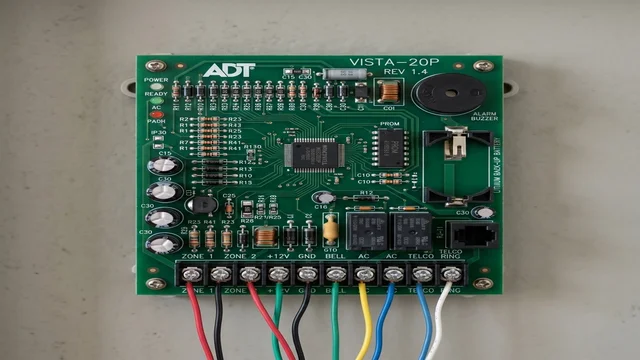
When homeowners ask how long a burglar alarm system should last, they are usually hoping for a simple answer; ten years, fifteen years, replace it after twenty. The honest answer is that the question does not work that way, because a burglar alarm system is not a single device.
It is a collection of components; wiring, detectors, a panel, a keypad, a communicator, a backup battery, external sirens. Each of these has a different useful life. Each ages differently. Each becomes obsolete at a different rate. A fifteen-year-old system may have wiring that will last another twenty years, a communicator that is already obsolete, a battery that needs replacing now, and detectors that are serviceable but behind current capability.
The previous articles covered what can be retained during an upgrade and how to make the upgrade-or-replace decision. This article focuses on the maintenance and lifespan question; how each component ages, what actually causes it to reach the end of its useful life, and how maintenance changes that timeline.
KEY POINT
The wiring may outlast the house. The electronics will not. That simple asymmetry is what makes alarm system lifespan a component-by-component question rather than a system-level one.
Failure and Obsolescence Are Not the Same Thing
Before looking at individual components, it is worth understanding the distinction between failure and obsolescence; because they drive very different responses.
Failure is straightforward. A component fails when it stops doing its job; the detector no longer triggers, the battery no longer holds charge, the panel no longer powers on. Failure creates an obvious problem that is usually impossible to ignore.
Obsolescence is more insidious. An obsolete component may still function perfectly; the panel arms and disarms, the detectors trigger, the siren sounds. But it can no longer communicate with the monitoring centre because the telephone network it depends on has been retired. Or it lacks the mobile app integration that your monitoring service now requires. Or its detector technology is generating false alarms that a current-generation sensor in the same position would correctly reject. The component is working. It is simply no longer fit for purpose in the current environment.
Obsolescence is the more common reason for alarm system upgrades. Most alarm systems in Singapore are not replaced because they fail; they are replaced or upgraded because the world around them has changed and they can no longer fulfil their intended function within that changed environment.
KEY POINT
A component that still works is not necessarily a component that still performs. Asking whether each part of the system is still fit for purpose, not just whether it is still operational; is the right framework for assessing alarm system age.
The Backup Battery; the Shortest-Lived Component
If there is one component that is guaranteed to need periodic replacement, it is the backup battery. Every alarm panel contains a standby battery, typically a sealed lead-acid unit, that keeps the system operational during a mains power failure. This is a safety-critical function: an alarm system that loses power during a power cut and cannot operate is exactly the kind of vulnerability a determined intruder might exploit.
Sealed lead-acid batteries have a well-established lifespan of approximately three to five years under normal operating conditions. In Singapore's climate, that window can be shorter. Sustained heat accelerates battery degradation; a battery housed in a panel box in a poorly ventilated location, running at elevated temperature for years, will deteriorate faster than its rated lifespan. By the time a battery fails visibly; triggering a fault indication on the panel; it has often been operating below adequate capacity for months.
The more dangerous scenario is a battery that fails silently. Some older panels do not generate a clear low-battery warning until the battery is critically depleted. A system that shows no faults on the keypad may have a backup battery that will last minutes rather than hours if mains power fails. This is one of the most common findings during routine maintenance visits; a battery that appears fine from the panel display but tests poorly under load.
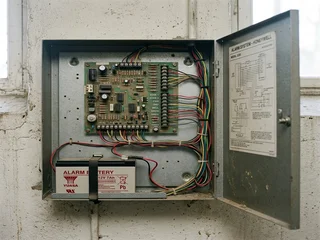
The practical guidance is simple: replace alarm backup batteries every three to four years as a scheduled maintenance task, regardless of whether the panel is showing a fault. The cost of a replacement battery is modest. The cost of discovering the battery was flat during the one power failure that coincided with a genuine intrusion attempt is considerably higher.
PLANNING POINT
If you do not know when your alarm battery was last replaced, assume it needs replacing now. In Singapore's climate, a battery that has not been changed in four or more years is a battery that should not be relied upon for backup power.
Alarm Wiring; the Longest-Lived Component
At the other end of the lifespan spectrum sits the alarm cabling. A properly installed wired alarm system uses multi-core detection cable, typically two-core or four-core; run inside walls, under floors, or through conduit to each detector position. When this cable is installed correctly and left undisturbed, it can remain perfectly serviceable for decades. There are no moving parts, no chemical processes, and no electronic components that degrade. The cable either conducts or it does not.
What degrades alarm cabling is not time alone but physical damage, from pest activity, from previous renovation works that nicked or crushed cables, from moisture ingress in poorly sealed outdoor runs, or from simply being pulled or bent sharply during installation. In Singapore, where renovation is frequent and builders are not always careful about existing cabling, damage from subsequent works is a more common cause of cable failure than age.
This is why the correct approach when assessing whether existing cables can be reused is not to estimate their age but to test them; checking continuity and insulation resistance on every circuit. A cable that tests clean at twenty years is a cable worth keeping. A cable that fails at five years has been damaged, not aged.
KEY POINT
Do not replace alarm cables based on age alone. Test them. If they pass, they are serviceable regardless of how long they have been in the walls. If they fail, the cause is almost always physical damage, not deterioration from age.
Panels and Communicators; Technological Obsolescence
Alarm panels are physically durable. Many units installed fifteen or twenty years ago are still powering on, arming and disarming, and recording events correctly. The electronics inside a quality panel can remain operational for a long time without mechanical failure. The problem is not physical durability; it is that the world the panel was designed for no longer exists.
A panel manufactured in 2005 was designed around PSTN telephone communication, without mobile app integration, without IP supervision, and without the cloud connectivity that modern monitoring platforms require. It may still function in isolation, but it cannot fulfil the monitoring and communication role that a current installation demands. The panel has not failed. It has been overtaken.
Communicators reach obsolescence faster than panels because they are more directly dependent on external infrastructure. A PSTN dialler communicator became obsolete not because it stopped working but because the copper telephone network it depended on was retired. The communicator could dial perfectly until the day the line was migrated to fibre VoIP, and then it could not reach the monitoring centre at all. This obsolescence can be silent: the panel shows no fault, the communicator appears to operate, but the signal never arrives.
For panels and communicators, the useful life question is therefore less about physical condition and more about support status and platform compatibility. A panel whose manufacturer has ceased support will eventually become unmaintainable. A communicator whose underlying network infrastructure has changed may already be non-functional.
KEY POINT
Check manufacturer support status for any panel more than ten years old. And verify; do not assume, that your communicator is still successfully reaching your monitoring centre. Silent communication failure is a real risk in systems that have not been assessed since the PSTN to IP transition.
Detector Lifespan; Age Versus Performance
Detectors occupy an interesting middle position in the lifespan question. Most quality PIR sensors and door contacts will continue to function for ten to fifteen years or longer without mechanical failure. The components inside are simple, the operating conditions are benign, and there is no inherent reason for early failure under normal use.
But as covered in the earlier article on detector technology, the gap between what a detector manufactured in 2005 can do and what a current-generation sensor can do is real and measurable. An older single-technology PIR will detect movement, but it may also generate false alarms from afternoon sun or air-conditioning that a modern unit in the same position would correctly ignore. The detector is not failing. It is simply performing below what current technology delivers in the same role.
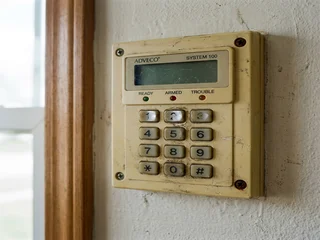
The practical guidance: detectors under ten years old that are not causing active problems are worth retaining during an upgrade. Detectors over fifteen years old are worth replacing as a matter of course, even if they have not caused obvious issues; the improvement in false alarm rejection from current technology is meaningful enough to justify the replacement cost. Detectors between ten and fifteen years should be assessed individually based on performance history and zone environment.
PLANNING POINT
If your system's detectors have been in place for more than fifteen years, the question is not whether they still work; they probably do. The question is whether they perform as reliably as current technology would in the same positions. For most installations, the answer is no.
Maintenance as the Multiplier
Two alarm systems installed on the same day in comparable properties can look very different ten years later. The difference is almost always maintenance.
A system that receives annual maintenance visits has batteries replaced before they fail silently, detector sensitivity checked and adjusted, wiring connections inspected for corrosion or loosening, communication verified as reaching the monitoring centre, and software updated where available. Problems are found small and fixed cheaply. The system continues to perform reliably.
A system that has never been serviced accumulates small degradations invisibly. The battery that has not been replaced in eight years. The detector terminal that has corroded slightly at the connection point and is producing intermittent zone faults. The communicator that has been trying to dial a telephone number that no longer exists. None of these shows as an obvious fault on the keypad display. None of them is caught until something goes wrong; either a genuine incident reveals the gap, or a maintenance visit uncovers several issues at once.
The maintenance multiplier works in both directions. A well-maintained system extends its useful life significantly; battery replacements at the right interval, detector assessments that catch marginal units before they cause problems, and communication checks that verify the path is clear. A neglected system shortens its useful life and creates silent vulnerabilities that make it less reliable than its age alone would suggest.
PLANNING POINT
An annual maintenance contract for an alarm system typically costs a fraction of what a single service call costs when something fails unexpectedly. The economics of preventive maintenance are straightforward, and the reliability benefit goes beyond cost.
Age Is Not the Right Question
The right question about an alarm system is not how old it is. It is whether it is still reliable and still current enough to fulfil its intended function.
A fifteen-year-old system that is properly maintained, has had its batteries replaced on schedule, has current communicators, and has detectors that are performing without false alarm issues may have many years of useful life remaining; particularly if its cabling is sound and can carry a future panel upgrade. That is not an old system. It is a maintained system.
A five-year-old system that has never been serviced, whose battery has never been replaced, whose communicator has never been verified, and whose detectors have been generating intermittent false alarms that the homeowner has learned to ignore, that is a system with a problem, regardless of its age. Age is a proxy for these underlying questions. The underlying questions are what actually matter.
Securevision Verdict
A burglar alarm system does not have a fixed expiry date. Different components age at different rates, and the distinction between failure and obsolescence means that a working component is not always a performing one.
Wiring may remain serviceable for decades. Batteries need replacing every three to four years. Panels and communicators become obsolete technologically before they fail physically. Detectors benefit from replacement after fifteen years even when they are still operational. And maintenance, or its absence; is the single biggest determinant of how long any system remains genuinely reliable. The goal is not to have the newest alarm system. The goal is to have a reliable one.
In Short
The lifespan of a burglar alarm system is not determined by any single component; it is determined by the combination of how well each component was specified, how consistently the system has been maintained, and whether the communication technology it relies on is still current. A system with aged detectors and a recent panel upgrade can be perfectly serviceable. A three-year-old system with a flat backup battery and no monitoring path is not. Age is a factor in the assessment, but it is never the whole answer.

Frequently asked questions
How long does a burglar alarm system last?
A well-maintained burglar alarm system can remain serviceable for 10 to 20 years, though individual components have different lifespans. The backup battery typically needs replacing every 3 to 5 years. Detectors may need attention after 10 to 15 years. The panel itself often outlasts the communication technology it relies on, which is the more common driver of replacement.
When should I replace my burglar alarm system?
Consider replacement when: the panel cannot be upgraded to support current communication paths (particularly if it still relies on PSTN); spare parts for the panel or detectors are no longer available; the system generates persistent faults that servicing cannot resolve; the installer who originally specified the system is no longer able to support it; or the detection coverage no longer matches how the property is used.
What is the lifespan of an alarm backup battery?
Sealed lead-acid batteries in burglar alarm panels typically have a service life of 3 to 5 years under normal conditions. The battery degrades gradually with each charge cycle. A battery that is past its service life may hold less charge and provide shorter backup duration during a power cut. Battery replacement is the single most common maintenance item in alarm systems.
How long do alarm detectors last?
PIR motion detectors and magnetic door contacts can remain functional for 15 years or more under normal conditions. Detector lifespan is affected by the environment; extreme heat, humidity, insects, and physical interference all accelerate deterioration. Wireless detectors have shorter effective lifespans than wired ones because the battery condition and radio module reliability degrade over time.
What is the difference between alarm failure and alarm obsolescence?
Failure means the system has stopped working; a component has faulted, a communication path has been lost, or a detector is no longer triggering correctly. Obsolescence means the system is still functioning but can no longer meet current requirements, for example, it relies on a communication technology that has been decommissioned, or it cannot integrate with modern monitoring platforms. Obsolescence is a more common reason for alarm replacement than failure in well-maintained systems.
Can old alarm wiring be reused when upgrading the system?
In most cases, yes. Alarm wiring, typically 4-core or 6-core alarm cable; has an extremely long service life and rarely needs replacement. The cable that was installed 15 or 20 years ago is generally still serviceable. Reusing existing wiring significantly reduces the cost and disruption of an alarm upgrade.
How do I know if my alarm system needs servicing?
Indicators that a system needs attention include: persistent fault indicators on the keypad, a low battery warning, detectors that trigger without apparent cause, zones that show as open when the associated door or window is closed, or failure of the system to arm correctly. Annual servicing is recommended regardless of whether these signs are present.
What happens when an alarm panel is no longer supported by the manufacturer?
When a manufacturer ends support for a panel model, firmware updates, security patches, and spare parts eventually cease to be available. This does not immediately make the panel non-functional, but it means that faults that cannot be resolved without replacement parts will result in the system being decommissioned. It also means the panel cannot be updated to address newly discovered vulnerabilities.
Is it worth repairing an old alarm system or should I replace it?
The answer depends on what specifically has failed, the age of the system, and the availability of parts. A single failed detector on a 10-year-old system with a current communication module is worth repairing. A 15-year-old system where the panel manufacturer no longer supports the model, the PSTN dialler is the only communication path, and two zones have faulted this year is a strong candidate for replacement.
How often should a burglar alarm system be serviced?
Annual servicing is the standard recommendation for residential burglar alarm systems in Singapore. Commercial and high-security properties often require more frequent servicing. A service visit should include testing all detectors and zones, checking backup battery condition, verifying communication path integrity, inspecting external siren and strobe condition, and confirming monitoring centre connection.
Who should service my burglar alarm in Singapore?
Alarm servicing in Singapore must be carried out by a company licensed under the Police Licensing and Regulatory Department (PLRD). Your original installer should be able to provide ongoing maintenance. If you are changing service providers, ensure the new company is PLRD licensed and has experience with the specific panel model installed.