- Existing alarm wiring can often be reused when upgrading a burglar alarm system, in many Singapore properties, the cables are still in perfectly good condition years after the original installation.
- Reusing cables reduces installation costs, shortens the upgrade timeline, and avoids hacking walls and repainting; significant advantages in a completed property.
- Existing detectors may also be reusable if they are in good condition, but modern detectors offer meaningfully better false alarm rejection than older units.
- The alarm panel, keypad, and communication module are typically the components most worth replacing; these are where technology has advanced most significantly.
- A site assessment is needed before deciding what to keep; cable condition, detector age, and whether the original zone layout still makes sense all need to be evaluated.
- A good upgrade is not about replacing everything. It is about replacing the right things.
"Do I Need to Rewire the Whole House?"
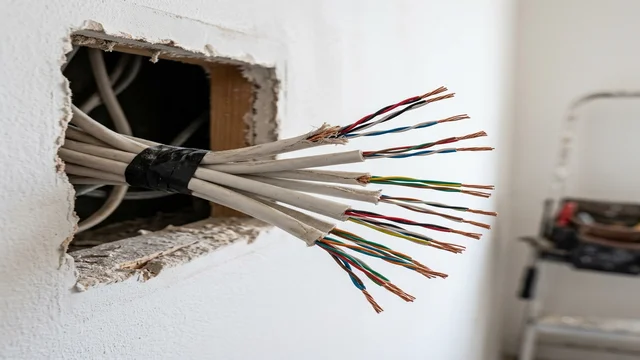
This is one of the first questions homeowners ask when considering an alarm upgrade, and it is a reasonable concern. Nobody wants to hack open walls, run new cables through finished ceilings, and repaint everything afterwards. In Singapore, where most properties are fully fitted and renovation work is disruptive and expensive, the prospect of rewiring an entire alarm system is enough to put some homeowners off upgrading at all.
The good news is that in many cases, rewiring is not necessary. The cables installed during the original alarm installation are often still in perfectly serviceable condition, and because most wired alarm panels use industry-standard zone inputs, those cables can connect to a new panel just as reliably as they connected to the old one.
KEY POINT
The question is not whether your property needs a new alarm system. It is which parts of the existing system are still worth keeping. In many upgrade scenarios, the answer is most of the cabling, and sometimes the detectors as well.
One of the Biggest Advantages of Wired Alarm Systems
One of the strengths of a properly installed wired alarm system is that the physical infrastructure; the cables concealed inside the walls and ceilings; can last far longer than the electronics connected to it. The alarm panel may become obsolete. The keypad may become outdated. The communication technology may change, as we have seen with the transition from PSTN to IP monitoring. But the cables themselves, if installed correctly and left undisturbed, often remain perfectly usable for decades.
This means that when it is time to upgrade the system, the most disruptive and expensive part of the original installation; running cables through a completed property; does not need to be repeated. A new panel can be connected to the existing cable infrastructure. The upgrade focuses on the components where the improvement in technology actually delivers value, rather than on replacing infrastructure that still works.
This is one of the primary reasons I continue to recommend wired alarm systems for landed homes, commercial properties, and any installation where long-term ownership is expected. The upfront investment in properly installed cabling pays for itself every time the system is upgraded.
KEY POINT
A well-installed wired alarm system is not a static installation; it is a platform. The cables provide the foundation. The technology connected to them can be updated as it improves, without the cost and disruption of starting from scratch.
Why This Matters in a Singapore Property
In Singapore, the practical value of cable reuse is especially significant. Most properties here are built from reinforced concrete; running new alarm cables through finished walls means hacking into concrete, channelling, and making good afterwards. For a property with ten or fifteen detector positions across multiple floors, that is a substantial renovation exercise in itself.
Reusing existing cables eliminates almost all of that disruption. The installation work is largely confined to the panel location and the individual detector positions. The walls stay intact. The ceilings stay painted. The upgrade can typically be completed in a day rather than several days. For homeowners who want to improve their alarm system without turning the house into a construction site, this is a meaningful advantage.
It also reduces cost significantly. Labour for cable installation in a completed Singapore property is expensive. If that cost can be avoided entirely because the existing cables are still serviceable, the overall upgrade budget is substantially lower.
PLANNING POINT
Before getting an alarm upgrade quote, ask specifically whether existing cables can be tested and reused. A good installer will check cable continuity and insulation before committing either way. An installer who quotes for full rewiring without first testing the existing cables is not doing you a service.
Can the Existing Detectors Be Reused Too?
Sometimes yes, sometimes no, and the answer depends on both the condition of the detectors and how old they are.
Most wired alarm panels accept industry-standard detector inputs, which means detectors from different manufacturers and different eras can typically connect to a new panel without issue. If the existing detectors are working correctly, not excessively old, and suitable for the environment they are protecting, there is a reasonable case for retaining them. This can reduce upgrade costs further and avoid unnecessary replacement of equipment that still performs adequately.
The more nuanced consideration is whether the detectors, even if functional, are still the best choice for their location. A detector that works reliably is not necessarily a detector that performs as well as current technology allows. This is where the age of the detectors matters more than their operational status.
KEY POINT
A working detector and a performing detector are not always the same thing. The detector triggers alarms, but does it trigger the right alarms, and does it reject the wrong ones as reliably as a modern unit would? That question is worth asking before deciding to retain older units.
Why We Sometimes Recommend Replacing the Detectors
As covered in the earlier article on modern detector technology, alarm detectors have improved substantially over the last two decades. Older PIR sensors were effective at detecting movement but less capable of distinguishing genuine intrusions from environmental disturbances; sunlight, airflow, temperature changes, and pets could all cause activations that a modern sensor would correctly reject.
Modern detectors apply more sophisticated signal processing, require confirmed detections rather than reacting to single events, and include features like pet immunity that were not available or reliable in earlier generations of hardware. For a property that has experienced persistent false alarms, replacing the detectors; even while retaining the cables; can make a more significant difference to daily reliability than replacing the panel alone.
The practical recommendation is this: retain detectors that are less than eight to ten years old and have not caused false alarm problems. Replace detectors that are older, that have generated nuisance activations, or that are positioned in environments where current technology would perform meaningfully better. The cables stay regardless; the detector replacement decision is made zone by zone based on the actual performance of each unit.
DESIGN RULE
Retaining old detectors to save cost makes sense if they are still performing reliably. Retaining them because replacement feels wasteful; even when they are causing false alarms or were manufactured fifteen years ago; costs more in the long run than the price of new sensors.
What Usually Gets Replaced
In a typical alarm upgrade where existing cables are retained, the components most likely to be replaced are the alarm panel, the keypad, and the communication module.
The alarm panel is the brain of the system, and panel technology has advanced considerably. Modern panels support mobile app integration, cloud connectivity, video verification input, cross-zoning, and a range of features that older panels simply cannot provide. Replacing the panel is almost always worthwhile because it is where the greatest improvement in capability is available for the investment.
The keypad follows from the panel. Modern keypads are typically touchscreen or graphic display units that integrate with the panel's software features. An older keypad is unlikely to be compatible with a new panel and is generally replaced as part of the same exercise.
The communication module is the third component typically replaced, and in many cases the most urgent one. As covered in the earlier article on PSTN to IP monitoring, many alarm systems installed more than ten years ago still use PSTN diallers. As Singapore's copper telephone infrastructure is progressively retired, those diallers will lose their ability to reach monitoring centres. Replacing the communicator with an IP and cellular module is not an optional upgrade; it is eventually a necessity for any property that wants to remain on professional monitoring.
KEY POINT
If your existing alarm system still uses a PSTN dialler for monitoring, the communicator replacement alone may be the most important upgrade to prioritise; regardless of the condition of the rest of the system.
What We Check Before Deciding
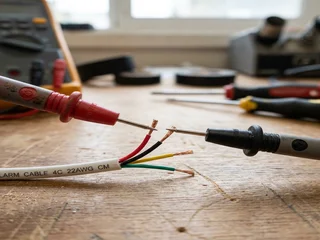
A proper assessment before any upgrade starts with the cables. We test continuity on every zone circuit to confirm the wiring is intact and that there are no breaks, shorts, or insulation failures. In older properties, cables can be damaged by pest activity, by previous renovation work, or simply by age; particularly if they were not installed in conduit. A circuit that tests cleanly can be reused with confidence. One that shows faults needs to be investigated before committing to a panel connection.
Detector condition comes next. We check that each detector is responding correctly, review any history of false activations on that zone, and assess whether the detector type is still appropriate for the environment; accounting for any changes in room use, furniture layout, or airflow since the original installation.
We also review the zone layout against the current security requirements of the property. A system originally designed for a family of four may be zoned differently from what the same property needs now that occupancy has changed, children have grown up, or the property is used partly as a home office. The cables running to each detector position are fixed, but how those detectors are grouped into zones and how each zone is programmed can be updated without any physical work.
PLANNING POINT
An alarm upgrade assessment is not just about what the installer can reuse; it is also an opportunity to review whether the original zone design still matches how the property is actually used. Layout changes over years of occupation often mean that the original zoning logic no longer reflects the real risk profile.
Wired Systems Age Gracefully
The renovation analogy is worth spending a moment on. When you renovate a property, you do not usually demolish the entire structure and start from scratch. You assess what the building still provides; solid foundations, good bones, a layout that works, and you improve the parts that have aged, degraded, or been overtaken by better alternatives. New kitchen, retained structure. New bathrooms, retained plumbing routes. New finishes, retained walls.
A wired alarm system works the same way. The cables are the bones of the system; installed once, maintained over time, reused across upgrades. The panel, keypad, communicator, and eventually the detectors are the finishes; components that benefit from periodic replacement as technology improves. A system installed in 2005 with good quality cabling can be running current-generation equipment in 2025 at a fraction of the cost of a full replacement, with none of the disruption.
This is why I consistently tell homeowners that the cost of a properly installed wired system is not just the upfront installation price. It is the total cost over the lifetime of the property, and over a twenty-year horizon, a system that can be upgraded panel-by-panel without rewiring will almost always be less expensive than one that needs complete replacement every time the technology changes.
KEY POINT
A well-installed wired alarm system is one of the few security investments that genuinely appreciates in value over time, not because the components last forever, but because the infrastructure they depend on does.
The Right Upgrade, Not the Biggest Upgrade
The most cost-effective alarm upgrade is rarely the most comprehensive one. It is the one that accurately identifies which components still provide value and which have been meaningfully overtaken by better alternatives, and replaces only the latter.
In practice, this often means retaining cables and some detectors, replacing the panel and communication module, and making zone programming updates to reflect how the property is currently used. For a property with a fifteen-year-old system, that approach can deliver a system that performs like a current installation at significantly less than the cost of starting from scratch. For a property where the original installation was particularly well-executed; good quality cable, well-positioned detectors, sensible zone design; even more can be retained.
Conversely, a property where the original installation was done cheaply; thin cable in poor condition, detectors in problematic locations, a zone layout that never really made sense; may genuinely benefit from a more thorough refresh. The assessment determines which scenario applies. There is no universal answer, and any recommendation made without a proper site assessment should be treated with caution.
Securevision Verdict
One of the biggest advantages of wired alarm systems is their upgrade flexibility. In many Singapore properties, existing cables and some detectors can continue serving reliably for many years; allowing homeowners to benefit from modern alarm technology without the cost and disruption of a complete replacement.
The key is understanding which parts of the system still provide value and which have been overtaken by newer technology. A good upgrade is not about replacing everything. It is about replacing the right things, and knowing the difference requires a proper assessment, not a standard quote based on assumptions.
In Short
The cable is rarely the problem. In the vast majority of alarm upgrade projects we carry out in Singapore, the existing wiring is retained; it is in good condition, it performs well, and replacing it would add cost and disruption without improving the outcome. The components that matter in an alarm upgrade are the panel, the communication module, and the detectors. Getting those right is what determines whether the upgraded system performs well for the next decade. The wiring is almost always already doing its job.

Frequently asked questions
Can I reuse my existing alarm wiring when upgrading my system?
In most cases, yes. Alarm cable, typically 4-core or 6-core copper cable; has a very long service life and can carry signals reliably for 20 years or more under normal conditions. When upgrading an alarm panel or replacing detectors, the existing cable infrastructure is usually retained, significantly reducing the cost and disruption of the upgrade.
What type of cable is used for burglar alarm wiring?
Most burglar alarm installations in Singapore use 4-core or 6-core alarm cable, which contains multiple strands of copper wire within a PVC outer sheath. The cable carries both power and signal from the panel to each detector. The same cable type has been used for decades and is compatible with both older and modern alarm equipment.
When would alarm wiring need to be replaced?
Wiring replacement is necessary when: the cable insulation has physically deteriorated or been damaged; connectors at the detector or panel end have corroded beyond recovery; the cable run length exceeds the specification for the new equipment being installed; or the cable has been cut, spliced, or otherwise interfered with in ways that affect signal integrity. These situations are less common than many people expect.
How do I know if my alarm wiring is still in good condition?
An electrician or alarm engineer can perform a continuity and insulation resistance test on the existing cable runs to confirm they are serviceable. In practice, most Singapore residential alarm wiring in conduit or concealed within walls has been protected from environmental damage and tests well even after 15 to 20 years.
Can I reuse old alarm detectors when upgrading the panel?
It depends on the detector type and the new panel's compatibility. Passive infrared (PIR) detectors and magnetic contacts use standardised wiring and are generally compatible across panel brands. However, detectors that are 15 or more years old may have deteriorated even if they have not failed outright. During a panel upgrade, it is common practice to replace detectors that are showing signs of age or unreliability while retaining those that are performing well.
Why are alarm cables usually in conduit in Singapore properties?
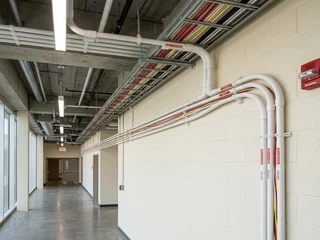
Electrical and signal cabling in Singapore residential and commercial properties is typically run in conduit; plastic or metal tubes embedded in walls or ceilings; during construction. Conduit protects the cable from physical damage, moisture, and pest interference, and makes it possible to pull replacement cable through the same route without opening walls. This is one of the reasons why alarm wiring in Singapore properties tends to age well.
What happens to the alarm wiring during a panel replacement?
During a panel replacement, the existing cable runs are typically left in place and reconnected to the new panel. Each zone cable is identified, labelled if not already marked, and connected to the corresponding zone terminal on the new panel. A competent installer will conduct zone testing after reconnection to confirm all detectors are communicating correctly before commissioning the system.
Can a wireless alarm system use the same wiring as a wired system?
No. A wireless alarm system uses battery-powered wireless detectors that communicate with the panel by radio, so there is no detector cabling to connect. If you are converting from a wired to a wireless system, the existing alarm cable is simply abandoned in place; it does not need to be removed. The cable remains in the walls and causes no issues.
Is it possible to add new cable runs to an existing system?
Yes; additional cable runs can be installed to extend coverage to new areas. In a renovated property where walls are open, new cable can be installed and conduit added easily. In a completed property, new cable can be surface-mounted in trunking or pulled through existing conduit where capacity allows. New cable additions are a normal part of expanding an alarm system's coverage.
How much does it cost to rewire an alarm system in Singapore?
If rewiring is genuinely required, which is uncommon; the cost depends on the size of the property, the number of cable runs, and the accessibility of the routing. In a typical Singapore apartment, rewiring might add $400 to $800 to an alarm upgrade project. In a landed property with more extensive cabling, the cost would be higher. In most cases, this cost is avoided entirely because the existing cabling is reusable.
Who should assess whether my alarm wiring can be reused?
A licensed alarm installer can assess the condition of existing wiring during a site visit. This assessment involves visual inspection of accessible cable sections and testing of each run with a multimeter or cable tester. The assessment takes 20 to 30 minutes for a typical residential property and should be part of any alarm upgrade quotation process.