- Good security is about layers, not a single device; each layer increases the effort and risk for an intruder.
- Most break-ins occur because of simple weaknesses that are overlooked, not because a sophisticated attack was planned.
- Lighting, visibility, and access control are just as important as CCTV and alarms; often more so.
- Burglars are looking for the easiest target, not the most valuable one. Making your property more trouble than the next one is the goal.
- The alarm should be the last line of defence, not the only one; fix the physical weaknesses first.
- Start by looking at your property through the eyes of someone trying to get in. The priorities become surprisingly clear.
If I Were the Burglar, How Would I Get In?
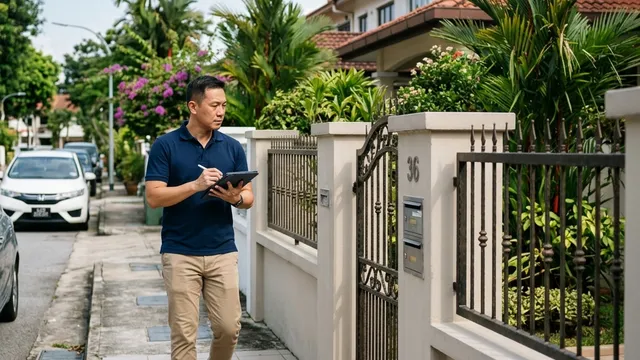
One of the questions I sometimes ask homeowners is this: if you were a burglar, how would you break into your own house? Most people laugh. Then they start walking around the property and suddenly begin noticing things they have never noticed before. A dark side passage. A gate that does not close properly. A window hidden behind overgrown plants. A CCTV camera pointing in the wrong direction. A sliding door that probably would not take much effort to force open.
The truth is that most burglars do not randomly pick a property. They assess it. They are asking themselves two simple questions: how easy is it to get in, and how likely am I to get caught? After more than three decades in the security industry, these are the same questions I ask whenever I visit a site. Whether it is a Singapore landed home, an office, a warehouse, or a retail shop, the principles are remarkably similar. Here are the ten things I look for.
KEY POINT
The most effective security assessment is the one you do yourself; walking your property slowly, looking for the places where someone could approach, linger, or work without being seen. Most homeowners find at least three things they want to change within the first five minutes.
Can Someone Approach the Property Without Being Seen?
The first thing I look for is visibility. Can someone walk up to the property and position themselves at a door, window, or gate without attracting any attention? Many Singapore properties have dark side passages between terrace houses, hidden rear entrances accessed through carparks, blind corners where vegetation has grown to screen the view, or areas where the perimeter wall creates a shadow that is not covered by any camera or light.
These are not just aesthetic concerns. They are opportunities. A burglar prefers privacy. The less likely they are to be seen approaching or working on an entry point, the more comfortable they become, and the longer they are willing to spend. If I find an area where someone could stand for several minutes without being noticed by a neighbour, a passerby, or a camera, I know where the assessment needs to start.
KEY POINT
Visibility is free. Cutting back vegetation, repositioning a light, or adjusting a camera angle costs almost nothing compared to the improvement it creates. The goal is to ensure that anyone approaching the property is visible from somewhere; a neighbour's window, a common area camera, a well-positioned garden light.
How Many Layers Must Someone Defeat?
One lesson I learned early in my career is that security is never about a single device. A lock is not security. A CCTV camera is not security. An alarm system is not security. Real security comes from layers; each one increasing the effort required, each one increasing the risk of detection, each one giving the intruder another reason to look for an easier target.
A well-secured Singapore landed property might have a perimeter gate, a locked grille at the main entrance, motion-triggered lighting across the approach, CCTV covering the main access points, and an alarm system with monitoring. Each of those layers can theoretically be defeated. Together, they create a cumulative deterrence that most opportunistic burglars will not attempt. The objective is not to create an impenetrable property; it is to make your property noticeably more trouble than the one next door.
KEY POINT
Count the layers between the street and your valuables. If the answer is fewer than three; say, just a front door lock, that is where to start. Each additional layer you add changes the risk calculation for an intruder significantly.
Where Are the Blind Spots?
Every property has blind spots; areas that are not covered by any camera, not visible from any neighbouring property, and not illuminated at night. The question is not whether they exist. The question is whether you know where they are before someone else discovers them.

When I walk around a site I look specifically for places where someone could hide, climb, wait, work on a lock, or force a window without being observed. In Singapore properties this is often the side passage between terrace houses, the area behind the utility meter box, the back fence line where tree cover is dense, or the car porch if it is not covered by a camera. Sometimes the solution is as simple as trimming a hedge or installing a single additional light. Sometimes it requires a camera repositioned or a new zone added to the alarm. The important thing is identifying the blind spots deliberately rather than discovering them after an incident.
PLANNING POINT
Walk your property perimeter after dark. You will notice blind spots that are completely invisible during the day. Bring a torch and mark the positions where you could stand for more than thirty seconds without any light reaching you. Those are the positions that need addressing first.
Is the Door Stronger Than the Lock?
Many homeowners focus on the lock. I often focus on the frame. Over the years I have seen doors where the lock was perfectly adequate but the frame failed under a single hard kick. The intruder did not defeat the lock; they defeated the door around it. A deadbolt morticed into a hollow timber frame held by ageing screws is not significantly stronger than no lock at all.
This is why I always look at door frames, hinge condition, strike plates, and the construction of the door leaf itself rather than just the cylinder or padlock. The same principle applies to sliding doors; the track, the anti-lift fitting, and the quality of the locking mechanism all matter, and many sliding door installations I see in Singapore properties are secured by nothing more than the factory catch. Grilles are commonly added for exactly this reason, but a grille that is bolted to a weak frame has simply moved the weak point one component downstream.
KEY POINT
Security is only as strong as the weakest component in the chain. A high-quality lock on a weak frame is a weak door. A strong door with a poor lock is the same problem from the other direction. Assess the whole assembly, not just the hardware.
What Happens at Night?
A property can look secure during the day and completely different after dark. This is why I always recommend that owners walk their property at night, not just during the day when the assessment feels comfortable. You will notice things you have never noticed before: the gate that casts a deep shadow across the side passage, the corner of the carport that sits in complete darkness, the motion sensor light that triggers too late or covers too narrow an angle.
Motion-triggered lighting remains one of the most effective and affordable security measures available, and it is consistently underused in Singapore residential properties. A burglar who finds themselves suddenly standing in a flood of light in an otherwise dark residential street has a decision to make very quickly. Most choose to leave. Lighting does not prevent entry, but it removes the cover that most opportunistic burglars depend on.
PLANNING POINT
Install motion-triggered lighting at every entry point and any area where someone could approach without being seen. Aim for coverage that activates before someone reaches the door or gate, not after they are already standing at it. The deterrent value comes from the sudden, unexpected exposure, not from illuminating someone already in position.
Can People See the Cameras?
This surprises some people. I actually want potential intruders to see the cameras. A visible camera is already doing part of its job before anything has happened; it is communicating that the property is monitored, that images will be captured, and that the risk of identification is real. In deterrence terms, a camera that is noticed is more valuable than one that is hidden.
Camera placement still matters significantly. A camera mounted so high that it captures nothing usable, or positioned to cover only the top of someone's head, creates the appearance of coverage without the substance. What I am looking for is cameras positioned to clearly capture face-height imagery of anyone approaching the main entry points, visible enough to be noticed but positioned to record useful detail. The two objectives are not contradictory; a camera at two metres height, clearly housing on a prominent bracket, with its lens aimed at the natural approach path, achieves both.
DESIGN RULE
Position cameras so they are visible from the approach but angled to capture usable facial imagery. The deterrent value and the evidential value are both maximised when the camera is obvious, well-positioned, and clearly operational.
If Something Happens, Who Will Know?
This is where the alarm system enters the picture, and it is worth being clear about what it is for. The alarm's primary job is to create urgency. The moment the siren activates, attention is drawn to the property, the intruder knows they have been detected, and time starts working against them. Whether the alarm reports to a monitoring centre or directly to the homeowner's phone, the critical question is whether someone will know what is happening quickly enough to respond while the incident is still in progress. The article on alarm sirens and the article on monitoring centres cover both dimensions in detail.
What I am assessing at this stage of a site walk is whether the notification chain is complete and current; whether the monitoring account has a valid contact list, whether keyholders are still reachable, and whether the communication path has been verified recently. A well-specified alarm with an outdated contact list and a PSTN dialler on a fibre line is not protecting the property the way its owner believes it is.
PLANNING POINT
An alarm system is only as useful as the response it generates. Verify your monitoring account's contact list, keyholder details, and communication path at least once a year, not just at the point of installation.
What About the Sliding Doors?
If there is one area that homeowners consistently underestimate, it is sliding doors. In Singapore landed properties especially, sliding doors at the back of the house, patio doors onto the garden, service entrances, and rear access points are often treated as secondary entrances, and therefore given secondary attention when it comes to security. Intruders frequently view them differently.
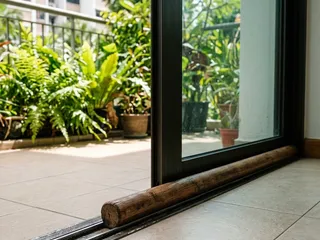
Sliding door security depends on three elements: the lock quality, the anti-lift fitting, and the track stop or security bar. Most standard sliding door installations in Singapore residential properties have only the factory catch, which can often be defeated by lifting the door out of the track, by jiggling the latch, or simply by applying force to the frame. A steel security bar dropped into the track, combined with an anti-lift device on the door itself, costs very little and changes the effort required to force entry substantially.
KEY POINT
Check every sliding door in the property. Lift the door slightly while it is locked and see if the panel moves in the track. If it does, the anti-lift protection is inadequate. A simple anti-lift block or pin costs almost nothing and closes that vulnerability immediately.
Are the Neighbours Paying Attention?
Technology matters. People matter too. In many Singapore landed estates and residential streets, alert neighbours remain one of the most effective security assets available, and one of the least discussed. People notice things that no camera captures: an unfamiliar vehicle parked in front of the house for two hours, someone who walked past the gate three times in the same morning, a contractor van parked outside a property that does not appear to be undergoing renovation.
This kind of natural neighbourhood attention creates a layer of surveillance that no security system can fully replicate. It is not something you can install; it is something you cultivate, by being the kind of neighbour who pays attention yourself and by maintaining enough of a relationship with the people around you that they would think to call if they noticed something unusual. In my experience, the properties that get burgled in otherwise well-secured streets are often the ones where the owner has been away for an extended period and the neighbours were not aware of it.
KEY POINT
Tell a trusted neighbour when you are going to be away for more than a few days. Ask them to keep an eye on the property and to contact you or the police if anything looks unusual. This costs nothing and adds a layer of human attention that no camera subscription can replace.
What Happens If Everything Else Fails?
This is where I often see homeowners approach security backwards. They ask about alarm systems first. Then CCTV. Then smart home integration. Those things are all important, but they should not be the first conversation. The first conversation should be about the weaknesses: the gate that does not latch properly, the dark passage with no light, the sliding door with no secondary security, the blind spot behind the garden shed.
Fix those first. They are usually inexpensive, often require no professional installation, and they directly address the most likely routes an opportunistic burglar would take. Then add detection, verification and monitoring as the electronic layer on top of a physical foundation that is already sound. An alarm system that is the only line of defence; installed in a property with poor lighting, an unsecured side gate, and a sliding door that can be lifted out of its track; is doing much more work than it should need to do.
The alarm should be the last line of defence, not the only one. By the time the alarm fires, something has already gone wrong with every other layer. Good security design means ensuring there are enough layers that the alarm rarely needs to fire at all.
Securevision Verdict
After more than 35 years in this industry, I have found that most properties do not need expensive solutions. They need the right ones. In many cases, a few simple improvements; better lighting, a repaired gate, a security bar on the sliding door, some trimmed vegetation; can change the risk profile of a property more meaningfully than a new alarm system installed on top of unaddressed physical weaknesses.
The key is to stop looking at your property as the owner and start looking at it as someone trying to get in. Walk the perimeter at night. Find the blind spots. Count the layers. Ask yourself honestly where the weakest points are. Once you do that, the priorities become surprisingly clear, and the fixes are usually simpler than you expected.
In Short
A security assessment is not a sales process; it is a diagnostic process. The ten questions in this article are the ones that reveal whether a property has genuine security gaps or simply ageing equipment. The properties that concern me most are not the ones with no system at all, but the ones with a system that has not been reviewed in five years, where the monitoring subscription may have lapsed, where the backup battery is flat, and where nobody has walked the perimeter to check what has changed since the original installation. A two-hour assessment costs very little. Finding out what it reveals is what matters.

Frequently asked questions
What is a security assessment?
A security assessment is a systematic review of a property's physical security; identifying vulnerabilities, evaluating existing measures, and recommending improvements proportionate to the risk. A thorough assessment covers approach routes, entry points, detection coverage, lighting, response plans, and the current operational state of any installed security systems. The output is a clear picture of where the property is adequately protected and where meaningful gaps exist.
How often should a property's security be assessed?
A security review is appropriate whenever the property has been extended or altered, when occupancy or usage patterns have changed significantly, when a security event has occurred nearby, when the installed security system has not been serviced in the past 12 months, or simply when the last deliberate review was more than two years ago. Annual review is a reasonable baseline for commercial properties; residential properties benefit from a review every two to three years.
What is a blind spot in a security context?
A blind spot is an area of a property that is not covered by any detection or surveillance system; a space an intruder could enter, move through, or occupy without being detected by cameras or alarm sensors. Common blind spots include the rear of a property not visible from any camera, areas between camera fields of view, and spaces added to the property after the original security system was installed.
Why is the perimeter approach more important than the door lock?
Most security failures begin not at the door but in the approach; the route an intruder takes to reach the door. A property that can be approached without being seen, without triggering any lighting, and without passing any camera or detector provides an intruder with time and concealment to work on a door lock at length. Making the approach visible, lit, and monitored is often more effective than upgrading the lock on the door itself.
What does 'layers of security' mean for a residential property?
Layers means multiple independent obstacles between an intruder and the interior. For a Singapore landed property, this typically means: perimeter lighting and visibility; a gate with access control or intercom; alarm detectors on windows and doors; interior motion detectors; and monitored communication to a response centre. Each layer independently deters, detects, or delays; so that a failure in one does not leave the property unprotected.
What is the sliding door problem in Singapore security assessments?
Sliding doors; particularly at the rear of landed properties; are a consistent vulnerability. The door itself may have a lock, but sliding doors are often more easily forced or lifted off their tracks than hinged doors. They also frequently lack alarm contacts because they were added after the original alarm system was installed, or because the installer did not specifically protect them. Confirming that all sliding doors have magnetic contacts or vibration sensors is a standard part of any security assessment.
How do I know if my alarm monitoring is still active?
Contact your monitoring centre and ask them to confirm when they last received a poll from your panel. If you cannot identify who your monitoring centre is, check your alarm panel documentation or ask your installer. A monitoring subscription that has lapsed, or a communication path that has failed silently; means your alarm is sounding into nothing when it triggers. Verifying monitoring status is one of the first things we check during an assessment.
What should I look for when assessing camera coverage?
Check: does every external entry point have camera coverage? Can the camera footage identify a person at each entry point, or does it show only a shape? Are there approaches to the property not covered by any camera? Is the lighting at camera positions adequate for night footage? Has the camera field of view been obstructed by tree growth or new structures since installation? And is the NVR actually recording and retaining footage for the expected period?
What is the neighbour effect in residential security?
Properties in close proximity to neighbours benefit from informal surveillance; a neighbour who notices an unfamiliar vehicle or an unusual activity and reports it. This informal awareness is a genuine security benefit, particularly in Singapore's high-density residential environment. Maintaining good relationships with neighbours, participating in residents' WhatsApp groups, and sharing security concerns through estate management channels all contribute to this layer of informal security.
How do I find a security assessor in Singapore?
Look for a company licensed under the Police Licensing and Regulatory Department (PLRD) with experience in residential or commercial security assessment relevant to your property type. A credible assessor will inspect the property thoroughly before making any recommendations, provide findings in writing, and give an honest assessment of whether existing measures are adequate rather than defaulting to proposing new equipment. Contact us to arrange a site assessment.