Eliminating the persistent friction of outdated access-addressing resident inconvenience and the growing gap between luxury living and ageing technology for 147 premium units.
| Client | L'viv Residences MCST |
|---|---|
| Location | 23 Newton Road, Singapore |
| Sector | Residential / Luxury Condominium |
| Project Type | Dual-system upgrade: estate video intercom plus standalone unit biometric access |
| Timeline | Sep 2024 - Jun 2025 |
This project represents the tension many older estates in Singapore now face: legacy systems still function, but they no longer match the expectations of a luxury development. Projects like this are rarely about replacing systems-they are about restoring how the development is meant to function without the cost or chaos of a full infrastructure rebuild.
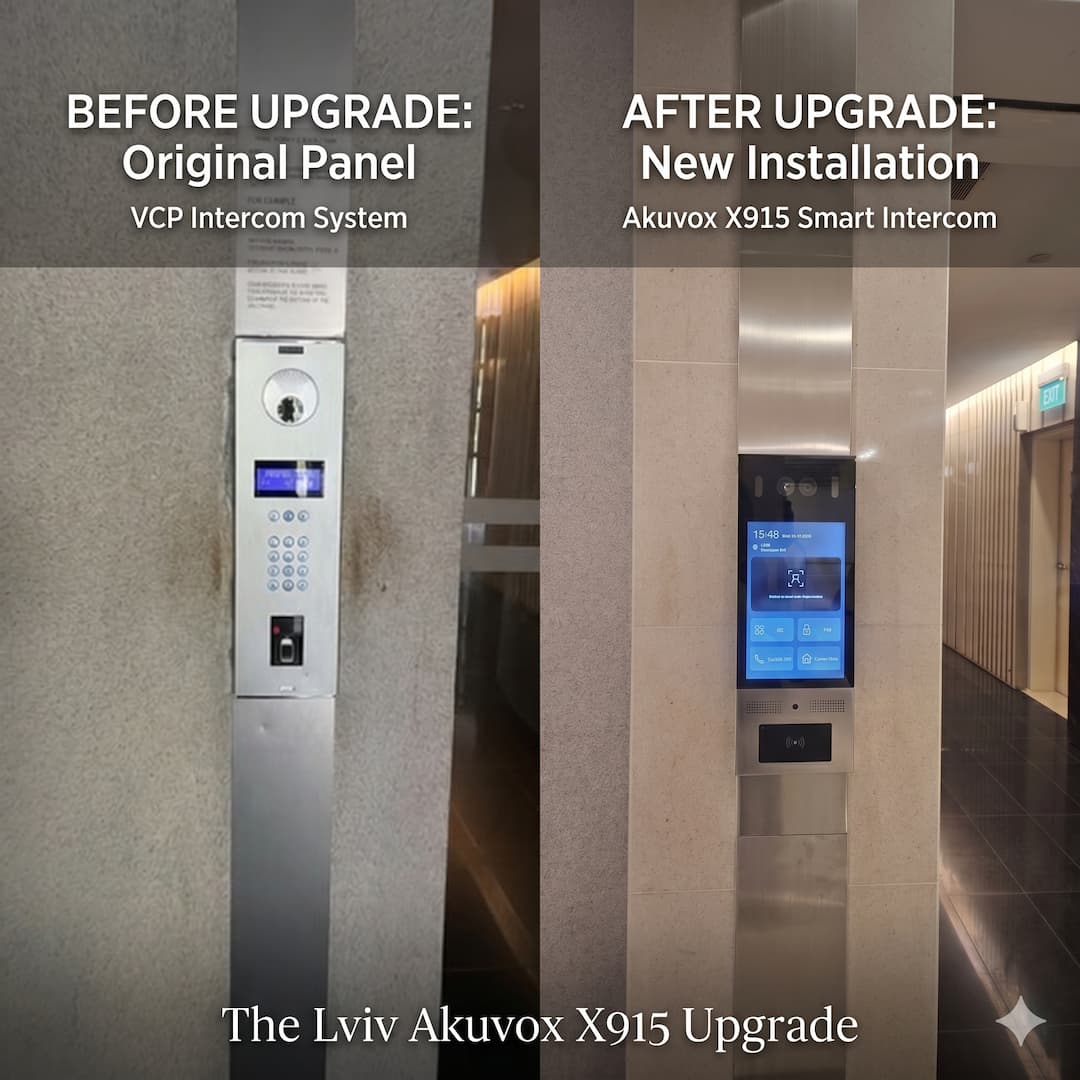
The original intercom arrangement had become functional but severely limited. Legacy hardware offered only basic audio or low-quality video, leaving residents without modern verification. In a luxury condominium, the inability to clearly see and communicate with guests via mobile was increasingly seen as a baseline failure.
The MCST faced a growing volume of resident feedback regarding missed deliveries and the lack of remote answering-frustrations that were misaligned with the estate's premium positioning.
Critical Human Impact: The lack of mobile-ready answering meant residents were tethered to their physical handsets. Any technical gap forced courier interactions to happen at the front gate, creating daily friction and persistent frustration.
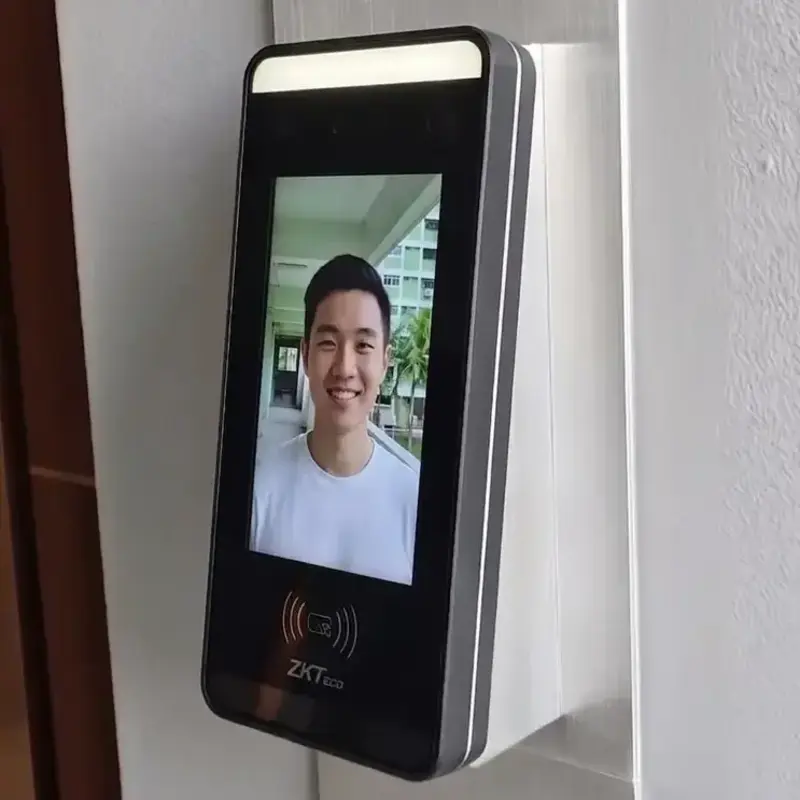
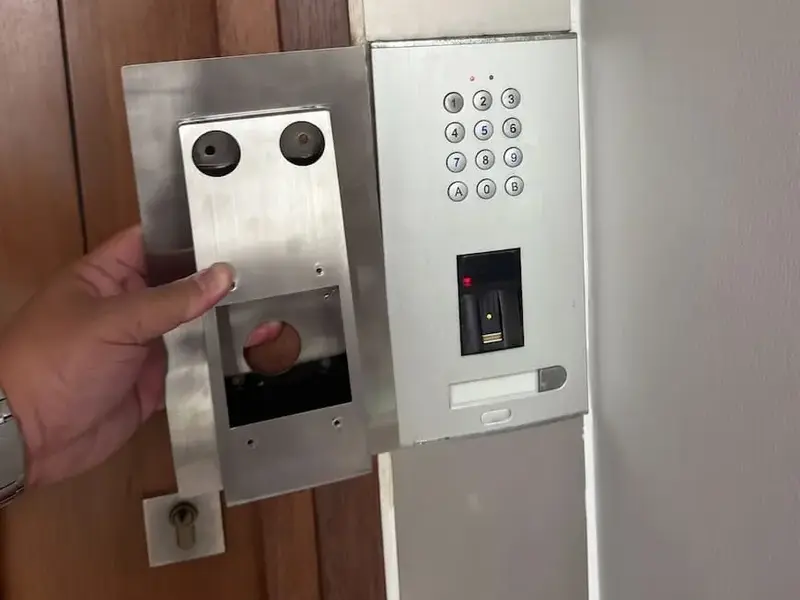
At the unit level, ageing fingerprint readers were creating frequent daily hurdles. Residents struggled with inconsistent scanning-often requiring multiple attempts due to environmental factors or reader degradation. Instead of providing a premium "invisible" entrance, the technology had become a repetitive obstacle for families and guests.
The existing architecture offered no flexibility; there was no fallback for children, helpers, or guests when the primary biometric scan failed, leading to a loss of confidence in the estate's core security layer.
A full IP rewire would have solved the problem technically, but at a massive commercial and resident cost. The challenge was finding a way to deliver IP-level functionality over the estate's original 2-wire backbone.
The council faced the classic dilemma of occupied estates: whether to commit to an intrusive, full-building rewiring or find a way to pivot the existing infrastructure toward modern performance.
The constant maintenance of legacy readers and the stream of resident complaints revealed a deeper truth. The issue was no longer technical-it was operational. The system was actively degrading the quality of life the project was built to deliver.
Securevision approached The L’viv by addressing visitor entry and private unit access as distinct but complementary layers. Residents can now enjoy a modernised common entrance experience and a resilient, flexible unit-level access layer. By designing these layers to work in harmony, the estate achieved a cleaner, more reliable result without over-complicating unit hardware.
For the estate-wide intercom, we selected an IP-capable ecosystem but avoided the cost and disruption of a full cable replacement. By using 2-wire network conversion hardware, the project could preserve the existing wiring path while still introducing video calling, app-based answering, and a stronger front-end visitor experience.
This was the critical architectural move. It allowed the estate to adopt newer functionality without turning the project into a civil works exercise.
The most important decision was to treat the existing 2-wire backbone as an asset, not an obstacle. That shifted the project from “major renovation” to “intelligent retrofit”, which is often the difference between a proposal that gets approved and one that stalls.
At the individual unit doors, residents now use a standalone biometric approach that operates independently of the building’s network. This ensures that front-door access remains entirely dependable even if other estate systems require maintenance or are offline.
By enabling face, palm, card, PIN, and app-based entry, residents have multiple fallback options that respect both their privacy and their need for operational resilience at the doorstep.
The project combined a retrofit-ready video intercom architecture for common entrances with standalone multi-modal access devices at each residential unit.
Deployed Akuvox X915 panels and 2-wire switches to deliver modern video verification and mobile answering without requiring new full-building cabling.
Each residence received a ZKTeco MiniAC Plus reader, providing dependable face, palm, and PIN authentication independent of building network status.
A strategic upgrade focused on restoring resident convenience and long-term reliability for condominiums with legacy 2-wire infrastructure.
Explore this solution →147 units updated without full rewiring or intrusive cable works, preserving the building's infrastructure asset.
High-definition video intercom panels provide 100% visitor verification for residents via wall panels or mobile app.
Retrofit completed efficiently, restoring the daily ease and premium experience residents expect from a luxury home.
The true success of the L'viv upgrade was treating the existing 2-wire backbone as a strategic asset. By using intelligent retrofit technology, we bypassed the cost and chaos of a full rewire while delivering the high-definition mobile experience that defines modern luxury living.
Every project Securevision delivers draws on multiple systems working together - cameras, access control, intercoms, vehicle management, network infrastructure, and platform software. The cards below show the full range of systems we design and install. Each one links to a deeper explanation of how it works, when it is needed, and what to look for when specifying it.
Tell us about your site. We'll assess it and design a system that works as one.
Serving Singapore Since 2006