Hotel Security Systems Designed for Guest Safety, Zone Control, and Operational Continuity
Integrated security for Singapore hotels: managing guest movement, staff access, and back-of-house protection without affecting the guest experience.
Supporting hotels and large-facility environments since .
In Short
What Hotel Security Actually Needs to Do
Hotel security is about protecting guests, staff, assets, and operations without affecting the guest experience. Most hospitality environments require access control, CCTV, communications, visitor management, and operational reporting working together. The objective is not maximum restriction. The objective is ensuring the right people have access to the right areas: at the right time: while maintaining the visibility and accountability that hotel operations and incident investigations require.
Most hotel security incidents do not occur because someone bypassed the front entrance. They occur because someone gained access to an area they should not have been in: a guest corridor on the wrong floor, a back-of-house service area, a plant room. The challenge is rarely opening a door. The challenge is ensuring that only the right person can open it, and that there is a record of every time anyone does.
Hotels Are Harder to Secure Because Every Zone Operates Differently
A hotel is not one uniform space: it is a property where public, private, and operational environments overlap. From the high-traffic lobby and F&B outlets to the quiet of guest corridors and the technical complexity of back-of-house service areas, every zone has a different purpose and a different security requirement.
A system designed with a single set of rules for the entire property creates friction in some zones and gaps in others. The right approach treats each zone as its own brief: with access rules, camera coverage, and response protocols that reflect how that zone actually operates.
Common Hotel Security Problems We See
Guest Movement Into Restricted Areas
Managing the boundary between guest-accessible amenity spaces and areas that are restricted to staff and contractors is a constant challenge. A gym or pool deck that guests can access freely must still exclude people who are not registered guests: and the system must enforce this without making any legitimate guest feel unwelcome or inconvenienced.
Staff Turnover and Credential Management
Hotels have high staff turnover by industry standards. Frequent staff changes, seasonal hiring, and contractor rotations mean that credential management: issuing, adjusting, and revoking access rights quickly and accurately: is an ongoing operational requirement rather than a one-time setup. Many hotels discover during a security review that credentials for staff who left months ago are still active.
Multi-Zone Access Complexity
Disconnected systems for room entry, lift access, and amenity gates create inconsistent access rules and administrative overhead. When a guest checks out but their room keycard, lift permission, and pool deck access are managed by three separate systems, revocation requires three separate actions: and the risk of one being missed is real.
Back-of-House Visibility Gaps
CCTV coverage in most hotels is concentrated in guest-facing areas. Loading docks, service corridors, back-of-house staff areas, and car park levels are frequently under-covered: and these are precisely the areas where the majority of staff conduct, inventory, and contractor incidents occur. The audit trail for what happens in the back of house is often significantly weaker than in the lobby.
Common Mistakes We See in Hotel Security Projects
After reviewing hospitality properties across Singapore, several issues appear repeatedly.
Applying a Commercial Building Template to a Hospitality Property
Hotels operate around the clock with a population that changes daily. A security system designed for a commercial office: where staff are known, access is predictable, and the building is closed at night: does not transfer well to a hotel where guests arrive at 2am, contractors start at 6am, and the lobby is never empty. The system design must reflect the 24-hour, multi-population reality of the property.
Focusing on Guest Areas and Overlooking Back-of-House
Many hotel security projects invest heavily in the lobby, guest corridors, and amenity areas while the loading dock, staff canteen, service lifts, and back-of-house corridors are either uncovered or covered by cameras that have never been reviewed. Most staff conduct issues and inventory losses in hotels occur in back-of-house areas: the operational spaces that the security design treats as an afterthought.
Managing Contractors the Same Way as Guests
Contractors are not guests. They require time-limited credentials for specific zones, a log of what they accessed and when, and automatic credential expiry when their work is complete. Many hotels issue contractors a staff-level access card for the duration of a project: and never revoke it when the project ends. A maintenance contractor who completed a lift job three months ago should not still have access to the plant room.
Treating the Security System as Separate from Operations
A hotel security system that the operations team cannot use independently: that requires a call to the security contractor to revoke a credential, pull a report, or add a new staff member: is a system that will be worked around. The management platform should be simple enough for the front desk team to perform routine tasks without technical assistance. The system serves the property; the property should not have to serve the system.
A Practitioner Observation
The most common discovery during a hotel security assessment is that contractor credentials from completed projects are still active: sometimes for projects that finished a year or more ago. The second most common is that back-of-house CCTV coverage has significant gaps that nobody has reviewed since the system was installed. Both of these are straightforward to address once they are identified, but they are almost never found without a structured review of the access control database and the camera coverage map.
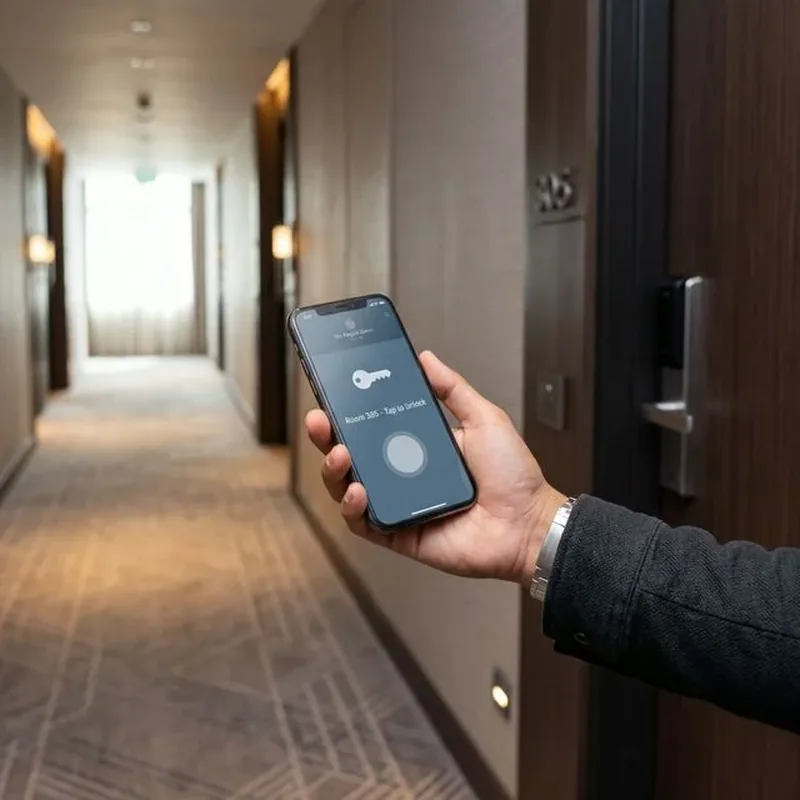
Managing Guests, Staff, and Contractors Separately Across the Same Property
The access control brief in a hotel is more complex than in almost any other commercial environment: because the same door may need to admit a guest, block a staff member from a different department, and log every contractor who passes through, all from the same credential system.
We configure role-based access logic that reflects each user group's actual movement pattern. Guests receive credentials for their room, their permitted lift floors, and any amenity zones included in their booking. Staff credentials are configured by department and shift: housekeeping accesses guest floors during assigned windows, engineering accesses plant rooms and utility areas, management accesses everything. Contractors receive time-limited credentials for the specific zones relevant to their work. All credential management runs from a single platform, not from separate systems for each door type.
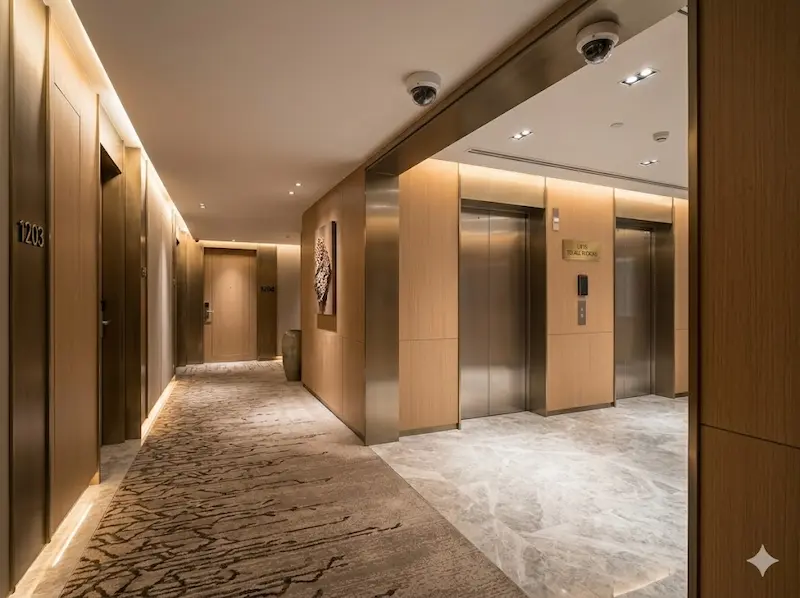
Maintaining Clear Coverage Across Every Zone of the Property
In a hotel, the question after an incident is always the same: what happened, where, and who was involved? The answer depends entirely on whether the right cameras were in the right places with sufficient retention to cover the period in question. CCTV in a hospitality environment is not primarily about deterrence: it is about being able to answer that question quickly and accurately when the general manager, the insurer, or the police ask it.
AI-Assisted Footage Search
A guest theft complaint, a liability dispute, or a staff conduct matter can be investigated in minutes rather than hours when the surveillance system allows footage to be filtered by zone, time window, and event type. The footage always existed: the question is how quickly it can be found and presented.
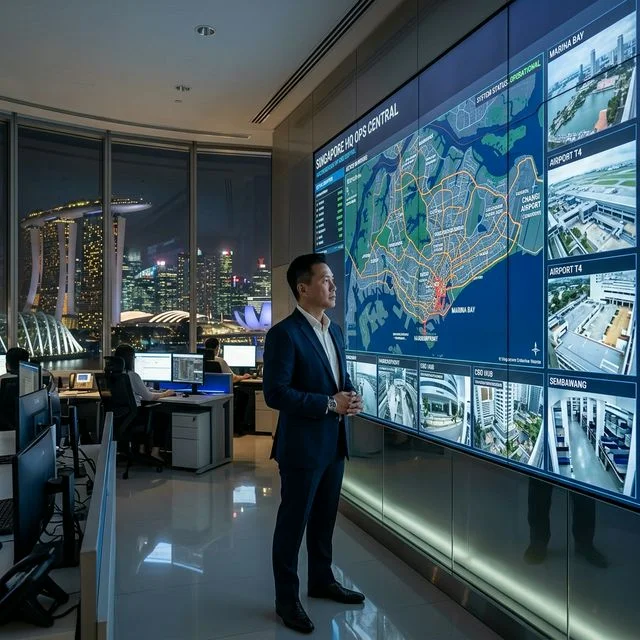
Tying Security Into the Way the Property Actually Runs
Disconnected systems create operational bottlenecks. When the access control platform, the lift system, and the fire alarm response are all independent, the security team is manually connecting information that the systems could share automatically. We integrate security with the facility's operational infrastructure: lift floor restriction connected to the access control platform, fire alarm release connected to the door system, vehicle access connected to the visitor log: so that the property responds correctly both during normal operations and during emergencies.
One platform covering access, surveillance, and facility coordination. One dashboard for the security and operations team.
How We Approach a Hotel Security Project
Hotel security design requires mapping the movement patterns of multiple distinct user groups before specifying any hardware: and executing the installation around a property that never closes.
Zone and Movement Mapping
Mapping the movement patterns of guests, staff, contractors, and service providers to establish role-based access rules for every entry point: so that the system reflects how the property actually operates, not a generic hotel template.
Credential Architecture
Designing a single credential platform that manages room entry, lift floor permissions, and amenity access from one system: so that check-in, check-out, and credential revocation are all handled in one place rather than across separate systems.
Lift and Facility Integration
Coordinating with lift contractors and building management to connect floor restriction, fire alarm response, and vehicle access into the security platform: so the property responds correctly to both routine operations and emergency events.
Phased Installation in an Occupied Property
Executing the installation zone by zone: back-of-house infrastructure first, public areas during low-occupancy windows, guest floors floor by floor: with no phase going live until it has been fully tested. Guests experience a seamless transition, not a building site.
Hotel Security Across Singapore
Securevision has deployed integrated security systems across Singapore hospitality properties: from boutique hotels and serviced apartments to large-facility environments with multiple buildings and complex back-of-house operations. Every project starts with a zone mapping exercise, not a product specification.
What Affects the Cost of a Hotel Security System?
Two hotels with the same room count may require very different systems depending on property layout, back-of-house complexity, and the number of distinct user populations to be managed.
Number of Floors, Lifts, and Controlled Zones
Each lift with floor restriction requires integration with the access control platform. Each controlled zone: the gym, pool deck, executive lounge, plant room, service corridors: requires its own access logic configuration. A compact boutique hotel and a multi-tower resort with seven lift cores and separate amenity buildings are fundamentally different scopes at the same room count.
Back-of-House Scope and Camera Count
Comprehensive back-of-house coverage: loading docks, staff canteens, service lifts, plant rooms, and service corridors: significantly increases the camera count and associated recording and storage infrastructure. Hotels that have historically under-invested in back-of-house coverage typically require a proportionally larger camera scope than the guest-facing areas alone would suggest.
Credential Population Complexity
A property with guests, full-time staff, part-time staff, regular contractors, and daily delivery personnel requires more complex credential configuration than one with a simple staff and guest population. The credential management platform scope scales with the number of distinct access rules that need to be maintained and updated on an ongoing basis.
Existing Infrastructure and Phasing Requirements
Hotels with existing structured cabling, managed network switches, and compatible door hardware can be upgraded at lower cost than those where all infrastructure needs to be built. Phased installation in an occupied property also adds time to the project compared with a vacant site: each zone must be commissioned and tested before the next phase begins, which extends the overall project timeline even when the daily work hours are constrained by occupancy.
A Practitioner Observation
The most significant variable in hotel security project cost: after property size: is almost always the scope of back-of-house coverage and the complexity of the lift integration. Both of these are easier to assess accurately after a physical site walk than from a floor plan alone. We present detailed scope and cost estimates only after the site survey, not before.
Frequently Asked Questions
Questions we hear from hotel general managers, facilities teams, and property owners evaluating security systems.
What security systems does a hotel typically require?
Most hotels require CCTV covering the lobby, guest lift lobbies, corridors, car park, F&B areas, and back-of-house service corridors; access control with role-based credentials for guests, staff, and contractors; lift floor restriction limiting guests to their permitted floors; IP telephony connecting front desk, guest rooms, back-of-house extensions, and management mobiles; and vehicle access management at the car park. The specific configuration depends on property size, layout, and the number of distinct user populations.
Can hotel room access integrate with the property's main access control system?
Yes. When room access, lift floor restriction, and amenity access are all managed from the same platform, the credential issued at check-in can simultaneously authorise the guest's room, their permitted lift floors, and any amenity zones included in their booking. Check-out deactivates all of these simultaneously: eliminating the operational overhead of managing separate systems for room locks, lifts, and amenities.
How should contractor access be managed in a hotel?
Contractors require time-limited credentials that permit access only to the zones relevant to their work. Credentials should be issued on arrival, configured for the specific work window, and automatically expired when the work is complete. All contractor access events are logged against the individual's credential. Many hotels discover that contractor credentials from completed projects remain active months after the work finished: this is one of the most common access control gaps we find during a security review.
Can existing door hardware and cabling be reused in a hotel security upgrade?
Often yes, depending on hardware condition and compatibility with the new system. Existing cabling, door closers, electromagnetic locks, and in some cases card readers can be retained. We assess hardware reuse potential during the site survey before agreeing any scope. For hotels, retaining existing infrastructure reduces the disruption to occupied floors during installation.
How long does a hotel security upgrade take in an occupied property?
It depends on the property size, scope, and occupancy calendar. We phase installations zone by zone: back-of-house infrastructure first, public areas during low-occupancy windows, and guest floor access controllers floor by floor. No phase goes live until it has been tested and commissioned for that zone. For a mid-sized hotel, a full access control and CCTV upgrade typically takes three to six weeks when phased around the occupancy schedule.
What happens to hotel access if the network or power fails?
Access control hardware is configured with local storage and offline mode: controlled doors and lifts continue to function during network interruptions using locally cached credentials. Fail-safe door configurations ensure that fire exit doors comply with SCDF requirements regardless of system status. For critical access points such as the main entrance and guest lift lobbies, we specify UPS backup so that a power outage does not lock guests out of their floors.
Can multiple hotel properties be managed from one platform?
Yes. A centralised video management and access control platform allows a security manager to view any property, review footage, and receive alerts from a single dashboard. Staff credentials can be configured to be valid across multiple properties with property-specific access rules. This is particularly useful for hotel groups where the security and operations team is centralised but properties are distributed across different locations.
How often should hotel security systems be reviewed?
We recommend a formal review when the property undergoes a significant renovation, when the operational model changes, when compliance requirements are updated, or when the security system is more than five years old. Annual maintenance servicing covers hardware condition and software updates. A security review: examining whether the system still covers the right zones with the right access logic: should be triggered by operational changes rather than a fixed calendar.
Also Relevant To
Hotel security expertise extends naturally into other high-footfall, multi-zone commercial environments.
Office Security
Hotel management offices, back-of-house administrative floors, and corporate event facilities share the access control and visitor management requirements of commercial office environments.
Retail
Hotel lobby shops, F&B outlets, and retail concessions within hospitality properties require loss prevention and access coordination alongside the hotel's main security system.
Commercial: All Solutions
From boutique hotels to mixed-use commercial developments: the full range of commercial property security solutions.
Ready to Secure Every Zone of Your Property?
Tell us about your hotel or hospitality facility. We will design a multi-zone security system that protects guests, supports operations, and integrates with your facility systems.
Licensed by the Police Force: Licence · Serving Singapore since 2006