Retail Security Systems Designed to Reduce Shrinkage and Improve Visibility
Protect inventory, deter theft, and gain clearer operational insight with integrated systems built for Singapore retail environments.
Supporting retail environments across Singapore since .
In Short
What Retail Security Actually Needs to Do
Retail security is about reducing losses, improving accountability, and maintaining visibility across staff, customers, inventory, and cash-handling activities. Most retail environments require CCTV, access control, stockroom security, and operational reporting working together. The objective is not simply recording incidents. The objective is identifying issues quickly, supporting investigations, and reducing the opportunities for loss before they occur.
Most retailers assume their losses come primarily from shoplifters. In practice, some of the most difficult losses to investigate occur in receiving areas, stockrooms, and at the point of sale: where the footage exists but finding the right clip quickly enough to be useful is the real challenge. A clear view of the cash drawer is often more operationally valuable than another wide-angle overview camera on the shop floor.
Retail Security Is About Protecting Margin, Not Just Premises
In Singapore's retail environment, security is more than preventing break-ins after hours. Real retail loss: shrinkage: is a constant pressure that erodes profitability from multiple sources: external shoplifting, staff manipulation, and operational process gaps that create unrecorded inventory discrepancies.
A retail security system provides the visibility needed to identify these losses and support the investigations that determine where they are coming from. The question a good system should be able to answer is not "were cameras running?" It is "what happened, who was involved, and what is the evidence?"
Where Retail Losses Come From
Internal Theft and POS Manipulation
Unrecorded voids, unauthorised discounts, and stockroom losses create significant hidden costs that are difficult to trace without CCTV coverage at the point of sale. When the transaction record shows a pattern of unexplained voids and the camera angle does not cover the terminal clearly, the investigation goes nowhere. The camera position and the POS integration both matter.
Shoplifting and External Theft
High-traffic retail environments face constant risk from opportunistic and organised shoplifting, particularly in areas with coverage gaps or poor camera angles. The deterrent effect of visible, well-positioned cameras is significant: most opportunistic shoplifters will choose a less visible target. The evidential record matters when deterrence fails.
Stockroom and Receiving Blind Spots
Many shops invest in shop floor coverage and leave the stockroom and receiving area under-monitored. These are the areas where inventory discrepancies are hardest to investigate: and where the most significant losses in high-value product categories often occur. A camera at the stockroom door and one at the receiving bench cost very little and resolve a disproportionate number of investigations.
No Consistent Visibility Across Outlets
Chain owners managing multiple outlets often lack a reliable way to review footage, monitor standards, and identify recurring problems across their network without physically visiting each store. When a shrinkage pattern appears at one outlet, the ability to review the relevant footage remotely from headquarters is the difference between a two-hour investigation and a two-day one.
More Than Cameras: Better Control Over Loss and Movement
Strategic retail security shifts the focus from recording to active loss prevention and operational support: giving management the tools to maintain accountability and investigate issues quickly when they arise.
Professional camera placement at entrances and transaction zones discourages opportunistic shoplifting and creates an accountability environment for staff handling cash and inventory.
Linking camera footage to POS transaction records means that every void, discount, and refund can be reviewed against the visual record of what actually happened at the terminal.
People counting, zone heatmaps, and dwell time data from the same camera network that protects the store also inform layout decisions and staffing levels during peak periods.
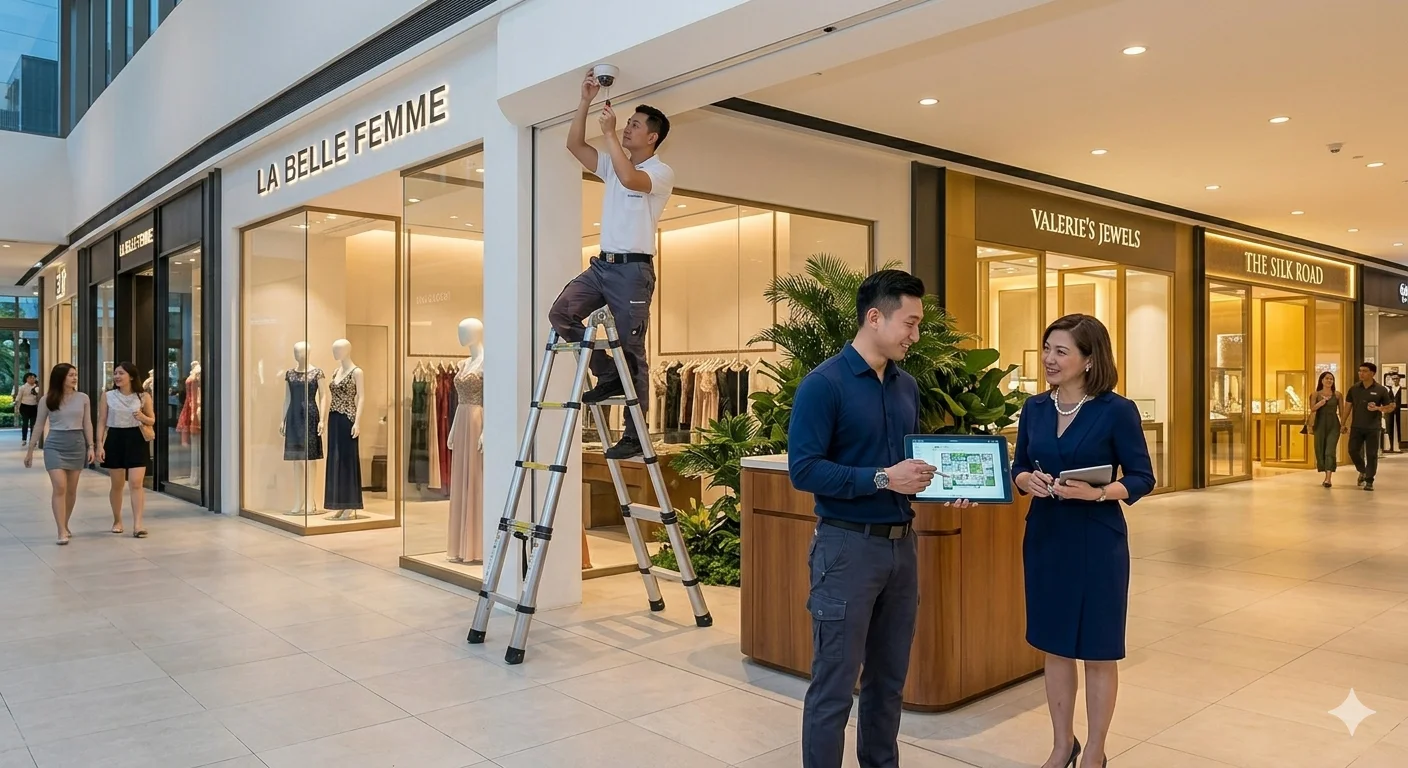
Reduce Theft at the Front and Back of the Shop
We focus on both external and internal loss through targeted camera placement and access control at the points where losses actually occur. Most retailers spend more time choosing camera hardware than deciding what specific situations each camera needs to capture. The camera specification matters less than the camera position and the question it is designed to answer.
Positioning for Investigation, Not Just Coverage
A camera that covers a wide area of the shop floor is useful for deterrence. A camera that captures a clear face at the entrance, a clear view of the cash drawer at the POS terminal, and a clear record of who entered the stockroom is useful for investigation. The two objectives require different camera positions: and a system designed only for deterrence often fails at the investigation step when a loss is actually reported.
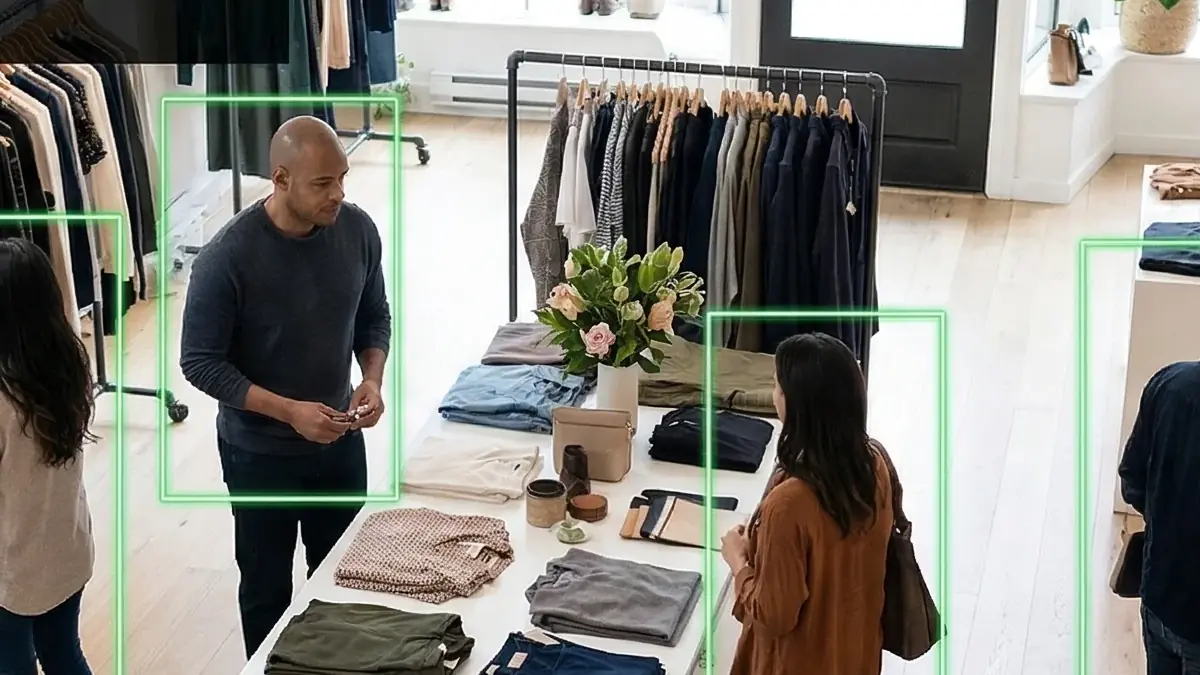
Turn Retail Security Into Operational Insight
The same camera network that protects the store can also provide data that improves how the store is run. People counting at the entrance tracks daily footfall patterns against sales performance. Zone heatmaps show which display areas generate the longest customer dwell time: and which are consistently ignored. Dwell time measurement at specific product areas provides data for layout decisions that used to require a consultant.
These are not separate systems requiring separate installations. They are analytics capabilities available from the same cameras that cover the shop floor for security purposes: configured at the platform level rather than the hardware level. The operational data is a by-product of the security coverage, not an additional cost.
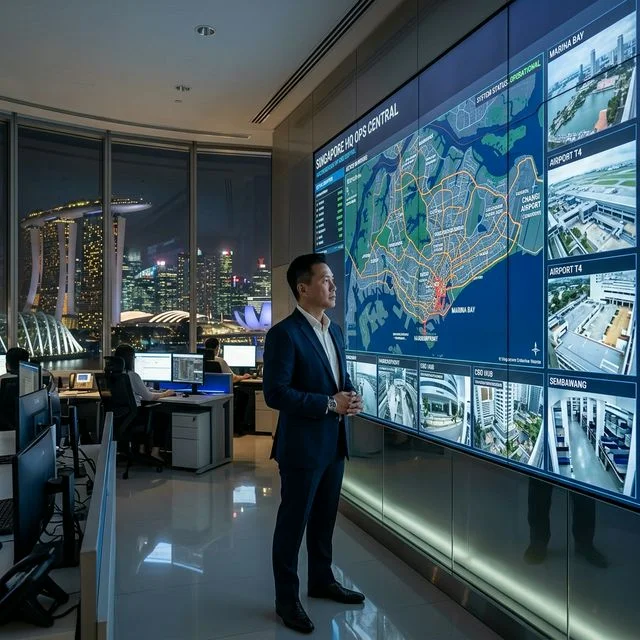
Managing Multiple Stores Without Losing Sight of What Matters
For chain owners and multi-outlet operators, cloud-managed CCTV provides consistent visibility across every location from a central dashboard. Footage from any store is reviewable from headquarters without dispatching someone to the site. When a shrinkage pattern appears at one outlet, the relevant footage can be reviewed and correlated with the POS record in the same session: without waiting for the store manager to retrieve and send it.
Consistent coverage. Remote review. Protected margins across every outlet.
How We Approach a Retail Security Project
Retail security design starts with understanding where losses are occurring: or where they are most likely to occur: before specifying any camera positions or hardware.
Auditing the POS transaction record for patterns: unexplained voids, frequent discounts, stockroom discrepancies: and mapping the physical blind spots where those transactions occur. The camera positions follow from the loss map, not from a standard template.
Connecting the CCTV recording system to the POS platform so that every transaction is timestamped against the corresponding camera view. When an unexplained void appears in the report, the footage is retrievable in seconds rather than requiring a manual search through hours of recording.
Configuring cloud management so that the owner or operations manager can review any outlet's footage and exception alerts from headquarters: without needing to visit the store or wait for a manager to retrieve and send the relevant clip.
Common Mistakes We See in Retail Security Projects
After working with retail operators across Singapore: from single outlets to multi-location chains: several issues appear repeatedly.
Focusing on Shoplifters and Missing Everything Else
Many retail security projects are framed entirely around shoplifting: the visible, external form of retail loss. In most shops, internal process gaps, POS manipulation, and stockroom discrepancies account for a significant proportion of total shrinkage. A system designed only to deter shoplifters will not provide the footage or the access control that makes internal investigations possible. The brief should address all sources of loss, not just the most visible one.
Deciding Camera Positions Before Defining the Investigation Objective
Most retailers ask "where should we put cameras?" before asking "what information do we need when something happens?" The second question determines the answer to the first. A retailer whose primary concern is cash handling at the POS needs a different camera position than one whose primary concern is shoplifting at a specific product display. Camera placement designed around the investigation objective produces significantly more useful footage than placement designed around general coverage.
Leaving the Stockroom and Receiving Area Uncovered
Many shops invest in comprehensive shop floor coverage and install a single camera pointing at the stockroom door as an afterthought. The stockroom and receiving area are where inventory discrepancies are hardest to investigate and where high-value product losses most often occur. A camera at the receiving bench, one at the stockroom access point, and one covering the shelving area costs very little to add at installation: and resolves a disproportionate number of investigations.
Treating Security as Separate from Store Operations
A retail security system that only the owner can access: that requires calling the security contractor to retrieve footage after an incident: is a system that will be bypassed in practice. Store managers and supervisors need to be trained to use the system for routine operational reviews, not just incident response. Regular review of footage around POS exception reports is a loss prevention practice, not just a security task. The system is only as useful as the people who use it routinely.
A Practitioner Observation
The most consistent finding in retail security assessments is not inadequate hardware: it is inadequate camera positioning. Shops that have invested in good quality cameras but positioned them for general coverage rather than investigation coverage find that when a specific incident needs to be investigated, the footage shows what happened in the vicinity but not what actually happened. The difference between a camera that records and a camera that resolves is almost always about where it is pointed, not what it costs.
Retail Security Across Singapore
Securevision has designed and deployed retail security systems for a range of Singapore retail footprints: from luxury boutiques requiring discreet camera aesthetics to large chain operators requiring cloud-managed multi-site oversight with POS integration. Every project starts with a loss mapping conversation, not a camera count.
What Affects the Cost of Retail Security?
Two stores of similar floor area may require very different systems depending on product value, shrinkage history, POS integration requirements, and whether multiple outlets need central management.
Store Size, Layout, and Camera Count
The number of cameras required to achieve investigation-quality coverage: with no significant blind spots at the entrance, POS terminals, stockroom, and receiving area: scales with store size and layout complexity. A compact single-counter shop requires far fewer cameras than a multi-floor retail space with multiple checkout zones and a separate receiving dock.
POS Integration Requirements
Connecting the CCTV system to the POS platform for transaction overlay requires compatibility assessment between the camera management software and the POS system. Most modern POS platforms support this integration. Older or proprietary POS systems may require additional middleware. The integration cost is proportionate to the complexity of the connection, not to the number of cameras.
After-Hours Alarm Scope
A basic burglar alarm covering the main entrance and stockroom costs significantly less than a comprehensive alarm covering every internal zone, the display areas, and the shopfront windows. The scope should match the product value and the history of after-hours incidents at the location. For chain operators, a consistent alarm specification across all outlets simplifies maintenance and monitoring.
Multi-Site Cloud Management
A cloud-managed platform covering multiple outlets requires a platform licence in addition to the on-site hardware at each location. The per-site cost decreases as the number of outlets increases. For chain operators, the operational benefit: remote footage review, centralised exception reporting, consistent standard monitoring: typically justifies the platform cost within the first year of operation.
A Practitioner Observation
The most cost-effective retail security investment is almost always repositioning existing cameras before buying new ones. Many shops have cameras that cover the right general area but the wrong specific angle: the POS camera shows the customer's back instead of the cash drawer, the entrance camera shows the door but not the face. Repositioning costs almost nothing and often resolves the investigation gap that prompted the security review in the first place.
Frequently Asked Questions
Questions we hear from retail shop owners, chain operators, and store managers evaluating security systems.
What security systems does a retail store typically need?
Most retail shops require CCTV covering the shop floor, entrances, POS terminals, and stockroom; a burglar alarm with PIR detectors, door and window contacts, and an external siren for after-hours protection; and access control at the stockroom and any back-of-house areas. For chain operators, cloud-managed CCTV adds central visibility across all locations. The specific configuration depends on shop size, product value, and whether the loss risk is primarily external, internal, or both.
Can CCTV help reduce shoplifting?
Yes, in two ways. Visible cameras at entrances and high-risk product areas act as a deterrent: most opportunistic shoplifters will avoid a store where they can see they are being recorded. And when a shoplifting incident does occur, footage from well-positioned cameras provides the evidential record needed for a police report and insurance claim. Camera placement matters: a camera covering the wrong angle is much less useful than one positioned to capture faces at the entry point.
Can CCTV integrate with our POS system?
Yes. POS transaction overlay connects the CCTV recording system to the point-of-sale platform so that every transaction: sale, void, discount, refund: is timestamped against the camera view of that terminal. When an unexplained void or suspicious discount appears in the POS report, the corresponding camera footage is retrievable instantly. This is one of the most effective tools for investigating internal cash handling issues.
What is the difference between loss prevention and security?
Security focuses on preventing unauthorised access and protecting the premises from external threats. Loss prevention is broader: it addresses all forms of retail shrinkage, including external shoplifting, internal theft, POS manipulation, stockroom losses, and process failures. A good retail security system supports both. Cameras at the entrance address external theft. Cameras at the POS and stockroom, combined with access control, address internal accountability.
Can multiple retail outlets be managed centrally?
Yes. Cloud-managed CCTV allows a chain owner or operations manager to view any store's live or recorded footage from headquarters without visiting the site. Incidents flagged at one store can be reviewed centrally and compared with transaction records from the same period. For chains where store managers have a history of inconsistent standards or unresolved shrinkage, remote visibility from headquarters is one of the most immediate operational improvements we implement.
Can existing cameras be reused in a retail security upgrade?
It depends on the age and condition of the existing cameras and cabling. Older analogue cameras can sometimes be connected to a hybrid recorder that accepts both analogue and IP inputs: allowing a phased upgrade without replacing everything at once. Where existing cameras are positioned incorrectly for the current shop layout, replacement may be more practical than repositioning. We assess existing infrastructure during the site visit before recommending any scope.
How long does a retail security installation take?
For a single retail outlet, a standard CCTV and alarm installation typically takes one day. Larger stores with POS integration, access control, and structured cabling may take two to three days. For chain operators upgrading multiple outlets, we phase the installations to minimise trading disruption: work is typically completed outside trading hours or in the first hours before opening.
What affects the cost of retail security?
The main factors are store size and layout, the number of cameras required to cover the shop floor and stockroom without blind spots, whether POS integration is required, the extent of after-hours alarm protection, existing cabling infrastructure, and whether multiple outlets need to be connected to a central management platform. Two stores of similar floor area may require very different systems depending on the product value and the operator's visibility requirements.
Also Relevant To
Retail security requirements often extend beyond the shop floor: into the building, the loading dock, and the tenancy mix.
Office Security
Retail chains with back-office operations, admin floors, or head offices in the same building need security that bridges the shop floor and the commercial office environment.
Hotel & Hospitality
Hotels with lobby retail, F&B outlets, or commercial tenancies need security coordination across guest-facing and retail zones: an area we handle regularly.
Commercial: All Solutions
The full picture of commercial property security: from single retail outlets to multi-tenanted buildings and mixed-use developments.
Ready to Protect Your Retail Margins?
Tell us about your store or chain. We will assess your shrinkage risks, identify the blind spots, and design a system that protects your profitability.
Licensed by the Police Force: Licence · Serving Singapore since 2006