- Modern alarm systems are designed to continue operating during power failures; backup batteries take over automatically with no interruption and no rebooting.
- A monitored alarm system immediately reports an AC power failure to the monitoring centre, so the loss of mains power is itself a detectable and reportable event.
- Cutting the power does not disable a properly designed alarm; it may actually draw attention to the property by generating a suspicious fault event at the monitoring centre.
- The siren remains available on battery power, so an intrusion during a power cut will still activate the alarm.
- CCTV systems are more vulnerable to power outages than alarm panels unless they are protected by a UPS.
- The real question after surviving a power cut is whether the alarm can still communicate, which is where dual-path communication with 4G cellular backup matters.
The Hollywood Scenario
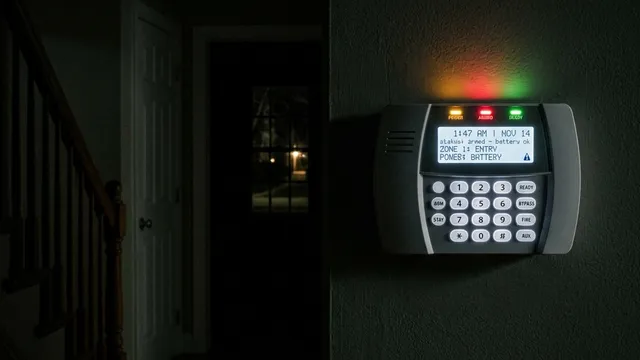
Many people imagine this scene. A burglar approaches the property. They open the electrical cabinet, switch off the mains power, and the house goes dark. The alarm stops working. They walk in unnoticed.
It sounds logical. The problem is that modern alarm systems were specifically designed to prevent exactly this. Security engineers thought about it decades ago; burglars are not the first people to consider cutting the power. The alarm industry's response was to build power failure handling into every professional installation as a core design requirement, not an optional extra.
KEY POINT
Power failure is not an unusual event that an alarm system must cope with unexpectedly; it is a normal condition that every professional alarm installation is designed and tested to handle. The system expects it.
Alarm Systems Expect Power Failures
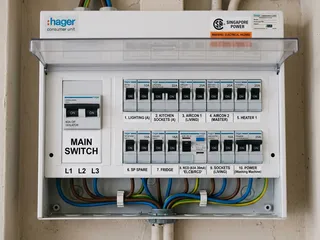
Mains power may fail but almost never because of a burglar. Electrical faults, utility outages, tripped circuit breakers, maintenance works, and accidental damage all cause power interruptions in ordinary properties. If every power failure disabled an alarm system, that system would be failing its most basic reliability requirement several times a year in normal operation.
This is why every professionally installed alarm panel includes a sealed lead-acid backup battery; the same technology covered in the article on alarm system lifespan. The battery is not an emergency accessory. It is part of the core design. Power loss is anticipated, and the battery is the system's prepared response to it.
KEY POINT
An alarm system that fails when the power goes out is not a security system; it is a piece of consumer electronics. Professional alarm panels are designed to a different standard, and backup power is a fundamental part of that standard.
The Battery Takes Over Automatically
The moment an alarm panel detects a loss of mains power, it switches to battery operation automatically. There is no reboot, no interruption, no action required from anyone. The system continues running exactly as before; detectors remain active, the panel continues processing zone signals, the keypad remains functional, and the siren remains available. In most cases the homeowner would not know a power failure had occurred unless they noticed the lights go out.
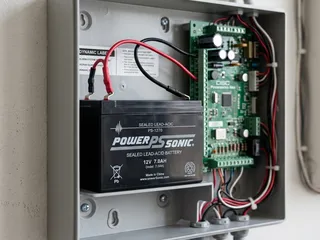
The duration of battery backup varies by installation. A small residential system with a standard 7Ah battery can typically run for several hours under normal load. Larger systems with more zones, active communicators, and frequent siren use draw more current and will deplete a battery faster. In Singapore's climate, battery performance can be affected by sustained heat; a factor worth considering when planning maintenance intervals, as covered in the lifespan article. The key point is that the backup window is measured in hours, not minutes, and that window is more than sufficient for the monitoring centre to identify the fault and respond.
KEY POINT
Battery backup buys time; enough for the monitoring centre to receive the power failure alert, investigate, and contact the property owner before the backup is exhausted. In most real-world scenarios, the power is restored long before that window closes.
The Monitoring Centre Knows Immediately
This is where a monitored alarm system shows its strength. The moment the panel detects a loss of mains power, it generates an AC failure event and transmits it to the Central Monitoring Station. The operator's screen shows the account, the property address, the time of the event, and that the system has switched to battery. If the power failure persists beyond a defined threshold, the monitoring centre can contact the property owner or keyholder to investigate.
From a security perspective, this is exactly what should happen. The monitoring centre knows that something has changed at the property. Depending on the time of day and the circumstances, a power failure event at 3am may warrant closer attention than one at 3pm during a storm. The operator follows the account's response procedure. The property is not invisible; it has just generated a reportable event.
KEY POINT
An AC failure signal is not just a housekeeping notification, in the right circumstances, it is an early warning. A monitoring centre that receives an AC failure event from a property in the middle of a clear night has reason to pay closer attention to that account.
The Burglar May Have Created a New Alarm Event
Here is the irony in the Hollywood scenario. The burglar cuts the power believing they have disabled the alarm. What they have actually done is generate a reportable event at the monitoring centre, switched the alarm to battery operation, and left the detection and siren capability fully intact.
Instead of entering undetected, they have drawn attention to the property before they have even opened a door. The monitoring centre knows that mains power at a specific address was interrupted at a specific time. If that is followed shortly afterwards by a zone activation; a door contact, a motion detector, a glass break sensor; the operator has two connected events on the same account within a short time window. An AC failure followed by an intrusion alarm is a much stronger signal than an intrusion alarm alone. The attempt to defeat the system has instead created additional evidence of the attempt itself.
This principle, that attempts to disrupt the alarm system generate detectable events rather than silence; is one of the more satisfying aspects of well-designed security engineering. The system is not just passive. It is designed to treat disruption as information.
KEY POINT
Cutting the power at an unusual time does not make the property invisible to the monitoring centre; it makes it more visible. An unexplained AC failure is an event worth investigating. An AC failure followed by an alarm activation is a pattern that operators are trained to recognise.
What About CCTV?
This is where alarm systems and CCTV systems diverge. Alarm panels are designed with built-in battery backup as a standard feature. Most consumer and small business CCTV systems are not. A typical CCTV installation consists of cameras, a network switch, an NVR, and an internet router; all requiring mains power. Without a UPS protecting the system, a power cut can bring the entire CCTV installation offline.
This is not a criticism of CCTV; it is a design difference that reflects the different purposes each technology serves. The alarm is designed to be resilient under adversarial conditions. The NVR is designed to record video reliably under normal conditions. For a property where both security and recording capability matter during power outages, a UPS protecting the CCTV infrastructure is worth adding. Without it, the camera coverage disappears at the exact moment the power cut makes the property more vulnerable.
PLANNING POINT
If your security design relies on CCTV cameras for verification during alarm events, ensure those cameras have backup power. An alarm panel that continues working on battery while the cameras go dark leaves a significant gap in the combined system's capability.
The Siren Still Works
Because the alarm panel continues running on battery backup, the siren remains connected and available throughout a power failure. If an intrusion occurs while the system is on battery; even if the mains have been deliberately cut; the alarm will still detect the breach and activate the siren. The deterrent effect described in the previous article on internet disruption applies equally here: the siren creates immediate noise and attention regardless of whether the power grid is supplying the panel or the battery is.
External sirens on most professional installations also include their own small internal battery as an additional safeguard against tamper, if someone attempts to disconnect the siren from the panel, it will sound on its own internal power. This is a standard tamper protection measure in professional alarm installations.
KEY POINT
The siren does not go silent when the power goes out. If an intrusion triggers the alarm during a power failure, the sound and strobe activation happen exactly as they would under normal conditions. The local deterrent is fully intact.
The Real Question Is Communication
The alarm panel survives the power cut on battery. The detectors remain active. The siren remains available. But the one genuine vulnerability in a power outage scenario is communication, and specifically, whether the devices in the communication chain beyond the alarm panel have their own backup power.
If the broadband router loses power during a mains failure, the alarm panel's IP communication path goes offline. The panel is still running, but it cannot reach the monitoring centre through the primary route. This is exactly the scenario addressed by dual-path communication with 4G cellular backup, covered in detail in the article on communication paths. A cellular communicator in the alarm panel draws its power from the panel's battery; it does not depend on the router or the broadband infrastructure. When the mains fail and the router goes offline, the cellular path activates automatically and communication continues.
A well-designed alarm system that survives a power cut, continues detecting intrusions, keeps its siren available, and communicates through its cellular backup is not meaningfully compromised by a mains power failure. The attack vector that the Hollywood scenario imagines has been closed by three decades of security engineering.
Securevision Verdict
One of the first things security engineers learn is that power failures are normal, and that a security system must be designed to handle them, not be defeated by them. A properly designed alarm system continues detecting intrusions, activating sirens, and communicating with the monitoring centre even when the mains power has been cut.
In many cases, cutting the power does not disable the alarm. It creates a reportable event, switches the system to battery operation, and leaves the detection and deterrent capability fully intact. The real challenge is ensuring the communication path remains available, which is exactly what 4G cellular backup is designed to do. Burglars prefer time, privacy, and a system that has gone blind. A properly specified alarm gives them none of those things.
In Short
A power cut does not disable a properly installed burglar alarm. The backup battery takes over automatically, the monitoring centre is notified of the mains failure, and the alarm continues to detect, sound, and communicate. The scenario where a burglar cuts the power and the alarm goes silent is a failure of installation; a panel without adequate battery backup, or a system that was never designed with power resilience in mind. A well-specified alarm system treats a power cut as an event to be monitored, not as an opportunity for an intruder.

Frequently asked questions
Will my burglar alarm still work if the power is cut?
Yes, if it has been properly installed. A burglar alarm panel contains a sealed backup battery that takes over automatically when mains power is lost. The alarm continues to detect, sound the siren, and communicate with the monitoring centre on battery power for the duration of the backup period, typically 8 to 24 hours depending on the battery capacity and system load.
How long does an alarm battery last during a power cut?
Battery backup duration depends on the battery capacity installed in the panel and the power consumption of the connected devices. Most residential alarm systems provide between 8 and 24 hours of battery backup. Larger systems with more detectors, keypads, and communication modules consume more power and may have shorter backup periods unless a larger battery is fitted. Ask your installer to confirm the backup duration for your specific system.
Does the alarm siren work during a power cut?
Yes. The siren is powered through the alarm panel, which runs on battery backup during a mains failure. A properly installed siren will sound normally regardless of whether mains power is available.
Does the monitoring centre know if my power has been cut?
Yes. When mains power fails, the alarm panel immediately sends a mains-failure notification to the monitoring centre through its communication path. The monitoring centre logs this event and monitors the situation. If communication is subsequently lost; because the battery has been exhausted or the communication path has also failed; the monitoring centre will treat this as an escalated event.
Can a burglar disable my alarm by cutting the power supply?
A burglar who cuts the mains power supply will cause the alarm to switch to battery backup, not to go offline. The monitoring centre will receive a mains-failure alert, which flags the property for closer attention. The siren and strobe continue to operate. The only way a power cut would disable the alarm is if the battery is flat, which is a maintenance failure, not a design feature.
How do I know if my alarm battery needs replacing?
Most alarm panels perform regular battery health checks and will display a low battery warning on the keypad or send a notification to the monitoring centre. You may also receive a notification through the mobile app. Battery replacement is a routine maintenance item; sealed lead-acid batteries in alarm panels typically need replacing every three to five years. If your panel is showing a battery fault, arrange for replacement promptly.
What happens to my CCTV if the power is cut?
Standard CCTV systems without dedicated backup power will stop recording during a power cut. If continuous recording through power cuts is important, a UPS (uninterruptible power supply) can be installed to power the NVR and essential cameras for a period after mains failure. Some IP cameras also have local SD card recording that continues during network outages. Discuss backup power options with your installer if this is a concern.
What should I do if my alarm shows a mains failure fault?
Check whether there is a genuine mains power failure; look at other electrical devices on the same circuit. If everything else is working normally, the fault may be a blown fuse in the alarm panel's power supply, a tripped circuit breaker, or a loose connection. Contact your alarm installer to investigate. Running the alarm on battery power for extended periods without investigation is not advisable.
Does the alarm keypad work during a power cut?
Yes. The keypad is powered through the alarm panel, which continues to operate on battery backup during a mains failure. You can arm and disarm the system normally during a power cut.
Can I add battery backup to an existing alarm system?
If your existing alarm panel already has a battery compartment but a small battery, upgrading to a larger capacity battery is straightforward. If your panel has no battery provision at all, which is uncommon in modern installations; this would need to be discussed with your installer, as it may require panel replacement. For CCTV systems, a standalone UPS can be added without modifying the existing installation.
Will the alarm trigger automatically when power is restored after a cut?
No; restoring mains power does not trigger an alarm. The panel switches back from battery to mains power silently. However, the panel will log the event and the monitoring centre will receive a mains-restore notification. Some panels are configured to sound a brief keypad alert when mains power returns, which can be disabled in the panel configuration if it is not wanted.