- Every burglar alarm system; regardless of brand or size; is built around the same five components: detectors, alarm panel, keypad, siren, and communication module.
- Detectors are the eyes and ears of the system; they identify that something has happened. The alarm panel is the brain; it decides what to do next.
- The siren's primary purpose is not to stop the burglar but to remove the two things they depend on most: time and privacy.
- Communication can be as simple as a local siren only, or as comprehensive as a professional monitoring centre that responds 24 hours a day.
- Understanding these five components makes upgrades and maintenance decisions significantly easier; you know what each part does and which parts have been overtaken by newer technology.
- Despite significant advances in technology, the fundamental principle of every alarm system remains unchanged: detect, decide, alert, communicate.
Most Homeowners Use Their Alarm Without Really Understanding It
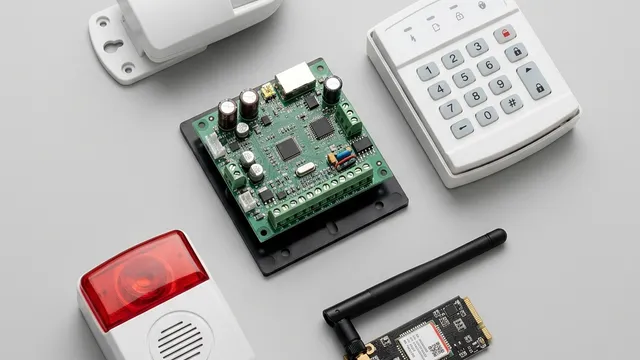
Most homeowners interact with their alarm system every day. They arm it before leaving the house. They disarm it when they return. If the keypad starts beeping, they call their alarm company. Beyond that, many people have little idea how the system actually works.
This is a foundational article; a plain-English explanation of how every burglar alarm system is built and how the components work together. Whether you have a simple system protecting a Singapore landed home or a larger installation covering an office or warehouse, the same five components are at work. Understanding them will help you make sense of any alarm upgrade discussion, any fault you encounter, and any decision about what to replace and what to keep. The other articles in this series go into each component in much greater depth; this one is the starting point.
KEY POINT
A burglar alarm is not a single device; it is a system of components, each doing a specific job. Once you understand what each component does, almost every alarm discussion becomes easier to follow.
Detectors; the Eyes and Ears of the System
Everything starts with the detectors. Their job is to watch for signs that something is wrong and report what they find to the alarm panel. Without detectors, the alarm system has no awareness of what is happening in or around the property.
Different detectors protect against different risks. Door contacts detect when a door is opened; a small magnet on the door moves away from a sensor on the frame, breaking a circuit and triggering a zone signal. Window contacts work the same way. PIR motion detectors; passive infrared sensors; detect changes in heat caused by a person moving through their field of view. Glass break sensors listen acoustically for the specific sound profile of breaking glass. Panic buttons allow an occupant to trigger an alarm manually, regardless of whether the system is armed.
Each detector monitors one zone or group of zones and reports to the alarm panel. The panel uses that zone information to identify exactly where in the property an event has occurred, which is why zone labelling matters so much. A signal from "Zone 3" tells an operator very little. A signal from "Front Door" tells them exactly what they need to know.
KEY POINT
Detector selection and placement are where most alarm system problems originate, and where the most improvement is available. The article on detectors and sensors covers this in detail.
The Alarm Panel; the Brain Behind Everything
If the detectors are the eyes and ears, the alarm panel is the brain. Every detector in the system reports to the panel. The panel receives that information and makes decisions; is the system armed, which zone was triggered, does this constitute an alarm condition, should the siren activate, should a notification be sent.
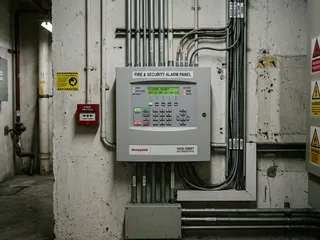
The panel is usually installed in a concealed location; a utility room, a storeroom, a ceiling space, or a service riser. Many homeowners never see it. Yet it is the most important component in the system. It determines how zones are grouped, how the system responds to different event types, how arming and disarming works, and how the system communicates with the outside world.
When upgrading an older alarm system, the panel is almost always the component worth replacing first. It is where technology has advanced most significantly, from basic PSTN diallers to IP communication, from simple zone monitoring to intelligent cross-zoning and mobile app integration. The cables and detectors may remain serviceable, but a new panel transforms what the system can do. The article on alarm panels explains what to look for when choosing one.
KEY POINT
The panel is where the intelligence of the alarm system lives. An old panel connected to good detectors and cables still limits the system to old capabilities. A new panel on the same infrastructure unlocks everything that current technology offers.
The Keypad; How You Talk to the System
The keypad is the part most homeowners are most familiar with; it is the visible face of the alarm system and the primary way users interact with it. You use it to arm the system before leaving, disarm it when you return, check the system status, reset alarms after an activation, and review any faults the panel has logged.
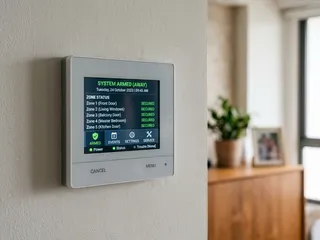
In older systems, keypads were simple numeric pads with a few LED indicators. Modern systems may have LCD or graphic displays, touchscreen interfaces, and the ability to show zone-by-zone status. Many current systems also support mobile app control alongside or instead of a dedicated keypad; arming and disarming from anywhere with a phone.
One practical detail many homeowners do not know: entry and exit delays; the time the system gives you to enter before alarming and to leave after arming; are programming settings, not fixed hardware limitations. If you feel rushed every time you enter the property and try to disarm, that can almost certainly be adjusted without any physical changes to the system.
KEY POINT
The keypad is the part of the system most likely to be replaced during an upgrade simply because newer keypads look and work significantly better. But the keypad is the least important component to upgrade; it is the interface, not the intelligence.
The Siren; the Part Everyone Notices
When people think of a burglar alarm, they usually think of the siren. It is certainly the most visible component; mounted externally on the property where it can be seen and heard. But its purpose is frequently misunderstood.
The siren's job is not to stop a burglar. It is to let them know they have been detected, and in doing so, to remove the two things they depend on most: time and privacy. The moment the siren activates, attention is drawn to the property, the intruder knows their presence is known, time pressure increases dramatically, and the risk of identification or intervention rises with every second they remain. Most burglars will leave quickly when an alarm sounds. The article on alarm sirens explains why this deterrent effect works even when no monitoring centre is connected.
Most external siren units also include a flashing strobe light. The siren creates audible attention. The strobe provides a visual indicator of which specific property has activated; useful for neighbours, responding security personnel, and police officers trying to identify the correct address when multiple properties are close together.
KEY POINT
The siren is the alarm's most immediate protective tool. Its value is in the pressure and attention it creates, not in physically preventing entry. A well-positioned, clearly visible siren with a working strobe is a meaningful deterrent before anyone even reaches the door.
Communication; How the Alarm Gets Help
Once the alarm has detected an intrusion and activated the siren, the next question is who needs to know. This is where the communication component determines how much of the alarm's capability is actually realised.
The simplest approach is bells-only; the siren sounds, and that is the extent of the notification. No signal goes anywhere. The system relies entirely on someone nearby hearing the alarm and taking action. This provides deterrence but no coordinated response, and it depends entirely on the noise being heard and acted upon.
Self-monitoring adds a direct notification path to the homeowner. When an alarm activates, a push notification, SMS, or app alert reaches the homeowner's phone immediately. The homeowner then decides whether to call the police, contact a neighbour, or investigate themselves. This works well when the homeowner is reliably available and responsive, but has an obvious gap when they are not, as covered in the article on self-monitoring versus professional monitoring.
Professional monitoring through a Central Monitoring Station provides the highest level of response assurance. When the alarm activates, trained operators receive the signal, follow the account's response procedure, verify the event, contact keyholders, and escalate to police if warranted; 24 hours a day, regardless of whether the homeowner is available. This is the model that the earlier articles in this series on monitoring centres, alarm response, and video verification all describe in detail.
KEY POINT
The communication choice determines what happens after the alarm fires. A siren alone creates pressure on an intruder. Self-monitoring adds the homeowner to the response. Professional monitoring ensures someone always acts, regardless of the homeowner's availability. Each level is appropriate for a different risk profile.
Modern Alarm Systems Are Smarter Than Ever
Today's alarm systems look and behave very differently from those installed twenty years ago. Mobile apps give homeowners real-time visibility and remote control. IP communications replaced PSTN telephone diallers, dramatically improving supervision speed and reliability. Video verification links camera footage to alarm events so monitoring operators can see what triggered the alarm rather than guessing. Cloud management allows remote diagnostics and configuration. Dual-path communication using both broadband and 4G cellular ensures the alarm can communicate even when one path is disrupted.
Each of these advances is covered in detail across the other articles in this series, from the PSTN to IP transition and video verification to communication redundancy and modern detector technology. The technology has changed substantially. The fundamental principle has not.
A detector identifies a problem. The alarm panel makes a decision. The siren activates. The communication system notifies the right people. That sequence has been at the heart of every alarm installation since the earliest systems were built, and it remains the right framework for understanding any alarm system today, regardless of how sophisticated the technology behind it has become.
KEY POINT
Technology advances have made each of the five components significantly more capable, but they have not added new components or changed the fundamental architecture. Understanding the five components means understanding every alarm system, past or present.
Why Understanding the Basics Matters
Many homeowners only think about their alarm system when something goes wrong; a battery fault, an unexpected activation, a keypad beeping with an unfamiliar code. Understanding the five components makes these situations much less confusing. When the keypad shows a zone fault, you know it is a detector reporting an issue. When a communication fault appears, you know it is the panel's path to the monitoring centre that has been disrupted, not the detection capability itself.
It also makes upgrade decisions significantly easier. Once you understand what each component does, the question of what to replace versus what to retain; covered in detail in the articles on alarm wiring reuse and upgrade versus replacement; becomes a practical component-by-component assessment rather than a choice between keeping everything and replacing everything.
The same five components are in every alarm system. The brand on the panel does not change what the panel does. The manufacturer of the detector does not change what the detector detects. Understanding the function of each component is more useful than understanding the specifications of any particular product, and it is knowledge that applies to every alarm system you will ever encounter.
Securevision Verdict
A burglar alarm system may appear complicated, but it is a combination of five components working together; detectors that identify a problem, a panel that decides what to do, a keypad that allows the user to interact, a siren that creates attention and pressure, and a communication module that ensures the right people are informed.
Once you understand these five building blocks, you understand how every alarm system works regardless of brand or model. The technology around each component continues to improve. The architecture does not change. That is what makes it worth understanding properly.
In Short
A burglar alarm is a system of interconnected components; detectors, a panel, a keypad, a siren, and a communication path; each with a specific job. Understanding how they work together helps you use the system correctly, identify what has gone wrong when a fault occurs, and make more informed decisions when the time comes to upgrade or replace it. A system you understand is a system you will use consistently. And consistent use is what makes an alarm system effective.

Frequently asked questions
How does a burglar alarm system work?
A burglar alarm system works by using detectors to sense changes in the protected environment; door contacts that detect when a door opens, PIR sensors that detect movement, glass break detectors that detect breaking glass. When a detector triggers in the armed state, it sends a signal to the control panel, which evaluates the event and triggers the appropriate response: activating the siren, sending an alert to the monitoring centre, and notifying the user's smartphone.
What are the main components of a burglar alarm system?
The main components are: the control panel (which processes all signals and controls the system response); detectors and sensors (PIR motion detectors, door contacts, glass break sensors); the keypad (used to arm and disarm the system); the siren and strobe (the audible and visual deterrent); and the communication module (which sends alerts to the monitoring centre and the user's smartphone).
What is a control panel in a burglar alarm?
The control panel; also called the alarm panel or controller; is the central processing unit of the system. All detectors connect to and report through the panel. When a detector triggers, the panel determines which zone is active, checks whether the system is armed, applies any relevant delay timers, and initiates the appropriate response. The panel also manages the backup battery and communication paths.
What is an alarm zone?
An alarm zone is a defined area or group of detectors that the panel monitors as a single unit. When any detector in the zone triggers, the panel identifies the zone and responds accordingly. Zones allow different areas of the property to be armed or disarmed independently, for example, keeping the perimeter armed at night while allowing movement inside.
How does a PIR motion detector work?
A PIR (passive infrared) detector senses the infrared heat signature of a moving body as it passes through the detector's field of view. It detects the contrast between the heat emitted by a person and the background temperature of the room. When a person moves through the detection zone in the armed state, the detector signals the panel, which initiates the alarm response.
What is the difference between arming and disarming a burglar alarm?
Arming means activating the alarm system so that detector triggers will generate an alarm response. Disarming means deactivating this response, allowing movement without triggering the alarm. Arming is done when you leave the property or go to sleep; disarming is done when you return or wake up. Most systems require a PIN code or an access credential to arm and disarm.
What is an entry delay in a burglar alarm?
The entry delay is the period between an entry point detector triggering and the alarm sounding, allowing an authorised person to enter and disarm before the siren activates. The exit delay is the equivalent period after arming, allowing the user to leave before the system becomes fully active. Both delays are set during installation and can be adjusted by your installer.
How does the alarm communicate with a monitoring centre?
The alarm panel sends digital signals to the monitoring centre through a communication path, typically broadband internet or mobile data (GSM/4G). When an alarm event occurs, the panel transmits an event code identifying the property, the type of event, and the zone involved. The monitoring centre receives this signal and initiates the appropriate response protocol.
Can I use a burglar alarm without a monitoring centre?
Yes. A burglar alarm can operate in self-monitoring mode, where alerts are sent directly to your smartphone rather than to a professional monitoring centre. This is a valid arrangement if you are reliably contactable and able to respond at all times. Professional monitoring provides 24-hour coverage and a structured response protocol that does not depend on the property owner being available.
What is the backup battery in a burglar alarm for?
The backup battery inside the alarm panel provides power to the entire system during a mains electricity failure. It ensures the alarm continues to detect, sound the siren, and communicate during a power cut. Battery capacity varies; most residential systems provide 8 to 24 hours of backup. The battery requires replacement every three to five years as it degrades with age.
How do I know if my burglar alarm is working correctly?
Check the panel display for any fault indicators. Confirm the backup battery warning is not active. Ask your monitoring centre when they last received a poll from your panel. Conduct a walk test; arm the system, walk through the detection zones (using a stay-arm or walk-test mode if available), and confirm each detector triggers as expected. Annual professional servicing is the most thorough way to confirm the system is working correctly.